
Netflix is raising monthly subscription prices in Australia just 15 months after its last increase, with the company confirming local users across all plans will be asked to “pay a bit more”.
The US streaming giant’s cheapest Standard plan, with ads, will now cost $9.99 a month in Australia, up from $7.99 a month.
The Standard plan without ads — which Netflix automatically transferred some users to after killing off its $12.99 ‘Basic’ ad-free tier earlier this year — will now cost $20.99 per month, up from $18.99.
Subscribers to Netflix’s Premium plan can expect their costs to rise from $25.99 per month to $28.99 per month.
The new prices, which came into effect for new members from 8 August, will take effect for current members in their next billing cycle.
A spokesperson for Netflix confirmed to Information Age that the company was “adjusting prices in Australia”.
“We offer a range of prices and plans to meet a wide range of needs, and as we deliver more value to our members, we occasionally ask them to pay a bit more,” they said.
How Netflix’s prices compare to the competition
Netflix’s pricing structure has positioned its Standard and Premium plans as more expensive than those of its rivals in Australia.
While the Standard Netflix subscription is now $20.99 per month, similar ad-free plans with Disney+, HBO Max, Stan, Amazon Prime, and Binge range between $13 and $19 per month.
At the Premium end, where users get the highest number of concurrent streams and the highest video and audio quality, Netflix’s $28.99 Premium subscription is significantly more expensive than the competition.
Netflix subscription plans in Australia, as of 8 August 2025
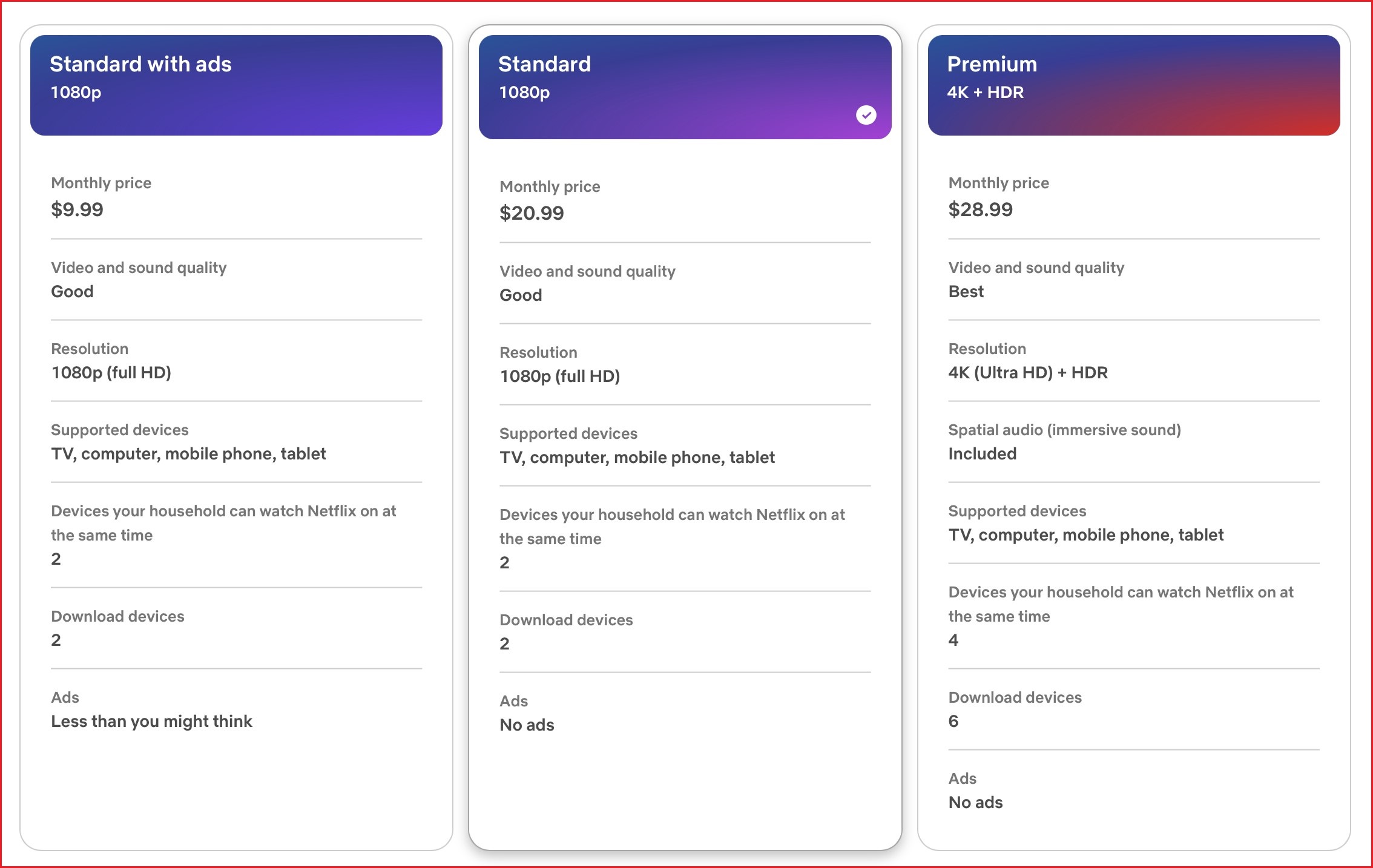
Image: Netflix
Premium subscriptions from Disney+, HBO Max, Stan, and Binge all range between $20.99 and $22 per month in Australia.
Disney+ raised its Australian prices in February after following Netflix’s example by cracking down on password sharing in late 2024 in an attempt to gain more users.
Netflix previously raised prices across its Australian plans in May 2024 and January 2022.
Australian households now spent an average of $21.63 per month on video streaming subscriptions, according to a July survey released on Monday by local bank Westpac.
Households were spending around $55 per month on gaming subscriptions and $17 per month on music streaming services, with analysis of transactions showing average monthly spends on all digital subscriptions were up 11 per cent in 2025, Westpac said.
The federal government has proposed banning so-called “subscription traps” which can make it difficult for Australians to cancel subscriptions for digital services.
It has been consulting with consumers, businesses, and state and territory governments on potential regulatory changes.
Netflix’s Asia-Pacific growth and ‘evolving’ subscriptions
Netflix’s strongest revenue increases in the past 12 months had been in the Asia-Pacific region, which saw 24 per cent year-on-year growth in the second quarter of 2025, according to earnings released in July.
The company is estimated to have almost 7 million subscribers in Australia — almost double that of nearest competitors Disney+ and Amazon Prime Video.
Netflix also recently enabled the collection of detailed Australian ratings data by advertisers for the first time.
Co-CEO, president, and director Greg Peters told investors the company was also “open to” adding new subscription tiers for different types of content, as it broadened its offerings into new areas such as live sport.
“I've learned to never say never,” he said in July.
“So I would say we remain open to evolving our consumer-facing model.”
Peters said Netflix’s subscription needed to ensure “reasonable returns to the business based on the entertainment value that we delivered”.
“… Obviously, the reason to do that is we can continue to reinvest in adding more entertainment and building a better experience,” he said.