



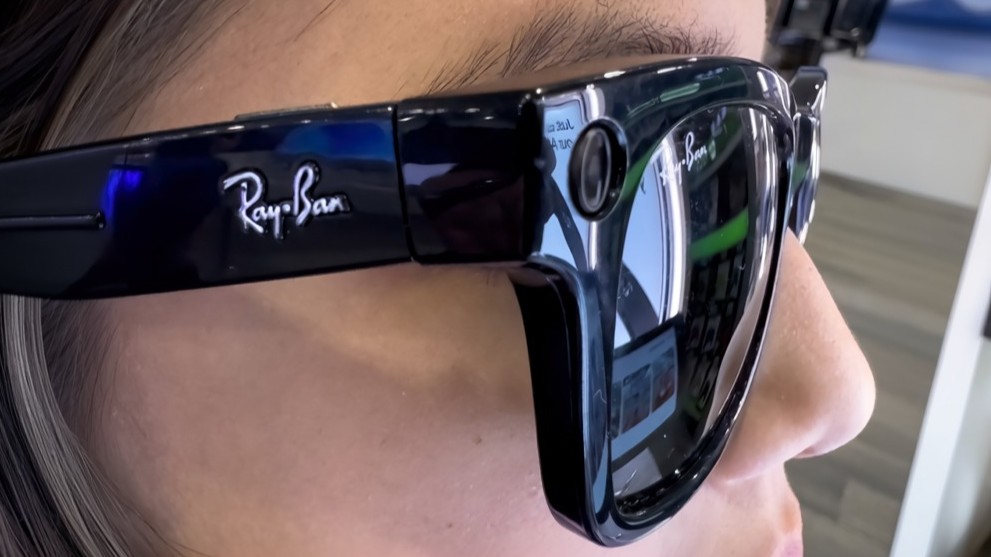

Meta has reportedly planned to introduce facial recognition to its popular line of smart glasses as soon as this year.
The feature, reportedly referred to as ‘Name Tag’ between Meta staff, would allow smart glass wearers to identify people by face and receive further information about them with the help of Meta’s AI assistant.
According to The New York Times, Name Tag would roll out to the smart glasses Meta produces in collaboration with EssilorLuxottica which owns popular glasses brands Ray-Ban and Oakley.
Four anonymous people involved with the plans told the publication facial recognition technology (FRT) could be added as early as this year.
Linking tasks to faces
According to an internal document from May 2025, Meta has been discussing how to release a feature that presents numerous “safety and privacy risks”.
Notably, two people familiar with the plans said the feature would not allow people to simply look up all persons they encountered in public.
Instead, the tech giant has been weighing at least two possible options: one where Name Tag recognises a user’s existing connections on Meta platforms – such as Facebook or Instagram – and another where people unknown to the user may still be identified if they have a public account on a Meta site.
Meta’s smart glasses currently require a wearer to activate them before taking photos or video footage, but the company is also working on glasses that can record continuously to recap the events of a wearer’s day.
FRT would reportedly be a key feature of the product, enabling wearers to be reminded of tasks when they see people they know, such as work colleagues.
According to The New York Times, an internal memo at Meta suggested political tensions in the US had created good timing for Name Tag’s release.
“We will launch during a dynamic political environment where many civil society groups that we would expect to attack us would have their resources focused on other concerns,” allegedly read an internal memo.
Will this be allowed in Australia?
Speaking with Information Age, a spokesperson for the Office of the Australian Information Commissioner (OAIC) said “biometric templates and biometric information” are sensitive information under the Privacy Act and are given a “higher level of privacy protection” than other personal information.
“As such, organisations must take reasonable steps to protect personal information they hold from misuse, interference and loss, as well as unauthorised access, modification and disclosure,” they said.
Though hardware retailer Bunnings recently received the greenlight for its use of FRT on the basis of retail crime and staff safety, Matt Warren, director of the RMIT Centre for Cyber Security Research and Innovation, said Meta’s model presents a “far broader problem”.
“In theory, anyone wearing Meta smart glasses could passively collect data on every person and place within their field of view, with no opt-out available for those being recorded,” said Warren.
“Informed consent is a cornerstone of our Privacy laws.
“Yet the nature of Meta's smart glasses makes compliance with this principle practically impossible.”
Although organisations can be made to follow privacy requirements under Australia’s Privacy Act, individual persons are generally not bound by the legislation.
As such, Australia’s legal approach to Name Tag could depend on whether FRT occurs locally on a user’s device, or off-site on a Meta server.
Maya Gómez, lecturer in law at Swinburne Law School, told Information Age the use of FRT is “not inherently unethical in all contexts”.
“Such technology can be useful for personal device unlocking, legitimate law enforcement tasks, opt-in event photography, accessibility tools, and more,” said Gómez.
“However, ambient identification of non-consenting third parties is ethically distinct because the data subject is not the user, and crucially, opt-out mechanisms are structurally weak.”
Gómez added the key issue may be how Name Tag approaches consent.
“An opt-out registry would itself require biometric enrolment, and of course, a public-space consent mechanism is practically unworkable at scale – imagine at a concert with 30,000 people,” she said.
“Meta would need to do significant lifting within the Australian context to ensure that it adheres to privacy concerns and requirements under the Act.”
Nothing set in stone
When asked whether there were any plans to enable such a feature for an Australian market, a Meta spokesperson said company was weighing its options.
“We’re building products that help millions of people connect and enrich their lives,” they said.
“While we frequently hear about the interest in this type of feature – and some products already exist in the market – we're still thinking through options and will take a thoughtful approach if and before we roll anything out.”
Information Age understands the tech giant currently has no firm plans regarding the release of Name Tag.