



Thai and Australian police have uncovered a sophisticated scam operation that used fake police branding, scripted calls and video interrogations to extort Australians from a compound in Cambodia.
The operation came to light earlier this year after the Royal Thai Military located and raided a six-story cybercrime facility in the small Cambodian town of O’Smach.
Evidence collected during the raid was passed to the Royal Thai Police, which subsequently contacted the Australian Federal Police (AFP).
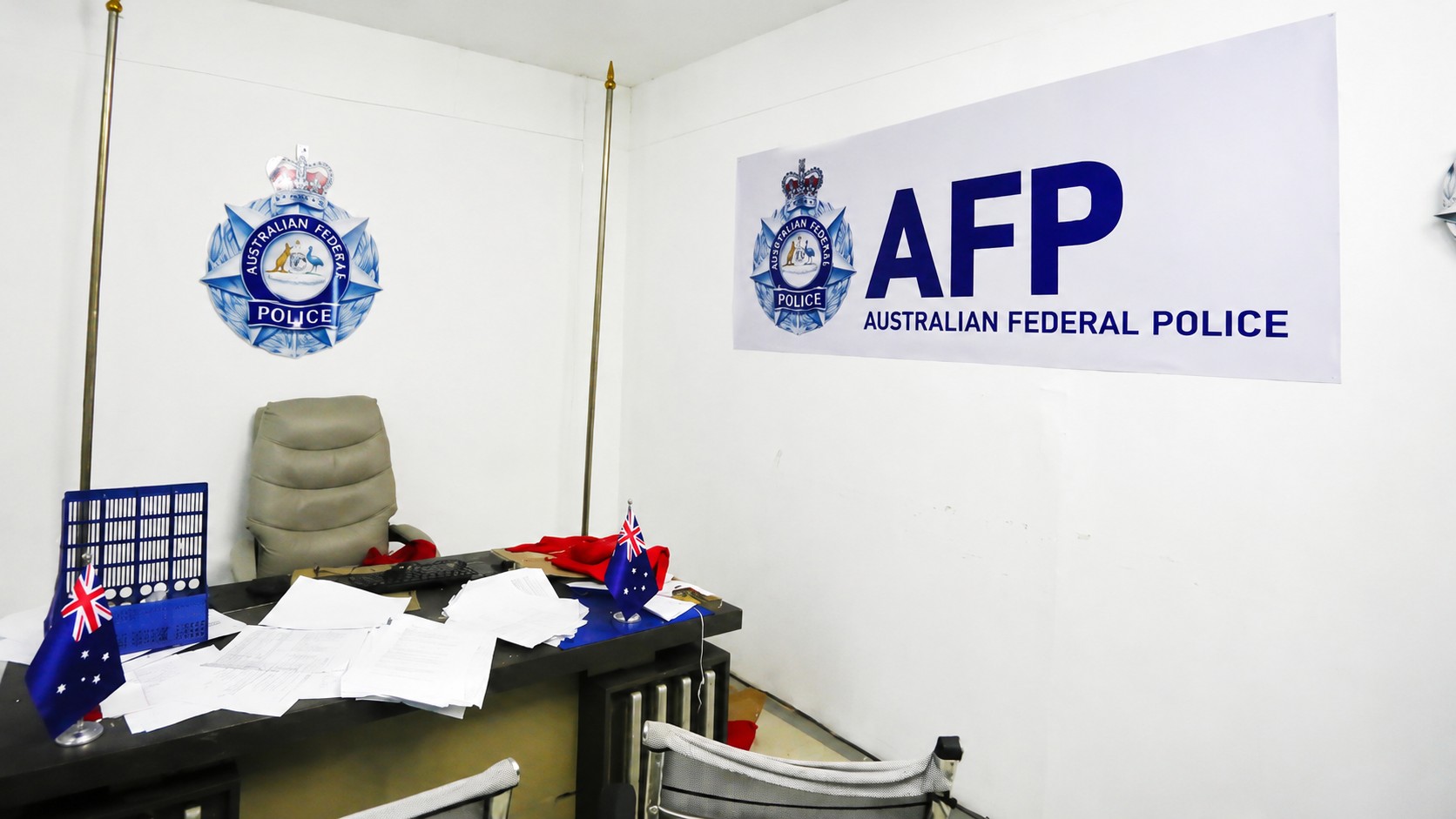
Among the material recovered were AFP logos, signage and Australian flags allegedly used to transform parts of the compound into convincing replicas of Australian police offices.
Investigators believe the set was used during video calls to convince victims they were speaking with legitimate AFP officers.
During these calls, Australians were persuaded to disclose financial information, enabling the scammers to eventually withdraw funds from victims’ bank accounts.
“Let me be clear about one thing,” said AFP acting superintendent Nuckhley Succar.
“The AFP will never ask you to verify your bank details or ask for money over the phone or in a video call.”
Script used against hundreds of Australians
The scam allegedly centred around a sophisticated, conversational phone script which AFP released to the media this week.
The script instructed scammers to introduce themselves as a federal police agent, then quote the victim’s full name and ID number to establish authenticity.
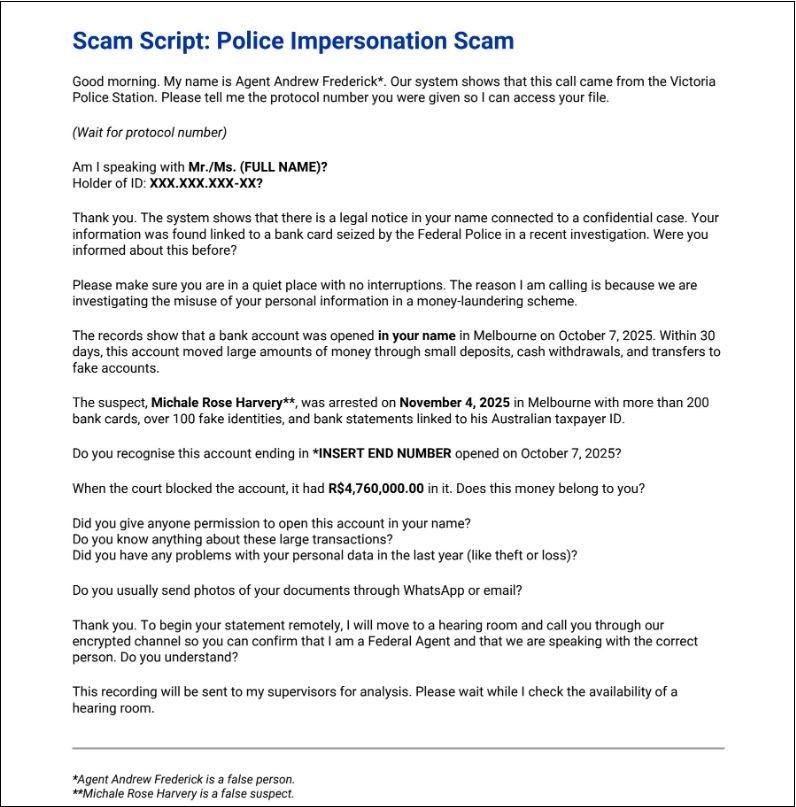
Victims were given a fake narrative about a Melbourne laundering suspect who had misappropriated their personal details. (Source: AFP)
Victims were then told that a bank account had been opened under their name as part of a money laundering scheme.
“There is a legal notice in your name connected to a confidential case,” the script read.
“Please make sure you are in a quiet place with no interruptions.”
Scammers then recited a lie about a Melbourne-based suspect who had been arrested with “more than 200 bank cards” and “over 100 fake identities”, including the victim’s.
Victims were told a high-balance account in their name had been blocked in court, after which the conversation would move to a ‘hearing room’ where scammers asked for an ‘official’ statement via video call.
Once on camera, the fake officer would verify the victim's identity before questioning them about their alleged involvement in the laundering scheme.
“We need to understand what happened with the account in your name,” the script read.
“Your name may be linked to suspicious activity.”
Victims interrogated for financial data
The process culminated in victims signing a supposed confidentiality agreement and providing detailed information about their bank accounts.
Scammers would collect information about the victims’ current transaction limits, balance and existing investments.
“This agreement protects you and the investigation,” read the agreement.
“Breaking confidentiality can lead to legal penalties.
“Accounts not confirmed by you may be blocked or confiscated.”
AFP identified the personal details of approximately 300 potential Australian victims from the scam centre.
Victims agreed to ongoing surveillance
To maintain trust and prevent victims from seeking outside advice, the script enrolled them in what it described as a "temporary surveillance protocol".
Under the arrangement, fake police representatives conducted check-ins every four hours and instructed victims to report any unknown contacts they received.
Victims were also asked to submit signed declarations or video confirmations relating to the supposed investigation.
“This script was sophisticated, convincing, and was designed to target victims via social engineering to play on their trust,” Succar said.
“But while the scammers may have thought they were smart, the AFP and our law enforcement partners are smarter.”
Information Age understands the compound was also set up to impersonate authorities from Singapore, China, Indonesia, Brazil, India, and other countries.
AFP did not specify whether the Cambodian facility was the only location using the script, and no charges have been announced.
Investigations involving Thai Royal Police are ongoing.
An AFP representative declined to comment while the matter was still under investigation.