



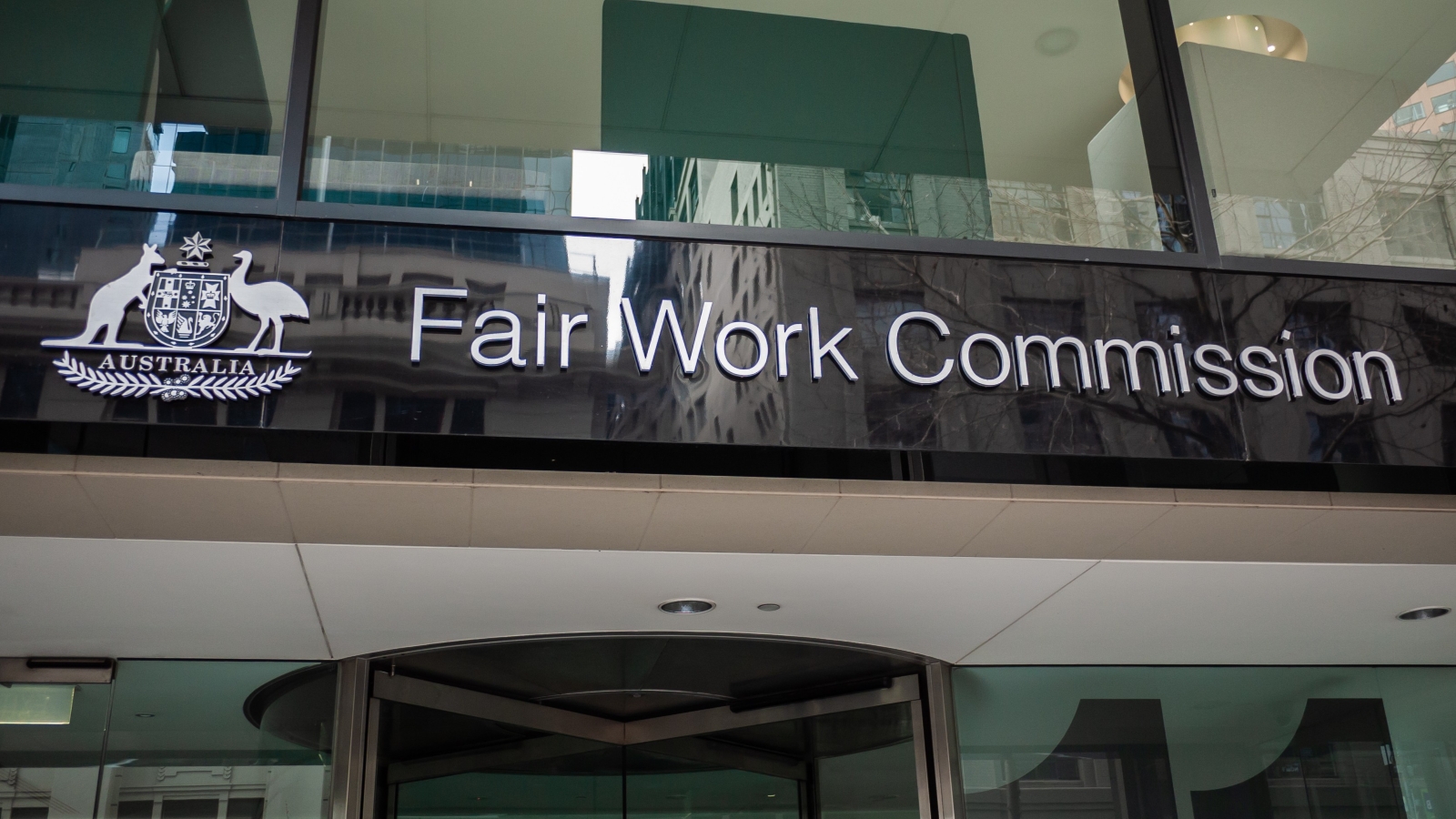

A former technology worker at an IT firm that consults for the Victorian government has had their unfair dismissal payout more than doubled to just under $10,000 after a successful appeal at the Fair Work Commission (FWC).
A five-year employee of specialist tech consultancy Bytewize, which provides ICT services to Victorian government schools, won an unfair dismissal case against the company earlier this year and was initially awarded just under $5,000 in compensation.
The case arose after the worker sent an email to some of the company’s clients giving notice of her resignation and making several allegations against her employer.
“It is with a very heavy heart that I am having to resign,” she wrote in the email.
“I have spent yet another month with no money, and as such this role is no longer sustainable for either my mental health or physical health.”
The worker was dismissed by Bytewize the next day, without serving her notice period.
In the dismissal email, the company’s director said the staffer’s email was “extremely disappointing” and “completely unacceptable”.
The director said the employee had “attempted to defame” the company with “information that simply is not true and not accurate”.
He said the employee was being stood down, effective immediately, as they “no longer wish to represent staff who act in this manner”.
Immediate termination ‘unjust and unreasonable’
The FWC found in April that while the email to clients was “unnecessary” and a “potential source of embarrassment” to Bytewize, it did not give rise to a reason to dismiss the worker on the spot.
“The applicant was prepared to serve a notice period but the respondent elected to bring forward the cessation of her employment in a manner I consider, on a fair reading of the Employment Agreement, was unjust and unreasonable,” wrote FWC deputy president Richard Clancy.
Because the worker had agreed to serve out her five-and-a-half-week notice period, the FWC found she should be provided with the wages she would have earned during this period, and that reinstatement was not appropriate because the worker had not sought it.
Why the payout was doubled
The commission’s initial decision took into account a new job the worker secured months after their notice period would have concluded, and her compensation was set at just under $4,500 in May.
The worker appealed this decision in June, saying the compensation had been “interpreted incorrectly” and that it “should not have been reduced, because the work periods would not have overlapped”.
A three-member FWC panel found on Friday, 14 August, that there had been a mistake with the original calculation of compensation.
They decided Bytewize should pay the former employee the full salary she would have earned during the notice period, of just under $10,000.
Bytewize had also attempted to appeal the Fair Work decision, arguing that it had involved an error, but this was refused “because no arguable error is demonstrated”, the commission said.
It comes after an Australian Amazon worker fired for sending “smart-arse” Slack messages was reinstated by the FWC in June after his dismissal was found to be not justified or valid.
Last year two founders of a Melbourne-based startup were also awarded more than $80,000 each when the FWC ruled they were unfairly dismissed by the Australian tech company that acquired their firm.