
Australia should anticipate accelerating change in demand for digital skills amid rising use of generative artificial intelligence, according to the minister for skills and training.
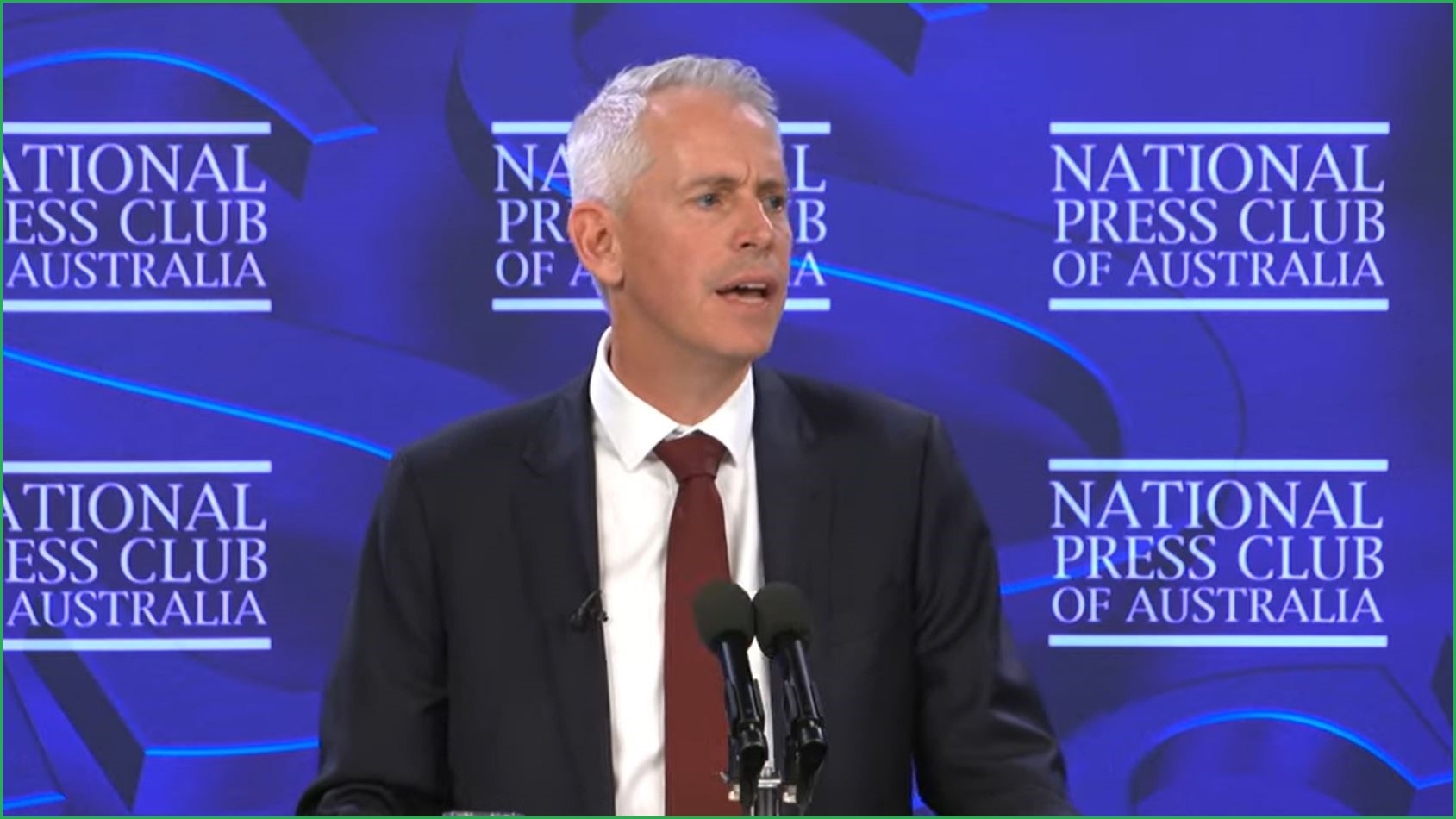
Minister Andrew Giles told the National Press Club on Tuesday that the nation “should also be looking to engage workers effectively in this process of change, to realise [AI’s] benefits”.
This would require “upskilling approaches that are fast, targeted, and accessible to everyone — not just those in formal education”, Giles said, quoting a June report by the Organisation for Economic Co-operation and Development (OECD).
He also urged Australians to value vocational education and training (VET) courses just as much as university degrees, to help prevent skills mismatches and shortages.
“I think we’ve got to think about engaging with AI as foundational,” he said.
“In that, there is a role for government, but there is also going to be a role for employers, of course.”
The Albanese government wanted to prepare Australians “for the future of work”, said Giles, who argued jobs were “changing fast with technology, automation, and AI reshaping industries”.
A recent study by government agency Jobs and Skills Australia, which found jobs would be augmented by AI more than they would be replaced, also showed the technology provided a productivity opportunity, Giles said.
Treasurer Jim Chalmers said on Thursday at the close of the government’s three-day Economic Reform Roundtable — which involved business groups, unions, academia, civil society, and government — that he saw “a heap of appetite” for skills reform to improve productivity.
Participants pushed for better recognition of international and local qualifications, improvements to the TAFE self-accreditation system, better access to credit transfers, and greater attraction of highly-skilled workers, he said.
Recognising migrants' skills and investing in VET
Small and medium businesses were not training workers enough to keep up with new technologies, Australia’s Productivity Commission warned earlier this month.
The commission's draft recommendations suggested the government trial incentives to help raise work-related training rates in small and medium enterprises.
It also recommended the government “move toward a national system of credit transfer and recognition of prior learning (RPL)” — including microcredentials, informal learning or work experience, and international work experience.
Giles told the National Press Club the government saw value in “the informal learning that people gain through experiences, as well as understandings gained outside of this country by migrants”, as “too many" immigrants had been held back from using their skills.
A report released in June by the federal government’s Australian Institute of Family Studies found many migrants experienced an “occupational downgrade” after moving to Australia, as their skills were not properly recognised and some were left employed in jobs below their qualifications.

A study by Jobs and Skills Australia found jobs would be augmented by AI more than they would be replaced. Image: Shutterstock
The federal opposition has also voiced support for streamlining skilled migration rules to better recognise overseas qualifications.
Giles said improving such recognition was worthwhile, despite being “a really complicated piece of work”.
“Getting that balance right between maximising contribution on the one hand, and maintaining community confidence and social licence on the other, is a real tension point,” he said.
Giles also announced the government would invest $30 million to train more electrical, construction, and First Nations teachers for VET courses.
Govt should ‘rule out’ training levy, opposition says
Speaking at a Tuesday event hosted by business advocacy association the Australian Industry Group (Ai Group), Opposition Leader Sussan Ley said the federal government should “firmly rule out” introducing a training levy on businesses.
A 1.5 per cent training levy suggested by the Australian Council of Trade Unions (ACTU) during the Economic Reform Roundtable would apply to businesses with more than $500,000 in annual turnover, unless they already spend that percentage on training.
Such a levy would be “effectively a multi-billion-dollar tax on employers”, said Ley, who argued business leaders who attended the roundtable “rightly hated the idea”.
“These kinds of punitive solutions are not solutions at all,” she said.
“They are recipes for lower investment and lower employment.”
The government has not publicly responded to the ACTU's suggestion.
Ley also criticised what she called “more inertia on skills reform” from the government, and said the Liberal-National opposition would “bring employers back to the centre of training” by pushing more industry-led training and microcredential programs.
Giles argued during his Press Club address that skills and training had been "neglected under the Coalition in the decade up to 2022", when Labor returned to power.