
One of Australia’s most successful tech entrepreneurs believes digital apprenticeships should be created for rapid upskilling for high-demand tech roles.
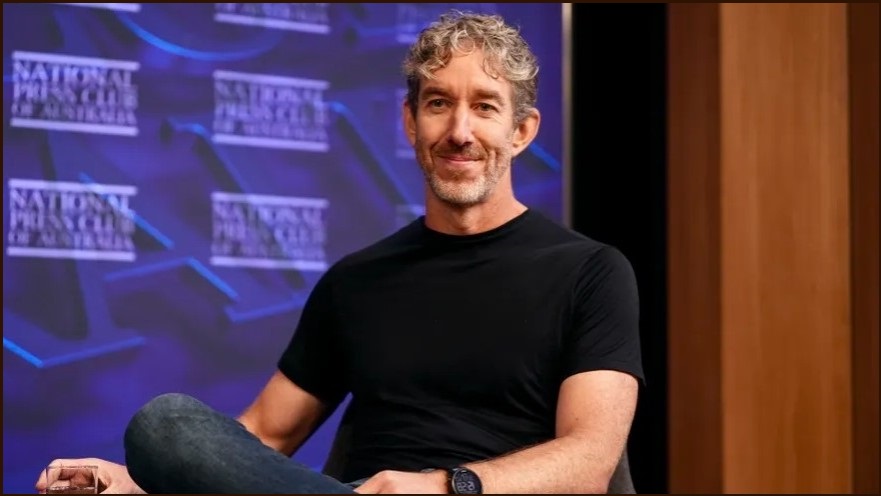
Atlassian co-founder and chair of the Tech Council of Australia, Scott Farquhar, spoke in Canberra at the National Press Club yesterday about the transformative impact of artificial intelligence (AI) on Australia and the economic opportunities.
Farquhar acknowledged job displacement risks – Atlassian reportedly fired 150 people due to AI just hours before he fronted up to the National Press Club – but advocated for re-skilling initiatives, digital apprenticeships, and wider AI adoption across public services.
He also encouraged Australia to become a regional AI and data hub.
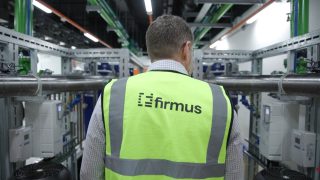
High up on his list of reforms is the creation of short practical qualifications that could be completed in six or 12 months to get people ready for high-demand industries like data centre construction and battery installation.
“We talk a lot about the theoretical future job losses of AI, but we ignore the very real jobs that are available today,” he said.
“Electricians, plumbers, air conditioning technicians, solar and battery installers. These are high paying jobs that are available that we need right now, and we just don't have enough.”
Australia as a regional data centre hub
Farquhar believes Australia is positioned to become a regional data centre hub due to our abundant land, green energy, legal stability, and talent.
Barriers include outdated copyright laws, skills shortages and sovereignty concerns.
“The Australian government and Australian businesses like to host their data locally … other countries have the same desire, so if we want their businesses to host their data centres here in Australia, we need to solve this.”
Farquhar said the answer lies in Australia hosting digital embassies.
He described these embassies as secure sovereign cloud vaults that host countries’ most important data, operating under the laws of those countries.
“Why host your foreign data in any other country when you could host it in Australia with cheaper power, faster build times, under the laws of your own country?’
He believes we could be the provider of choice for every government in the region and for every business that needs a Southeast Asian data centre.

Farquar argued Australia is ideal for hosting 'digital embassies'. Photo: Shutterstock
Productivity within Australia could improve measurably by the adoption of AI tools, Farquhar added.
He quoted figures from the Tech Council of Australia that show up to $115 billion a year could be added to the economy by 2030 simply by adopting existing AI tools.
AI will reshape industries by powering everyday applications and transforming service delivery.
“AI can automate routine administrative tasks, allowing professionals like doctors and teachers to focus on core aspect of their roles.”
He highlighted AI tools such as Heidi Health which helps reduce time spent on paperwork for healthcare providers.
Making life easier for Australians
Farquhar said all individuals and organisations should experiment with AI to discover their transformative applications.
“Companies and government leaders are encouraged to integrate AI into daily operations for enhanced effectiveness.”
Government should deploy AI agents to simplify and expediate citizen-facing processes, such as development applications and subsidies
Describing AI as the defining technology of our time, Farquhar urged government and industry to work together to ensure Australia doesn’t miss the chance to lead in the next industrial revolution.
“What was once hard becomes easy,” Farquhar said.
“AI is doing for knowledge work what engines did for physical labour, and the nations that act early will reap the rewards.”
He warned that without urgent investment in digital infrastructure, skills, and policy reform, Australia risks becoming a passive consumer of global technologies, rather than an active contributor.
After more than 23 years at the helm, Farquhar stepped down as co‑CEO of Atlassian in August 2024.
His co-founder Mike Cannon‑Brookes became sole CEO while Farquhar remains on the board and serves as a special adviser.
Farquhar now focuses on family time, philanthropy, and investments through his venture firm Skip Capital and involvement with initiatives such as Pledge 1%.