
NBN Co will integrate Amazon’s Project Kuiper low earth orbit (LEO) satellite network with its nationwide broadband backbone, offering fast broadband to rural and regional Australians by mid-2026 and introducing competition with rival Starlink weeks after its global outage.
The new agreement will see the national broadband provider become a wholesale customer of Amazon, which is building a global network to rival SpaceX’s Starlink – already enjoying strong local success through direct sales and partnerships with the likes of Telstra and Optus.
LEO satellites orbit Earth at a fraction of the distance of NBN Co’s geostationary Sky Muster satellites, cutting data transmission latency and delivering broadband at over 100Mbps – but since they move relative to the ground, continuous coverage requires thousands of them.
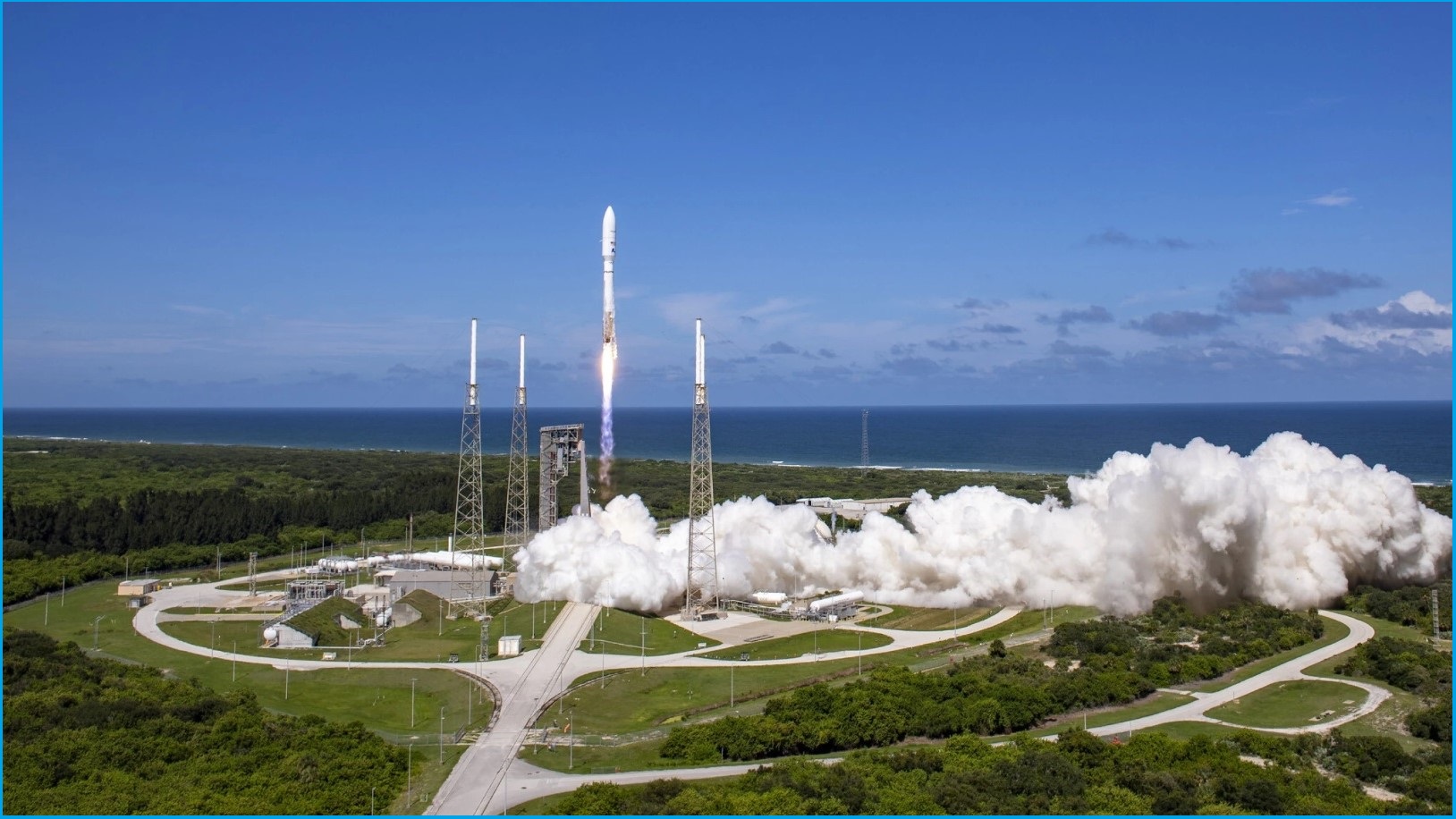
Project Kuiper – which Amazon began deploying commercially in April and now has 78 LEO satellites in orbit after three launches – will initially include over 3,200 satellites, half the number Starlink uses to deliver broadband connectivity nearly anywhere on Earth.
NBN Co expects the agreement will enable it to deliver “residential-grade” fixed broadband services to over 300,000 premises currently served by Sky Muster – which is a decade old and will be retired by 2032 after failing to keep up with faster LEO alternatives.
Called a “major leap forward for customers” by NBN Co CEO Ellie Sweeney, the services will be available to new and existing customers within its existing satellite footprint – with retail service providers, regional communities and others to be consulted on pricing and speeds.
“Australians deserve to have access to fast, effective broadband regardless of whether they live in a major city, on the outskirts of a country town or miles from their nearest neighbour,” she said, adding that the deal will “ensure the NBN network is future-ready.”
Healthy competition for Starlink
The deal comes just weeks after a Starlink software upgrade caused a catastrophic outage that cut its services worldwide for nearly three hours – leaving Ukrainian troops cut off and 6 million users worldwide, including 200,000 in Australia, scrambling to recover.
Even as some affected users reached out to the company demanding compensation, SpaceX CEO Elon Musk apologised for the outage, which Starlink’s engineers have promised won’t be repeated after the problem was identified and patches applied.
Yet the outage is a reminder of the dominance of Starlink in a market that has offered few alternatives – making Project Kuiper’s Australian entry a crucial competitive option that will give regional broadband users a choice of fast providers for the first time ever.
“We’ve designed Project Kuiper to be the most advanced satellite system ever built,” VP of technology Rajeev Badyal said, adding that the team “looks forward to creating new opportunities for hundreds of thousands of people in rural and remote parts of the country.”
And while NBN Co will initially focus its services on rural and regional Australians, the availability of an alternative to Starlink is likely to expand across Australia soon afterwards as Amazon expands Kuiper’s availability beyond the scope of the NBN Co agreement.
Starlink is responding in kind, with new features such as beam switching – which maps nearby obstacles that can block satellite signals, then focuses the antenna’s beam to avoid them – and Starlink Community, which lets many subscribers share a single Starlink dish.
Groundwork for an LEO revolution
Yet even as the LEO battles heat up, NBN Co’s long-term reliance on Project Kuiper will pave the way for broader usage of LEO satellites that will, Gartner recently predicted, drive a 24.5 per cent revenue surge in the next year as LEO becomes a mainstream connectivity option.
New consumer and business use cases will complement the provision of basic broadband services in areas with no other connectivity options, with use of LEO services to connect IoT devices in faraway locations, and for providing broadband to ships and airplanes, surging.
“Companies and consumers can expect consistent internet access and IoT sensing anywhere, without being limited by location,” said Khurram Shahzad, senior director analyst at Gartner, noting that “even airplanes, ships and sea platforms will benefit from new means of network resiliency and a ubiquitous internet.”
LEO opportunities have driven a surge of other private-sector development including in Australia, with Optus recently partnering to develop and launch an LEO reference design by 2028 and IoT specialist Myriota expanding its own LEO constellation with four new satellites.
Domestic capabilities are crucial to reduce the “serious strategic concerns” of overreliance on foreign firms like Starlink, telecomms analyst Paul Budde recently noted in warning Australia’s LEO industry “must avoid becoming another political or commercial football.”
“We are in desperate need of competition to Starlink,” Budde said, lauding NBN’s move and noting that “as legacy television and satellite-based broadcasting decline, LEO constellations are increasingly positioned to serve as the backbone of future global connectivity.”