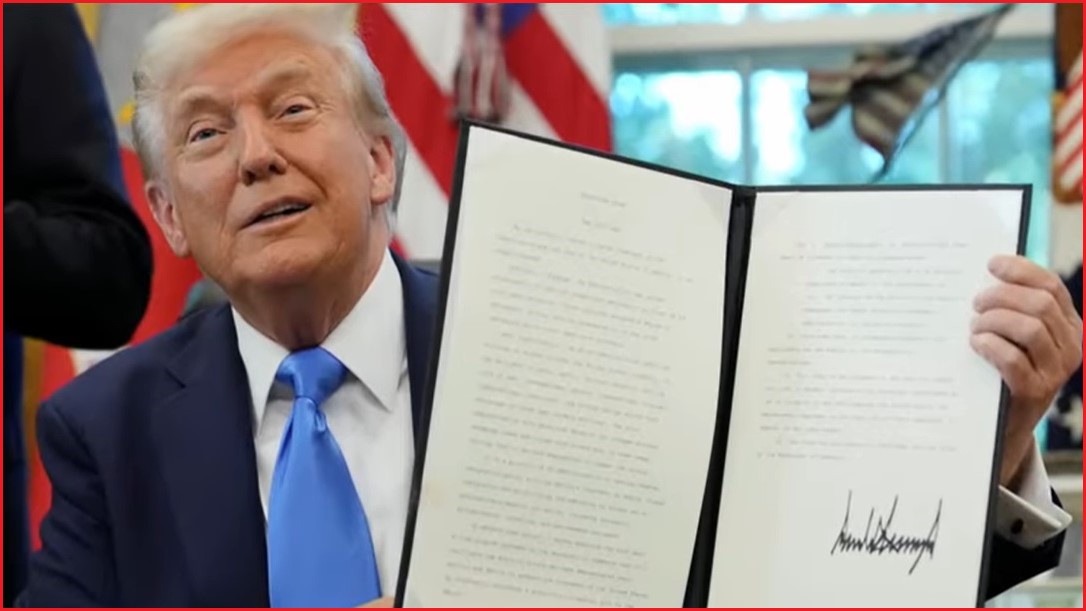

US President Donald Trump has imposed a more than $150,000 fee for a popular tech visa, accusing IT businesses of exploiting the system.
On Friday, Trump, alongside US Commerce Secretary Howard Lutnick, announced from the White House that a $US100,000 fee would be imposed for H-1B visas, coming into effect from the weekend.
Lutnick said the visa scheme had been hijacked by tech firms and that it was allowing foreign workers to take the jobs of Americans.
“The whole idea is no more with these big tech companies or other big companies training foreign workers,” Lutnick said.
“They have to pay the government $US100,000, and then they have to pay the employee.
“If you’re going to train somebody, you’re going to train one of the recent graduates from one of the great universities across our land.
“Train Americans, stop bringing in people that take our jobs.”
Confusion reigns
On Friday, Lutnick repeatedly said that the $100,000 fee would be imposed annually and only for a maximum of six years, and little information was given on what would happen to those already on one of the visas, particularly who weren’t currently in the US.
Tech giants Microsoft and Amazon, along with investment banking titan JPMorgan, quickly advised all H-1B visa holding employees to remain in the US, and for those outside America to return by midnight on Saturday, before the new fee structure was implemented.
But the next day, the White House moved to quell some of these fears and the general confusion around the announcement.
White House press secretary Karoline Leavitt posted that the fee would only apply to new visas, not renewals or to current visa holders.
“H-1B visa holders can leave and re-enter the country to the same extent as they normally would; whatever ability they have to do that is not impacted by yesterday’s proclamation,” Leavitt said.
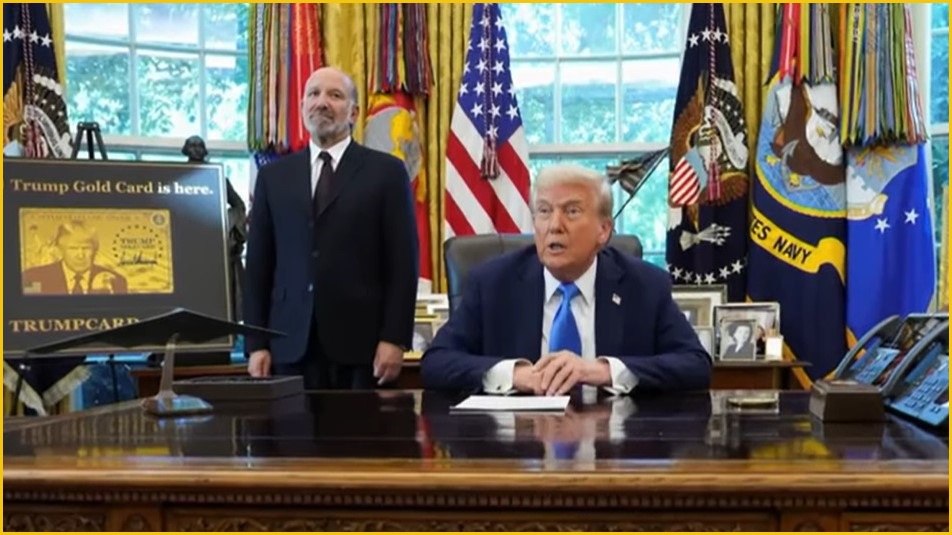
US Preident Donald Trump [R] and US Commerce Secretary Howard Lutnick [L] announce the visa changes. Photo: White House press conference
A White House account on X claimed that lawyers and “others with agendas” were “creating a lot of FAKE NEWS” about the scheme.
Concord Visa is a firm that represents many Australian businesses and individuals with US visa applications.
Its CEO, Kevin Park, said the company had been “flooded” with enquiries from visa holders asking if they could still leave the US or return home.
“Our message is don’t panic, but do get advice specific to your situation,” Park said.
“Changes are happening at pace – what we’re hearing from US officials and the reality at the border isn’t always going to marry up perfectly.
“There is going to be a lot of stress and confusion for the next few months as litigation and further details emerge. Right now, those affected will need to come up with a game plan that covers all possible scenarios. This includes employers in the US too.”
Popular tech visa
The H-1B visa is hugely popular among American tech companies, with the top 10 users of it including Amazon, Microsoft, Meta, Apple, Google, AWS and Oracle.
In the first half of this year, Amazon and its cloud company AWS received approval for more than 12,000 of the visas, while Microsoft and Meta received 5,000 approvals each.
The majority of visas are awarded to people from India, accounting for more than 70 per cent of the scheme, with China the next most prominent with just over 11 per cent of the visas.
The scheme has been highly controversial within the Trump administration and Trump’s close advisors, and led to an early schism between the President and former close confidante Elon Musk, who is a supporter of the program.
Trump has said that the scheme is being exploited by tech companies and is leading to local jobs and training going towards foreigners rather than Americans.
In the proclamation announcing the reforms, Trump said it has been “deliberately exploited to replace, rather than supplement, American workers with lower-paid, lower-skilled labour”.
“The large-scale replacement of American workers through systemic abuse of the program has undermined both our economic and national security,” it said.
“IT firms in particular have prominently manipulated the H-1B system, significantly harming American workers in computer-related fields.
“It is therefore necessary to impose higher costs on companies seeking to use the H-1B program in order to address the abuse of that program while still permitting companies to hire the best of the best temporary foreign workers.”
Each year about 500 Australians receive an H-1B visa, and thousands already hold one.
The Trump administration has also announced a $1.5 million ($US1 million) ‘gold’ visa, allowing foreigners to purchase US residency.
For $7.5 million ($US5 million), buyers will also be exempt from US taxes on non-US income for 270 days.