





Premier of Victoria Jacinta Allan has announced plans to make working from home a legal right for workers in her state.
The proposed legislation would give any public or private sector employee who can ‘reasonably’ perform their duties remotely the right to work from home for at least two days per week.
“More than a third of Australians are working from home regularly, including more than 60 per cent of professionals — and the data says they are more productive, benefiting businesses and the economy,” said Jaclyn Symes, Victorian Minister for Industrial Relations.
“Work from home saves families money, means more people are in the workforce — and it even cuts congestion.”
The government pointed to the many benefits of flexible working arrangements, including increasing workforce participation for carers, women with young children and people with a disability.
Research indicates hybrid working could save workers thousands in commuting costs, reduce expenses for businesses and inject millions of dollars into Australia’s economy through productivity gains.
However, the government also noted legislation was a necessary step to stop employers denying reasonable requests for flexibility, something they say is being reported to unions daily.
“There are plenty of bosses who will fight us on this. I’m sure of it,” Allan told the Victorian ALP state conference last weekend.
“And we won’t stand by while workers — especially women, single mums, carers — get punished for needing balance in their lives.”
It’s not the first time work from home has made political news this year.
In the lead up to May’s federal election, then-opposition leader Peter Dutton backflipped on his party’s plan to require public servants to return to the office full-time after the policy was slammed by voters and unions.
Legality to have its day in court
While the specifics of the proposed legislation are yet to be announced, several law experts have already raised concerns about how a state-based work-from-home law could be enacted.
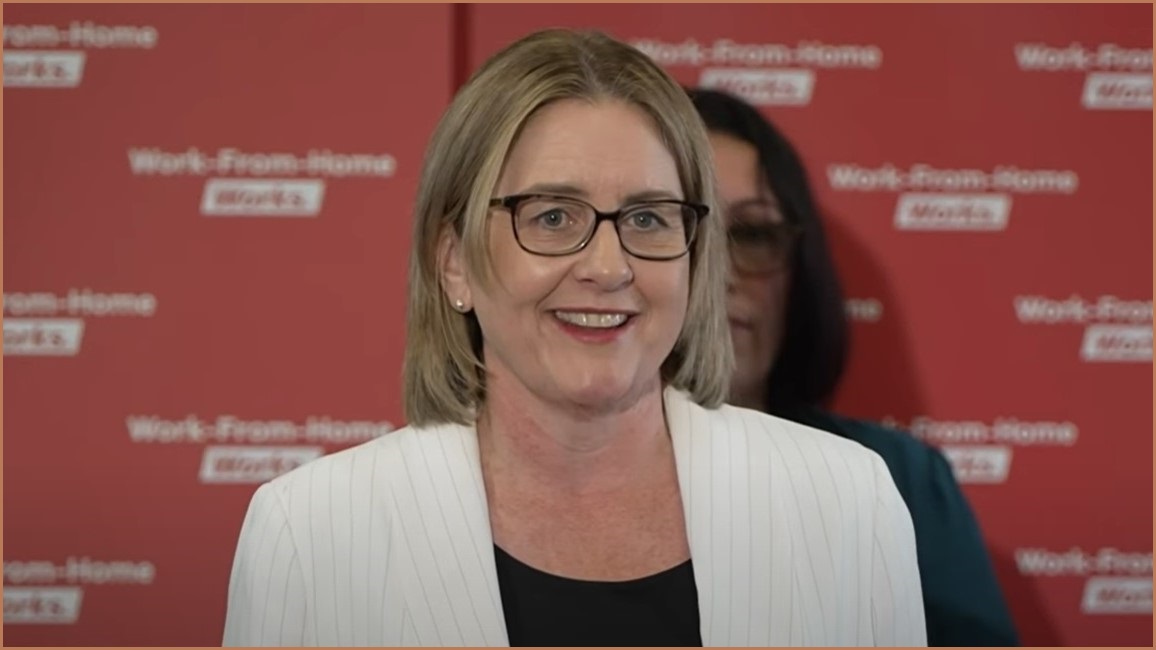
Victorian Premier Jacinta Allan announces the state will seek to enshrine work-from-home in legislation. Photo: YouTube
In particular, they note Victoria — along with all other states and territories except Western Australia — referred the power to make workplace laws to the federal government many years ago.
Under section 109 of the Constitution, in cases where state and federal laws conflict, federal rules prevail.
Giuseppe Carabetta, associate professor of workplace and business law at the University of Technology Sydney Business School, told ABC employers would likely challenge a state-instituted work-from-home law by claiming it to be inconsistent with the federal Fair Work Act.
However, federal minister Tanya Plibersek indicated the government would not intervene, saying the proposed law was a matter for Victoria to decide.
Treasurer Jim Chalmers echoed the same sentiment on Wednesday, telling a press conference, “The Victorian government supports work from home, as does the Commonwealth government.”
“I’m responsible for our regime at the Commonwealth level, and I’d invite you to ask them about their regime in Victoria.”
Allan said a “range of legislative options” were available to her government, and suggested they may use the Fair Work Act as a ‘floor’ on which to build the working from home law.
Green flag or red tape?
Reactions to the proposed bill have been divided.
Several large employer groups and peak business bodies have criticised the proposal, with many calling it an ‘overreach’.
Committee for Melbourne CEO Scott Veenker told SBS News the plan represented yet another regulatory burden that increases the cost of doing business in the state, while Melbourne’s Lord Mayor Nick Reece warned the law could be unfair to workers who are unable to work from home.
The Victorian Chamber of Commerce and Industry told Information Age they also harbour major concerns about the proposal, including its potential to damage productivity and teamwork and exacerbate mental health issues due to detachment from the office.
“WFH certainly works well in some contexts, but that should be determined by the employer in consultation with the employee,” said Victorian Chamber chief executive Paul Guerra.
“If Victoria moves away from the legislated national system, businesses will move interstate and jobs will be lost.
Other groups have championed the news, with the Victorian Trades Hall Council commending the plan to put workers and their families’ needs “ahead of the wishes of micromanagers”.
Luke Hilakari, Victorian Trades Hall Council secretary, says this simple change will have a meaningful impact for thousands of families.
“When any workers’ lives get easier, that’s something all Victorian workers should be on board with because it raises the bar,” he said.