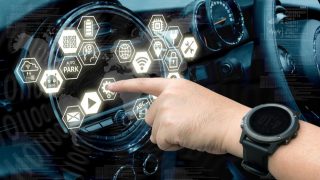




Australian motor vehicle insurers are still evaluating the implications of the local availability of Tesla’s full self-driving (FSD) features, which is about to put self-driving cars on our roads without a clear understanding of who’s responsible in the case of a crash.
Road authorities have long weighed the implications of autonomous vehicles (AVs) and automated driving systems (ADSs), but the issue gained urgency with revelations that Tesla recently enabled FSD (Supervised) features for many Australian vloggers.
Drivers must keep their hands near the wheel at all times to take over if the car’s algorithms cause it to make mistakes – as did the fully autonomous FSD ‘robotaxis’ causing chaos in San Francisco and driving on the wrong side of Texas roads.
Tesla has blamed “driver misuse” for FSD’s issues – but with Victorian road authorities confirming that the testing was “not approved” for local roads, what would happen if an Australian driver didn’t intervene in time, or at all, to avoid an accident?
To find out, Information Age contacted leading Australian automotive insurers – including RACV, Suncorp, RACQ and others – but all declined to discuss how they would handle such incidents, instead deferring to the Insurance Council of Australia (ICA).
AVs “could provide significant benefit but must be introduced with robust safety measures,” an ICA spokesperson told Information Age, adding that “robust consumer protections and clear regulatory guidelines” are crucial to navigating its “complexities.”
“If we see control of vehicles shift from drivers to automated systems,” they added, “compulsory third-party insurance would need to adapt to ensure it provides access to compensation for injuries and deaths caused in crashes when an ADS is engaged.”
Unanswered questions, evolving laws
One recent multi-year survey, of over 6,000 Australian adults, found that 47 per cent were “very concerned”, and an additional 32 per cent “concerned”, about financial or legal liability if a self-driving vehicle is involved in a collision or makes mistakes.
Some 84 per cent were concerned that they wouldn’t be able to take control of the car if an autonomous system failed – with just 3 per cent of respondents saying they were unconcerned about such a situation.
Drivers also worry about the prospect of our roads filling with unmanned AVs, with 70 per cent worried about driverless cars traversing roads to deliver themselves, or to pick up goods or passengers – as with the autonomous taxis planned for London next year.
UK regulators have addressed liability in that country’s Automated Vehicles Act (AVA), which was passed last year and will be implemented by 2027 – and will grant users of automated vehicles immunity while automated vehicle features are engaged.
That law creates three new legal concepts: the authorised self-driving entity (ASDE) responsible for how the vehicle drives, the user-in-charge (UiC) who’s in a position to operate the vehicle’s controls, and the no-user-in-charge (NUiC) operator overseeing autonomous vehicles.
UK insurers will cover civil liability through normal means and liability will shift to the vehicle’s manufacturer or operator – a lesson Tesla recently learned when it was forced to pay $375 million ($US243 million) for a crash blamed on autonomous features.
In the US, where FSD is already available for a monthly charge, major insurers have adapted their coverage for autonomous features – with Tesla also offering an insurance policy with flexible premiums based on driver Safety Scores assessed by the vehicle.
Could Tesla could be liable for every crash in which its FSD features were active? Photo: Shutterstock
Indeed, McKinsey has projected that widespread use of data about driver habits, paired with broader adoption of autonomous features that improve vehicle safety, could see insurance premiums “disrupted” at a cost of over $210 billion ($US140 billion).
“The limited introduction of AVs in some US states has shown the need for basic safeguards to enhance accountability and safety,” the ICA spokesperson said.
These include local registration of ADS companies, restricting aftermarket modifications to approved changes, and ensuring clear data-sharing obligations to assist insurance investigations.
Australia still figuring it out
The UK’s AVA will likely inform legislation in Australia, where law reform is still developing in an area that Barry Nilsson principal Henry Silvester notes “is fraught with challenges” that have kept Australia behind the global pack in terms of AV readiness.
Australia has an “urgent need for a unified national approach by 2026,” Silvester said – a decade after Australian law reform began and a National Transport Commission (NTC) discussion paper noted laws “do not contemplate an ADS ‘driving’ a motor vehicle”.
An ADS crash, it warned “may not meet [requirements] and access to compensation or benefits may be more restricted for those injured in an ADS crash.”
“Significant redesign of [motor vehicle insurance] schemes may be required to ensure that the cost of ADS crashes is borne by those who can control the risks,” the paper said – flagging manufacturers, ASDEs, comms providers and infrastructure owners.
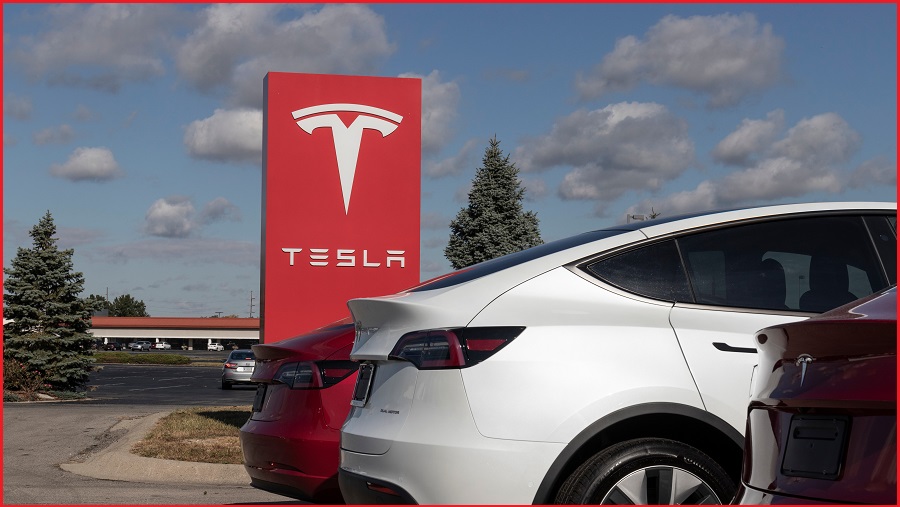
Does that mean Tesla could be liable for every crash in which its FSD features were active? Time – and legal precedent – will tell.
With such regulations still developing, current FSD users are in a legal grey area, with little clarity as to whether insurance would cover them in a collision if they were not actually controlling the car – or whether they could claim damages from its maker.
For now, “it’s unlikely that Tesla owners will see any substantial changes” to policies or premiums since self-driving features were available when insurers priced their risk, Australian Electric Vehicle Association president Dr Chris Jones told Information Age.
FSD (Supervised) “is ostensibly just a step above that,” he said, noting that “the abundance of technology (and distracting, confusing screens) is resulting in a lot of low-speed accidents, which insurers are well aware of.”
“Unless the legislation is amended to allow such vehicles to operate completely unmanned,” he added, “any FSD features will still require a human operator to take control.”