
Australians will be able to opt out of algorithmic social media feeds under proposed ‘digital duty of care’ legislation unveiled by the federal government on Tuesday.
If passed by parliament, the bill would require platforms to let users opt out of social media feeds which serve recommended content based on their demographics and interests, including posts from people and pages they do not follow.
It would also “require platforms to protect children from harmful content, including content that promotes eating disorders, misogynistic content, pornography, and content that glorifies crime”, Prime Minister Anthony Albanese told a press conference, while flanked by representatives from children’s advocacy and mental health groups.
The laws would also give Australia’s eSafety Commissioner greater powers to issue removal notices to websites and apps hosting nudify material, Albanese added.
Minister for Communications Anika Wells said, “Tech companies can still move fast, but they will no longer be allowed to break things.
“Because online harms have real-world consequences, especially for children, as the parents, advocates, and educators assembled here today have lived.”
The government did not describe its proposed regulation of algorithms as either an ‘opt out’ or ‘opt in’ model, and instead said it would force platforms to create “user empowerment tools” which provide both options.
Platforms are expected to be required to display pop-up messages under the bill, to ask users if they wish to opt in to an algorithmic feed, or to opt out and only see content from people and pages they directly follow.
The digital duty of care would also force major digital services such as online games, apps, and AI chatbots to actively shield users from potentially addictive design features.
Breaches of the law would lead to fines of up to $109.2 million – around double that of the financial penalties under Australia’s under-16s social media ban, which the government is also attempting to increase.
The government said it is seeking feedback on its draft legislation, which it plans to introduce to parliament later this year.
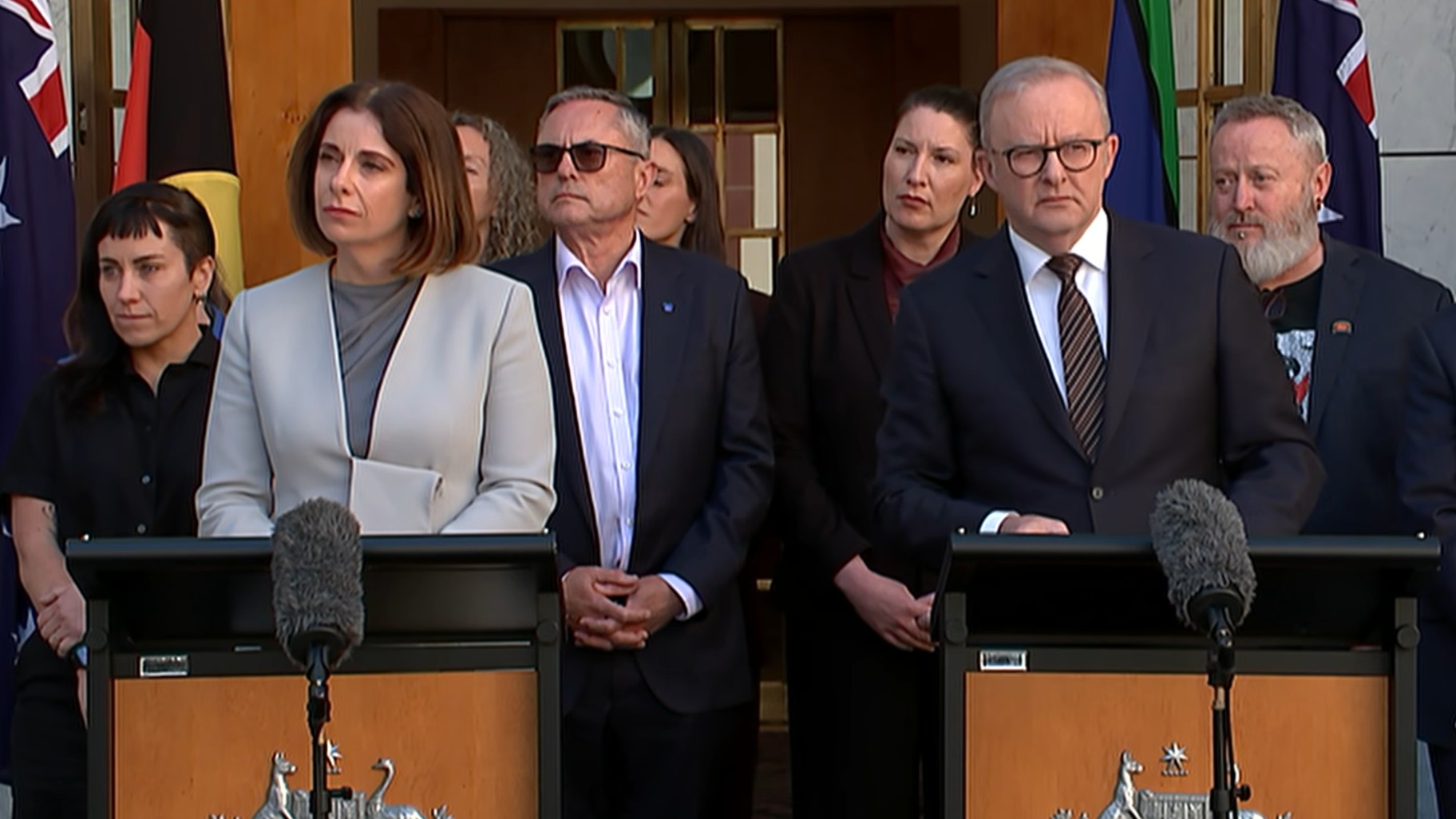
Minister for Communications Anika Wells (left) and Prime Minister Anthony Albanese (right) say Australia needs digital duty of care laws. Image: Parliament House / YouTube
New laws ‘not about censorship’, PM says
Ahead of the government unveiling its proposed legislation, opposition leader Angus Taylor said on Monday that he was “deeply skeptical” about Labor’s plans, and worried that it would be “an attempt by the government to censor social media” and reduce free speech.
Coalition spokesperson on communication and digital safety, Sarah Henderson, said Labor’s digital duty of care laws “raise serious free speech concerns”.
Albansese said the government’s draft legislation was “not about censorship” but “about giving people control themselves, over what they see”.
Lobby group Digital Industry Group Incorporated (DIGI), which represents social media giants such as Meta, TikTok, and Snapchat in Australia, was contacted for comment.
The group previously said it recognised there is “community concern” about how recommender systems work, but suggested such algorithms “don’t just do one thing”.
“They make digital services more relevant and useful for Australians' different interests and needs,” DIGI said.
“This could look like helping surface news and entertainment, connecting shoppers with small businesses or helping people find what they are searching for.”
Australian Chamber of Commerce and Industry CEO Andrew McKellar said while his organisation supports protecting people from harms associated with social media, reforms should "ensure there is no collateral damage to business”.
"Many small businesses, especially those starting out, rely on social media platforms to get established and build their customer base," he said.
Australian Computer Society (ACS), which represents technology workers, said while it welcomes the proposed digital duty of care, Australia needs to have a technology workforce which can test whether digital platforms abide by the legislation.
"Government, regulators, and industry will need ethical technology professionals with recognised technical capability to interrogate these systems, test the evidence, and make independent judgments about whether people are genuinely being protected," ACS CEO Dr Prins Ralston said.
“... The legislation should therefore be supported by clear assurance requirements, access to evidence, proportionate independent scrutiny, and investment in the professional capability needed to make the duty enforceable.”
First announced by the federal government in late 2024, the digital duty of care was later delayed until after the May 2025 federal election, while the government considered whether to introduce significant financial penalties for breaches of the laws.
The government began public consultation on the proposed measures in November 2025, but did not explicitly mention the possibility of opting out of social media algorithms at the time.
A ‘global reckoning’ for Big Tech
“For too long, tech companies have been running real-time, unregulated product testing on Australians, and their platforms and tools have infiltrated our daily lives in ways that we could never have imagined,” Minister Wells said.
“Some good, but some with terrible consequences – and there is a global reckoning coming for Big Tech.”
Social media users in the European Union already have the legal right to opt out of personalised recommendation algorithms on social media, under its Digital Services Act.
Much like in the EU, Australians would also gain the right to have their personal information deleted from social media apps and other online platforms under draft privacy legislation released by the government last week.
Federal Labor’s push to further regulate social media platforms comes as several other countries also seek to better protect users from harmful content and addictive algorithmic feeds.
Since Australia’s under-16s social media ban began in December 2025, similar bans have been proposed by other governments, including the likes of New Zealand, the United Kingdom, France, Norway, and Spain.
But social media platforms are “not doing enough to comply with Australia’s laws”, with some children still able to breach the under-16s age ban, Minister Wells said in parliament on Monday.
Meta – which owns Facebook, Instagram, and Threads – last month agreed to pay up to $US18 billion ($25 billion) to settle a court case brought by several US states, which alleged the company designed its platforms to exploit and addict young users.
ACS is the publisher of Information Age.