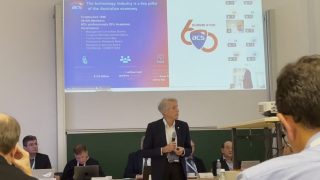




Growing up as a self-described “awkward kid” in Logan, Queensland, computers were “the one thing” that made Beau Tydd happy.
“You could play games, you could pull computers apart and put them together, and you could see that you could do something — so it gave me a purpose,” ACS's new president tells Information Age.
While Tydd says he “didn’t really know what to do” when he left high school, he ended up studying IT and was the first person in his extended family to attend university.
“I picked tech, and no one knew why, but it's been an amazing career for me,” he says.
Despite admitting he underperformed at university, Tydd soon landed a job as an IT trainer, which he says was “probably one of the hardest jobs" he has ever had.
“You had to learn a lot of content very quickly, and you had to engage with people — and tech people generally aren't very good at engaging and passing over ideas,” he says.
“So for me, that was probably the best job I could have had at that stage, because it gave me confidence to engage and it gave me confidence to continue learning.”
Finding community at ACS
Tydd went on to work in IT for a hotel, a project management company, and in various tech roles across the Pacific Islands for close to 15 years.
It was overseas that he learned “tech can change lives”, he says, which spurred him to bring technology’s many benefits back to Australia for “people who may not have had opportunities” to enter the tech workforce.
However, Tydd reflects that he “didn’t have a community” when he returned to Australia just over 10 years ago.
He says it wasn’t until he reached out to ACS (Australian Computer Society) — the nation's largest professional association in tech, and publisher of Information Age — that he found a new home in its Gold Coast chapter.
“That was my first real taste of what the community can bring,” he says.
“I was lucky enough and fortunate enough to meet some Fellows in ACS, and they guided me through the history of ACS, and they sort of opened my idea about why ACS is important to people.”
Tydd says he now tries to bring that passion to younger generations, even if he accepts “people will come and go through ACS in their career”.
“But if ACS is a safe place that people can come back and be supported — and that's whether they're going through career changes, or whether they're going through skills changes, or life changes — it's a place where everyone belongs and a place where it's safe to come and share your views," he says.
Making ACS ‘more about the members’
Now aged 47, with four children and based on the Gold Coast, Tydd was elected in November 2025 as the new president of ACS.
He began his two-year term in January 2026, as successor to former president Helen McHugh.
“A lot of listening” has taken place in the weeks since, Tydd says, including at management committee meetings, branch events, and a Congress gathering in Melbourne.
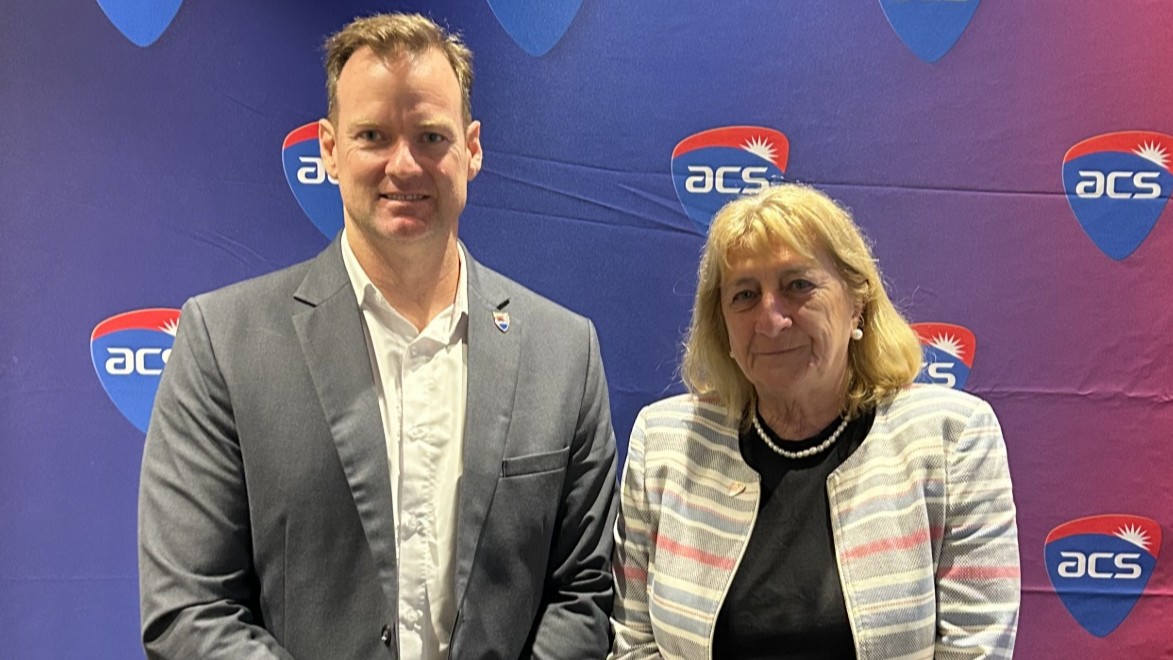
New ACS President Beau Tydd [L] with former president Helen McHugh [R]. Image: Supplied
The new president says he wants to take focus away from ACS’s president and CEO roles, to make the organisation “more about the members … to ensure that members are at the heart of everything that we do”.
That shift in focus, he says, will involve encouraging more debate within ACS membership while still recognising and learning from older members, and keeping generations young and old updated on how technology is affecting their lives.
He admits, though, that ACS is often perceived as being run by older academics, and says he wants to change that view.
“I hope that in the two years that I'm president, that we can change that, and we can show that ACS is a community of professionals that work together to ensure that the industry has the the ethics that it should have, and also has a pipeline of talent coming through,” he says.
“… ACS brings that community together, to have that chat, to have that recognition, to bring like-minded people together.
“So when time gets tough you can lean on each other, but also, when times are good you can recognise and celebrate.”
As ACS celebrates 60 years in 2026, Tydd says the organisation needs to prepare for the future by promoting both traditional and new pathways into tech, including for younger generations whom he worries are increasingly deciding not to study IT or dropping out of courses.
“There is no traditional pathway for a tech worker anymore, and I think that's the exciting part of what the future holds,” he says.
“You can start in the Help Desk and move into cyber, move into AI, move into whatever is next — you can then transition back.
“It's probably the most exciting time to be in tech, because the industry is changing but you can adapt to learn different skills to give you a different career pathway.”
In order for ACS to be around for another 60 years, according to Tydd, the society needs to use experienced industry workers as mentors for budding tech pioneers.
“There's young people coming through who we need to recognise, and to make sure that they have a platform," he says.