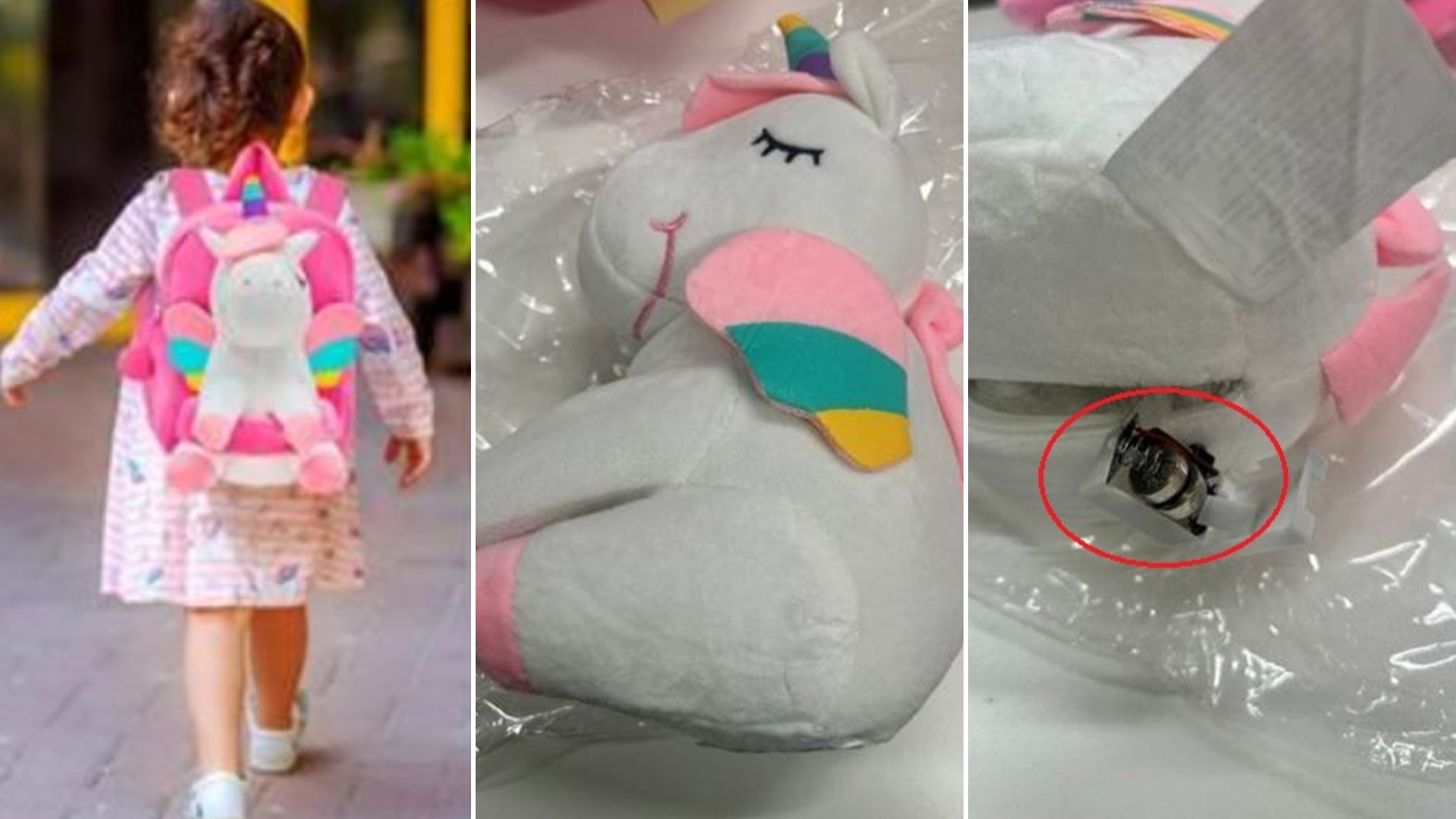

Australian children were endangered by Amazon’s sale of unicorn toddlers’ backpacks in 2022, the ACCC has alleged as it drags the e-commerce giant to Federal Court in the first case where an online retailer has been sued for non-compliance with mandatory product safety standards.
Amazon sold 41 of the backpacks and had 267 more in stock between 22 June and 1 November 2022, the ACCC said in noting the backpacks included a light-up plush toy that contained button batteries – but did not have legally required warning labels on the products or packaging.
Such labels are legally required for products including the flat, round single cell batteries – typically up to 32mm in diameter and 1mm to 11mm thick – that are widely used in hearing aids, toys, kitchen scales and other low-powered devices.
They also power trackers like Apple AirTags, which have attracted the ACCC’s concern because children, particularly those under 5, are attracted to the “tiny, shiny, and deadly” batteries – which have caused several deaths and are responsible for an estimated 20 emergency department admissions per week.
“Button batteries pose a serious hazard for young children,” ACCC deputy chair Catriona Lowe said, noting that given the mass popularity of Amazon and other ecommerce sites “it is important that consumers have confidence and trust in digital markets.”
Small packaging, big problems
The lawsuit against Amazon is only the latest step in the ACCC’s work to get product manufacturers to improve their stewardship of products containing button batteries.
In 2023, for example, the agency revealed that it and state consumer protection authorities had audited over 400 businesses and found “concerning levels of non-compliance” with the mandatory labelling standards introduced a year earlier.
Fully 34 per cent of products with the batteries, and 28 per cent of packs of replacement batteries, lacked the mandatory warning information – which includes a clear warning label featuring an alert word, safety alert symbol, warnings about potential burns if swallowed, and more.
That year, the Reject Shop and Dusk paid nearly $240,000 after ACCC fined them over novelty Halloween products using the batteries – with Lowe calling it “essential that businesses comply with Australia’s world-first button battery standards to prevent further injuries and deaths.”
“We encourage online suppliers to follow the recommendations in the standards,” she added, “and include warning information and emergency advice about button battery products in online listings so consumers have the same safety information they would have if purchasing from a physical store.”
Despite her warnings, last November consumer group Choice conducted its own testing – buying 24 items from Amazon, Shein, eBay, AliExpress and Kogan – and found 17 failed to meet the mandatory button battery standards.
Retailers and e-tailers out of warnings
The ACCC has previously sued physical companies for breaches of the button battery safety standards, with the Federal Court last December finding retailer City Beach liable for selling over 54,000 such batteries in 60 types of products and fining the company $14 million for the breach.
Amazon – which does have a formal button battery policy for its suppliers – was tight-lipped about the lawsuit, saying in a statement that it had signed up to the ACCC’s Australian Product Safety Pledge and that it is working with its suppliers to ensure that its products are safe and compliant.
As Australia’s largest e-commerce vendor, however, the implications of the Amazon lawsuit will be felt across an e-commerce industry where the popularity of parallel imports – for example, the products that Temu and Shein dropship straight from China – has soared.
Roy Morgan recently found that Temu, for one, attracted 5 million Australian shoppers last year – up 17 per cent on the previous year – while Shein has 2.9 million Australian customers, up 28 per cent year on year.
Amazon, by contrast, grew 6 per cent last year to reach 9 million Australian customers.
That sees ACCC aiming high as it seeks to make an example of the market colossus, arguing that Australian Consumer Law (ACL) requires e-commerce vendors to bear the ultimate responsibility for ensuring the safety of any products that are within its possession or control.
ACCC is seeking declarations, penalties, costs and other orders as it ramps up enforcement of button battery standards that are among its highest priorities for the next year.
“These mandatory warnings,” Lowe said, “are there to help keep children safe and businesses must get them right.”