
E-commerce giant Amazon wants to bring its Prime Air drone delivery service to Australia, with a new job posting clarifying its plans as the company rapidly expands its service in the US and overseas amidst growing community opposition.
A new job ad confirms Amazon is recruiting a head of regulatory approvals to shepherd the service – which uses a fleet of automated drones to deliver packages to nearby customers within 30 minutes – through Australian regulatory approval.
Amazon is currently “evaluat[ing] Australia and other countries” for expansion of Amazon Prime Air, according to the ad, which describes the role as involving drone system certification, airspace authorisations and flight permissions, operating certificates and more.
The successful candidate, who will be based in either Canberra or Sydney, will work with Prime Air’s global regulatory, engineering, legal, and public policy teams and will own the company’s relationship with airspace regulator the Civil Aviation Safety Authority (CASA).
Operating the drone fleet will require technical approvals related to the design and certification of Prime Air’s bespoke 37kg MK30 drone, including beyond visual line of sight (BVLOS) authorisation that will allow the drones to range up to 12km from the warehouse.
The successful candidate will also engage with Airservices Australia to map out and secure permissions for drone flight corridors, and work with state, territory and local governments as well as engaging with communities through which the service’s drones will fly.
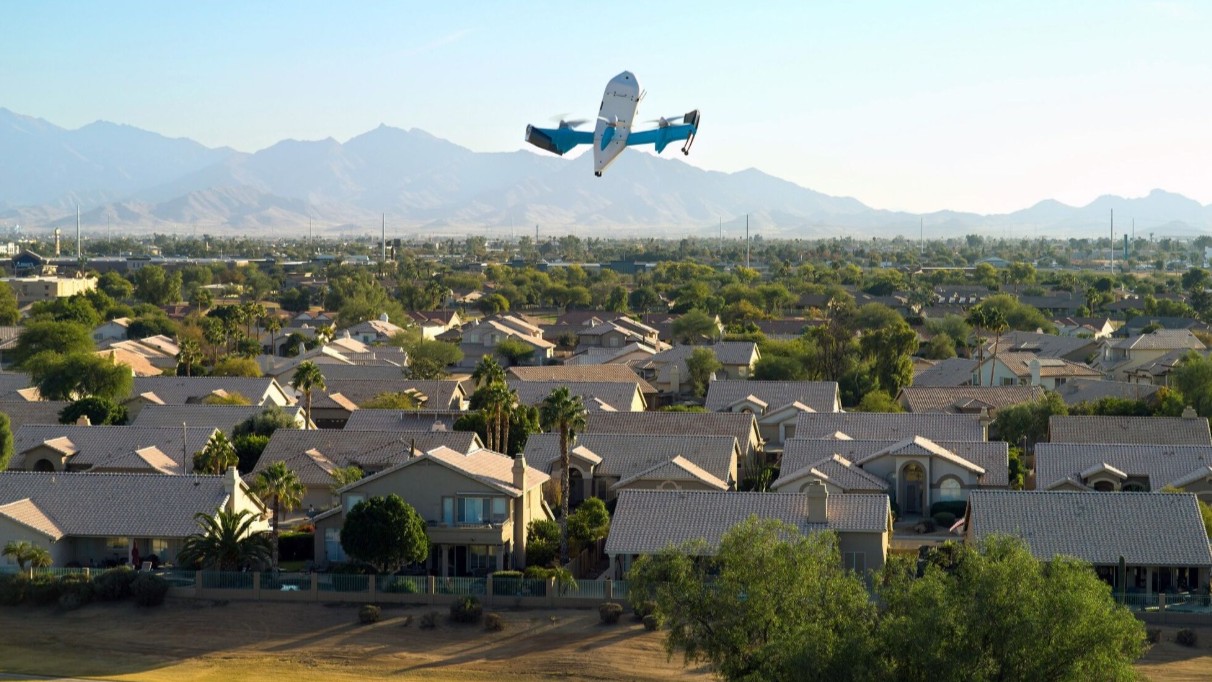
Prime Air leans heavily on data-driven route mapping and planning, with terabytes of raw geospatial data stored in Amazon servers to help the company dispatch the drones – which can carry packages up to 2.27kg (5lb) and drop them in your yard from 4m off the ground.
The service is currently available in 12 US metropolitan areas across Texas, Florida, and several Midwest states, with four more cities coming online soon and Amazon announcing in August that it will expand the service to nearly 500 cities and towns by the end of this year.
Welcome service or unwelcome guest?
Amazon promotes Prime Air as a convenience play, promising to deliver meal ingredients, medications, and other essentials within 30 minutes – significantly faster than even its recently launched same-day and overnight delivery options.
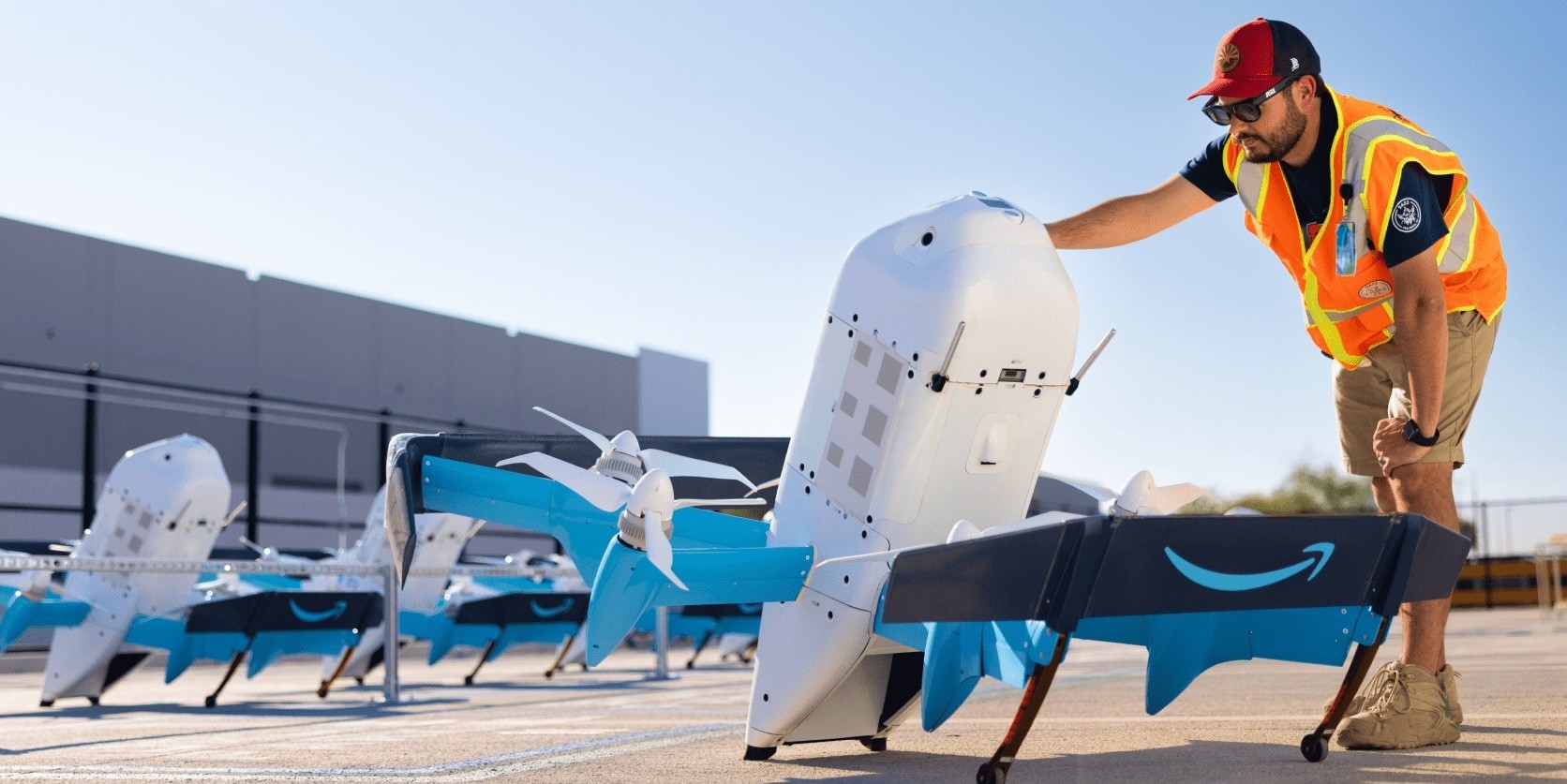
The Amazon drones have fuelled noise complaints and caused a bushfire in the US. Photo: Amazon
A recent McKinsey & Company survey of over 3,000 consumers found 76 per cent of respondents willing to switch to commercial drone deliveries, with respondents in India, China, Brazil and Saudi Arabia among the most enthusiastic adopters.
Yet the reality of drone delivery has hit US communities hard, with a 2022 experimental drone crash causing a bushfire and residents of cities like Richardson, Texas complaining about incessant and irritating noise for 13 hours per day.
Amazon claims its custom propellers cut noise in half – and said in a statement that “sound heard on the ground is minimal and short-lived, comparable to a passing car, and fewer than 1% of the customer service inquiries we receive about Prime Air are about noise.”
But residents aren’t buying it, with community advocates in Texas and cities like Westborough, Massachusetts, 50km west of Boston – challenging Amazon at community awareness nights and forming protest groups like Mass Blue Skies and Quiet Skies TX.
Once word spread that Amazon was planning to launch Prime Air in rural Lockeford, California – 55km south of the state capital of Sacramento – residents threatened to shoot down the drones in protest.
Given Australians’ increasing pushback against AI data centres and renewable energy infrastructure, and anger over aircraft noise that has sustained Sydney Airport curfews for over 30 years, similar protests in Australia aren’t out of the question.
Recent news reports suggest that Australian residents are already fed up with increasingly common conventional drones, with 9 News noting that CASA received 1,283 complaints about annoying drone operations in the year to August 2026.
“We do encourage people not to put the law into their own hands,” CASA RPAS team leader Heath McDonald warned.
Can Prime Air Australia get off the ground?
For all the controversy, Amazon has over 8.8 million Australian customers and many are likely to value its fast deliveries, which can be chosen from the Amazon app and, in the US, costs around $7 (US$4.99).
Despite early Deloitte predictions Australian food deliveries would reach 46 to 65 million in 2040, drone delivery has a chequered past here – with Google-owned Wing Aviation pulling out in January after gaining CASA BVLOS approval to deliver goods from Coles and DoorDash.
Also in January, drone delivery startup Swoop Aero went into liquidation after raising over $26 million in venture capital funding, leaving the consumer market empty despite formal government drone delivery guidelines.
Time will tell whether Amazon can make the model work in Australia this time around, with its rapid US and global expansion – led by Australian-born Prime Air vice president and general manager David Carbon – also set to push into the UK, Italy and elsewhere.
That expansion is also fuelling a range of jobs including engineering roles at Amazon’s Seattle headquarters and package and drone handling staff at drone-enabled warehouses.