
Australia Post has unveiled a range of blockchain-based digital stamps that, unlike NFTs, cannot be traded.
It comes several years after a handful of global postal services released similar digital tokens, and after the value of most non-fungible tokens (NFTs) has plummeted to almost zero.
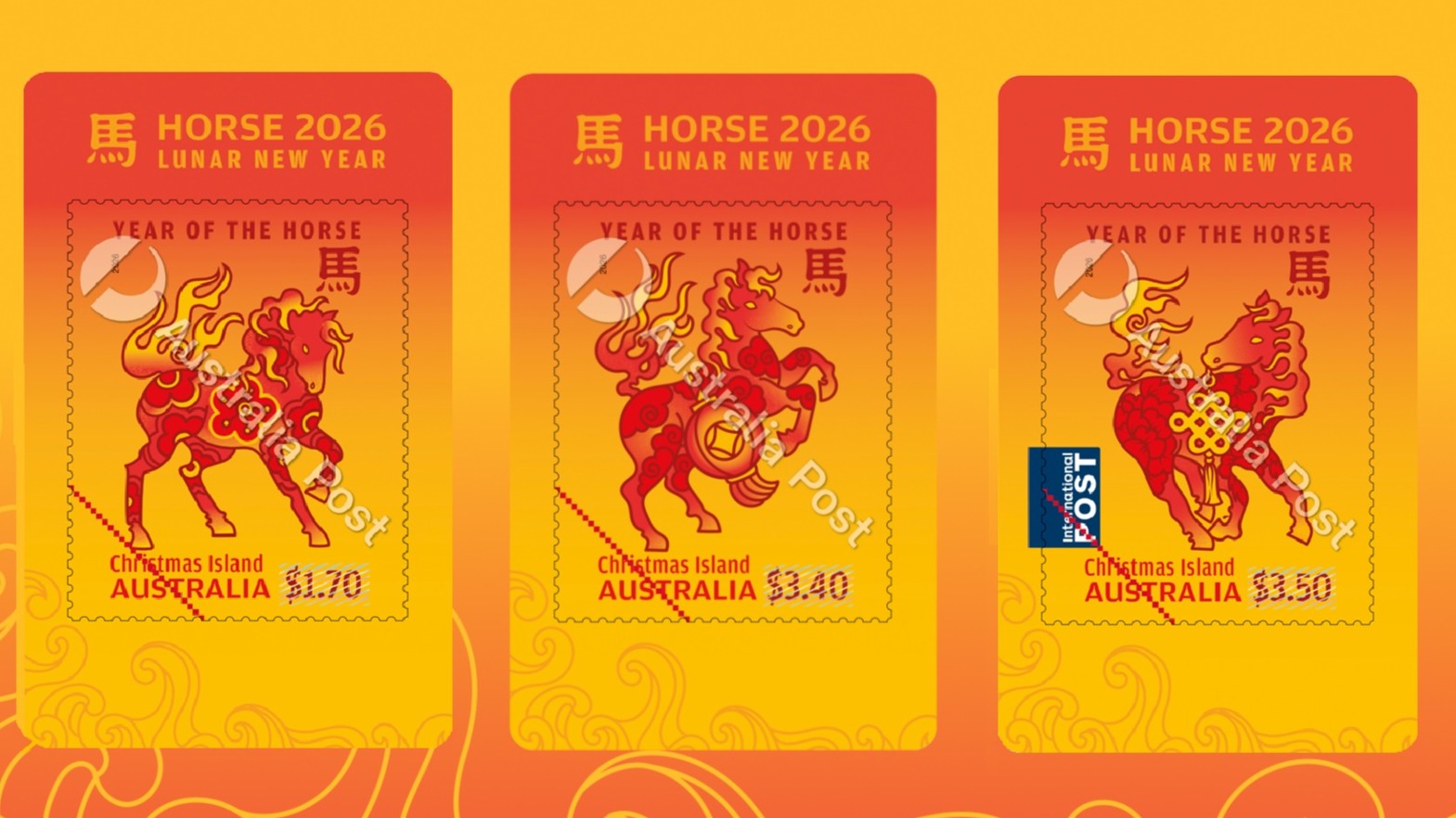
To coincide with the Lunar New Year and the Year of the Horse, Australia Post has announced a number of ‘DigiStamps’, to be sold for $15 each, featuring three unique horse designs.
The purchase comes with a usable physical stamp and a secure digital counterpart based on the blockchain that the buyer can activate using a QR code on the back of the stamp.
The DigiStamps effectively function like NFTs except that they cannot be traded by the user and are instead authenticated cryptographically without the ability to be transferred between digital wallets.
This means they cannot be sold as a digital asset by the buyer in the future.
‘A defining moment’
Australia Post General Manager of Retail Product Kayla Le Cornu said the release “marks a defining moment in the history of collecting”.
“By blending a centuries-old tradition with digital innovation, ‘DigiStamps’ are a tangible example of how Australia Post continues to modernise as a 21st-century, digitally enabled postal operator,” Le Cornu said in a statement.
“This evolution builds on our long legacy while reimagining how collecting can look today, opening the door for a new generation to discover the joy of collecting, while giving long-standing stamp enthusiasts new ways to engage.”
With each purchase comes a digital token that is “displayed online as a unique collectable, designed to create a seamless collecting experience without needing to download an app, create an account or set up a digital wallet”.
The $15 DigiStamps have been designed by Sydney artist Chrissy Lau and can be bought in participating post offices and online.
To deliver the product, Australia Post partnered with Austria-based tech firm StampFinity to create “soulbound tokens” (SBT), which were invented in 2022 by the co-founder of cryptocurrency Ethereum.
SBTs serve to give credentials or a crypto-based product to an individual permanently, without the ability to sell or trade it.
The checkered past of NFTs
Several postal services around the world have worked with the same company to release NFTs in recent years, led by Austria Post in 2019, which was the first to release a tradeable digital token stamp.
Postal authorities in Switzerland and the United Arab Emirates have also put out digital token offerings.
NFTs rose to prominence in 2021 and exploded into the mainstream as a much-hyped digital asset.
The images came with digital authentication tokens on blockchain ledgers to prove their ownership and were on-sold to others.
The global hysteria reached a fever point when major brands and some of the highest-profile people in the world jumped on the bandwagon – including Donald Trump, Jack Dorsey, Paris Hilton, the AFL, and eBay.
In September 2021, NFT creators sold $256 million of new NFTs, and investors traded $1.1 billion-worth of the digital assets.
But according to more recent analysis, three years later, up to 95 per cent of all NFTs are effectively worthless and have lost nearly all of their value.
The Australian Open’s venture into NFTs saw the organisation sell nearly 7,000 tennis ball artworks linked to small plots on tennis courts at Melbourne Park.
They were sold for about $278 when they were sold in January 2022, as The Guardian reported.
But in the years since, the value of these tennis ball NFTs has dropped significantly, with sales in early January of between $15 and $89.
The 2025 iteration of the Australian Open did not include any mention of NFTs.