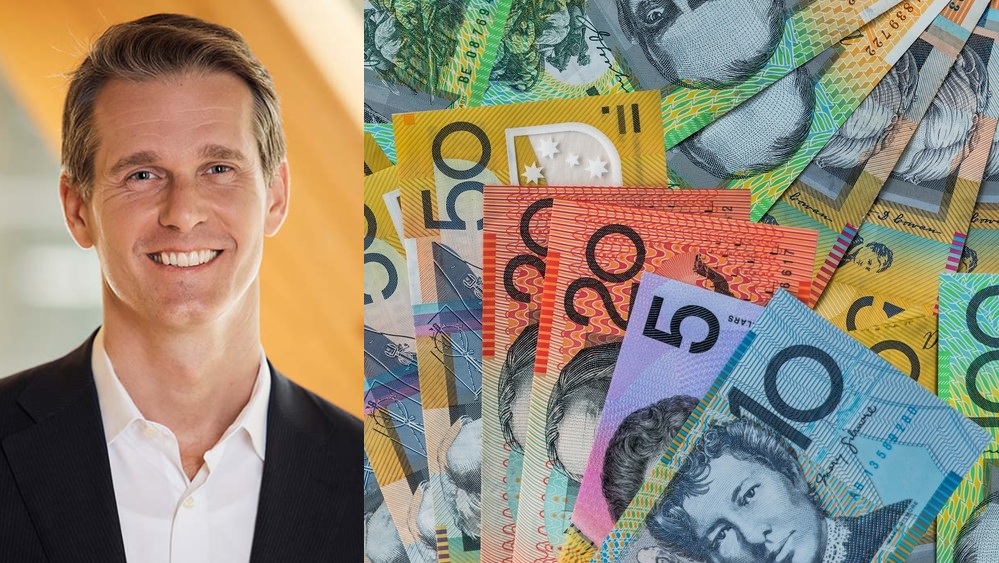

Large cryptocurrency platforms poured nearly half a million dollars into Australia’s two major political parties in the lead-up to last year’s federal election ahead of major regulatory reforms promised by both sides of the aisle.
The donations include nearly $50,000 by a large crypto exchange to the Labor MP who would later be appointed the Assistant Minister responsible for the digital economy.
Data released by the Australian Electoral Commission (AEC) this week revealed that large cryptocurrency firms including Coinbase and Swyftx made significant donations to Labor and the Liberals in 2024-25, ahead of the May 2025 federal election and Labor’s landslide victory.
Cryptocurrency reforms and the potential for stronger regulations was an election issue, with both major parties promising to act on the issue.
Since its election victory, the Labor party has moved ahead with its planned reforms that will require crypto platforms to obtain an Australian Financial Services Licence, similar to other financial institutions.
Information Age does not allege any wrongdoing.
Big spending
AEC data reveals that four cryptocurrency platforms – Coinbase, Swyftx, Immutable and WeMoney – chipped in a total of nearly $500,000 to the two parties, with more money flowing to the Liberals than Labor.
US-based cryptocurrency exchange Coinbase donated the most out of these companies, contributing a total of $230,000.
Of these donations, $130,000 went towards Liberal NSW, and $100,000 to Labor NSW.
Australian crypto platform Swyftx chipped in a total of $201,700 across a number of political donations in 2024-25.
The company contributed $120,000 to the Liberals and about $32,000 to Labor, along with a near-$50,000 donation to Labor MP Andrew Charlton.
The donation to Charlton was made on 24 April 2025, according to the AEC data, less than two weeks before the election.
Charlton was later appointed the Assistant Minister for Science, Technology and the Digital Economy.
In a statement after this appointment, Swyftx said it was “unequivocally good news for crypto in Australia” and that Charlton has a “deep understanding of blockchain, coupled with a genuine belief in its potential to support the Australian economy”.
Immutable, a Sydney-based tech company developing blockchain-based games, donated $32,000 to the Liberals and $22,000 to Labor in the 2024-25 financial year.
WeMoney, a financial wellness app that allows its users to integrate cryptocurrency with traditional banking accounts, also chipped in just over $26,000 to the major parties, with more than 60 per cent of this going towards the WA Liberals.
A pivotal election
The 2025 federal election was a pivotal one for cryptocurrency platforms, with both major parties promising reforms and further regulations for the space.
Following the election, the Labor government unveiled major reforms that will fully regulate cryptocurrency platforms by 2027.
Legislation introduced to Parliament late last year outlined “clear, enforceable rules” for companies holding digital assists on behalf of users that will ensure they “meet the same standards of transparency, integrity and consumer protection that apply across the financial system”.
The scheme will introduce two new types of financial products: asset platforms and tokenised custody platforms.
Both will be required to hold an Australian Financial Services Licence and be subject to core obligations, including: prohibitions on misleading and deceptive conduct and unfair conduct terms; requirements to provide clear information about how assets are held and what users’ rights are; and strong governance and risk controls.
Cryptocurrency platforms holding less than $5,000 per customer and facilitating less than $10 million in transactions per year will be exempt from this new regulatory scheme.
If passed by Parliament, the regulations will be enforced by 2027.
The major crypto exchanges have supported the broad intent of these reforms in submissions to government but have pushed for more detail and clarity.
In a submission to Treasury, Coinbase supported the thrust of the bill but raised concerns that a “deference to ASIC’s standard-setting powers” could “inadvertently restrict global business models”.
Coinbase also pushed for clearer policy settings for companies operating between financial and non-financial products and other “refinements” to “strengthen the legislative framework and provide greater certainty for both consumers and well-regulated businesses”.
Swyftx’s submission to Treasury said that it “strongly endorses the government’s view that digital asset regulations should be both competition and technology-neutral, with a focus on supporting innovation and consumer protections”.
It also pushed for greater clarity around objectives, powers and transitional arrangements.
Big tech donors
A number of other major tech players also emerged as significant political donors.
Atlassian co-founders Mike Cannon-Brookes and Scott Farquhar contributed a combined $2.8 million to political parties and organisations.
All of Cannon-Brookes’ $1.3 million in donations went towards Climate 200, the organisation providing funding to climate-focused independents.
Farquhar contributed $1.5 million to Climate 200, along with $22,870 to the Queensland Greens.
Cliff Obrecht, the co-founder of Australian tech giant Canva, was also a major donor to Climate 200, contributing $500,000.
He also donated $250,000 to Labor’s Victorian branch.
Food delivery giant DoorDash was also a major political donor in 2024-25, forking over nearly $900,000 with the majority going towards the Liberals.
The US-based company gave $90,000 to Labor and the rest to the Liberals.
Before the federal election, the Labor government introduced major gig economy reforms, including setting minimum standards and protections against unfair deactivations.
Tech giant Airbnb contributed $58,000 to the major parties, with $33,000 given to Labor and $25,000 to the Liberals.