

Australians looking for a new role in the new year are being warned to be on high alert, with cybercriminals pretending to be well-known tech firms to scam job seekers.
Cybersecurity firm Bitdefender has identified a series of scam emails impersonating companies like Amazon offering what seems too good to be true: an easy job, fast interview process and flexible work.
But if you get an email like this, it isn’t a new year miracle – it’s an attempt to hoover up your personal information and harvest your credentials.
“Although not all recruitment scam emails we’ve detected look the same, the styles and approaches share the same goal,” the Bitdefender report said.
“Some messages read like formal HR emails, while others rely on slick visuals and one-click actions. Both aim to rush job seekers into engaging before they have time to verify anything.”
Too good to be true
With many Australians entering the new year with the aim of finding a new job, these scam hiring emails have been on the rise, the report found.
Using trusted brand names, the emails typically include a subject line that is good news, like: “your interview is confirmed”.
It then says that the individual’s resume has been reviewed and approved and sometimes references a jobs platform such as Indeed.
The scam emails will then ask the victim to immediately approve the interview or job and to move to a separate messaging app such as WhatsApp, Telegram or Microsoft Teams, where it is easier to obtain their private information.
Australians looking for a new job this year should watch out for red flags, including being approached for a role they didn’t apply for, the offer of instant approval with no interviews, a sense of urgency in the email and the sender using a generic address such as Gmail rather than an official company one.
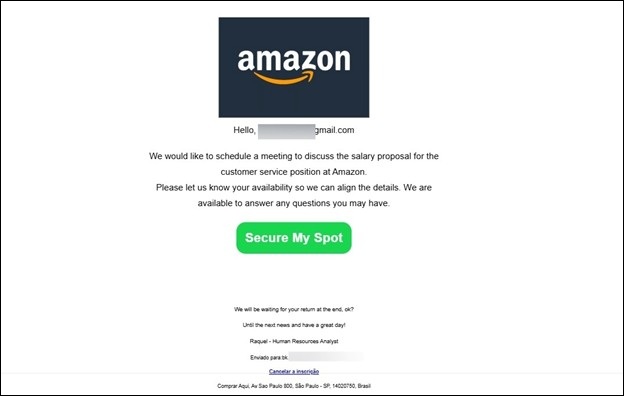
Image: Bitdefender / Supplied
Copying real companies
According to the Bitdefender research, there are two types of these scam emails.
Direct-contact recruitment scams involve long, text-heavy emails that claim an individual has made it to the next stage of the process and instructs them to download a messaging app or contact a purported HR manager.
The tone of these emails is “procedural and authoritative”, with an aim of copying a real corporate hiring process.
Once the victim has been lured off email, scammers will then attempt to harvest their personal information, request identity documents or ask for fees supposedly for onboarding or training.
The other form these emails take are one-click confirmation scams, which are more visually polished and contain few details.
These emails include real company logos and “reassuring” copy along with prominent buttons encouraging the receiver to confirm an interview to secure their spot.
This approach aims to get the receiver to quickly click on a malicious link without properly thinking through what they have been sent.
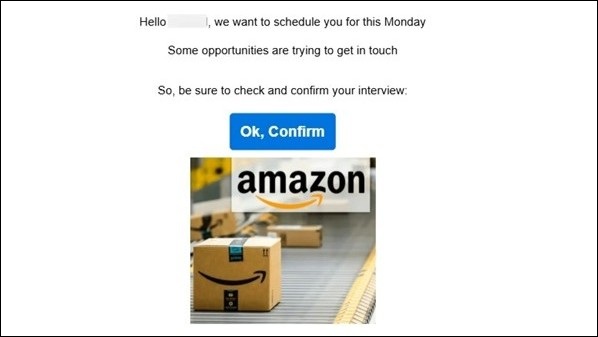
Image: Bitdefender / Supplied
The report found that both email forms use similar psychological triggers, including trust in well-known brands, urgency and a fear of missing out on a big job opportunity.
The consequences of falling victim to one of these jobs scams can be major, with information obtained including CVs and IDs, emails and passwords, and lost money.
The Australian competition watchdog recently concluded a six-month campaign against recruitment scams like these, which saw it remove 2,000 fake job ads and 30,000 social media accounts.
From 2022 to 2023, the losses Australians incurred through these scams jumped by more than 150 per cent, with Scamwatch receiving more than 3,000 reports of jobs scams with associated losses of $13.7 million.
Scammers have previously been found to target university students with these scams, exploiting anxiety about careers and money.
Separate research has found that 2026 is likely to be a good year for job hunters, with more jobs on offer and the ability to reject certain jobs if the pay is too low or flexible work is not on offer.
However, LinkedIn believes Australians are entering “an era of ‘job hugging’”in 2026, saying workers are more likely to stay put in jobs because changing jobs is deemed too hard and risky.