



Gippsland could become Australia’s next major data centre hub as a new regional fibre network targets the connectivity gap that has held back investment outside Melbourne.
Rural Fibre Co, founded and funded by Aussie Broadband founder Phillip Britt, is building a 2,823km fibre network across Gippsland that will eventually reach more than 40,000 properties in 209 local towns, while giving data centre operators access to high-capacity links between the region, Melbourne and the global internet.
The project was originally created to give regional Victorians an alternative to fixed wireless NBN broadband.
But as opposition to data centres grows in metropolitan areas, Britt believes Gippsland has the ingredients to attract a new wave of investment.
The region has abundant industrial land, power infrastructure and water – but until now has lacked the high-capacity fibre connections needed to support major data centre developments.
“All the data centre capacity at the moment sits in Melbourne,” Britt told Information Age, “and it abuts areas that perhaps don’t really want these sorts of assets near them – but the Latrobe Valley has an abundance of industrial zoned land, plenty of power and infrastructure, and plenty of water.”
“It’s a sensible place to put this kind of infrastructure, but the missing element was fibre connectivity – so part of this project is to try to bring connectivity in from other parts of the world, so we can try to turn Gippsland into a real technology hub.”
From regional broadband to data centres
Rural Fibre Co has already connected hundreds of homes to its first fibre ring in Hazelwood North.
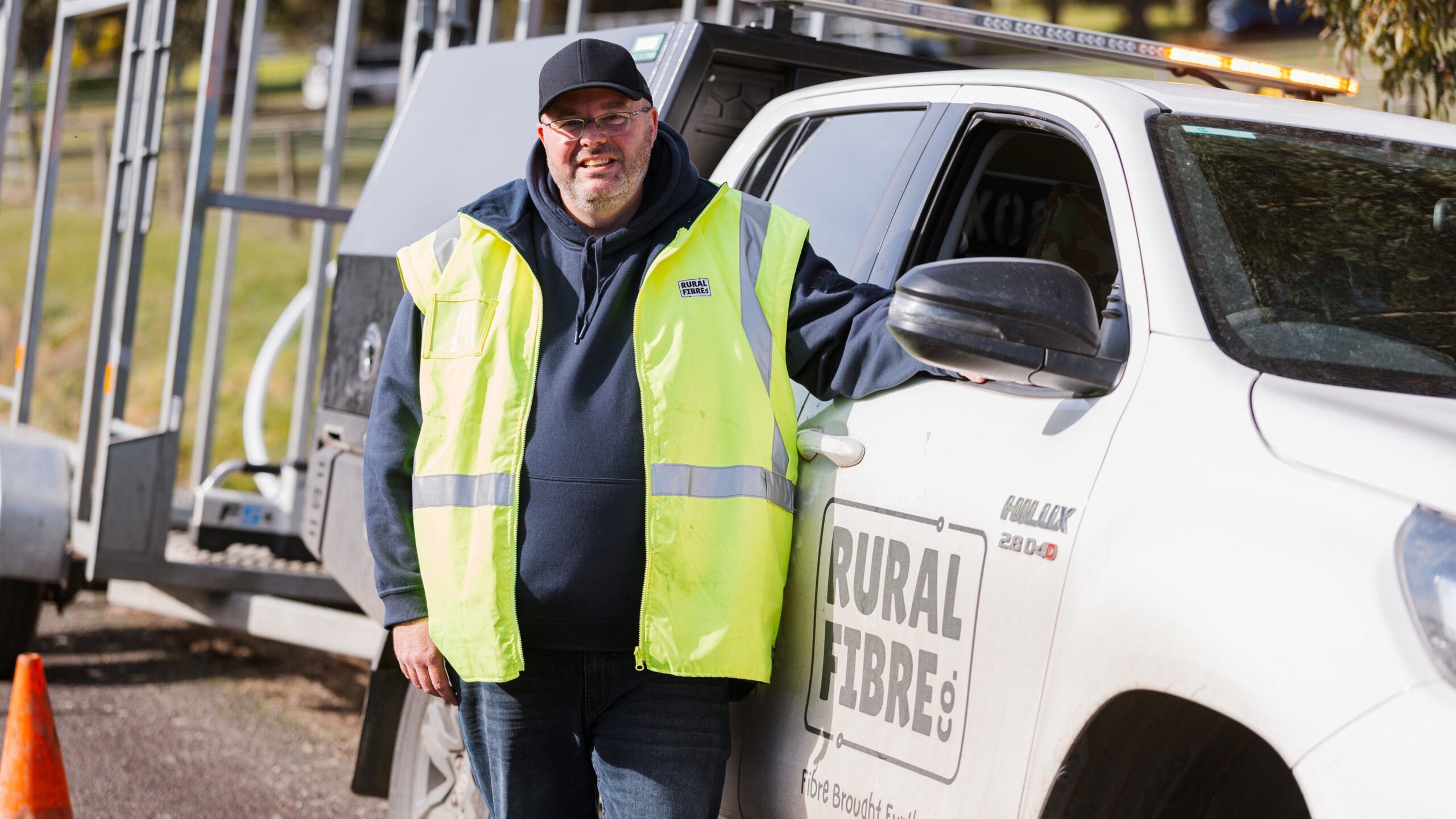
It is now building the 728km 90 Mile Loop, a fibre backbone that will reach 18,820 properties across the region. A 43-person construction crew is installing fibre-optic cable in roadside ducts as the company pushes ahead with the build.
The loop is expected to be completed by June 2027, with further expansion planned through 2027 and 2028. The completed network will stretch 2,823km and include redundant links to Melbourne and key infrastructure such as Marinus Link.
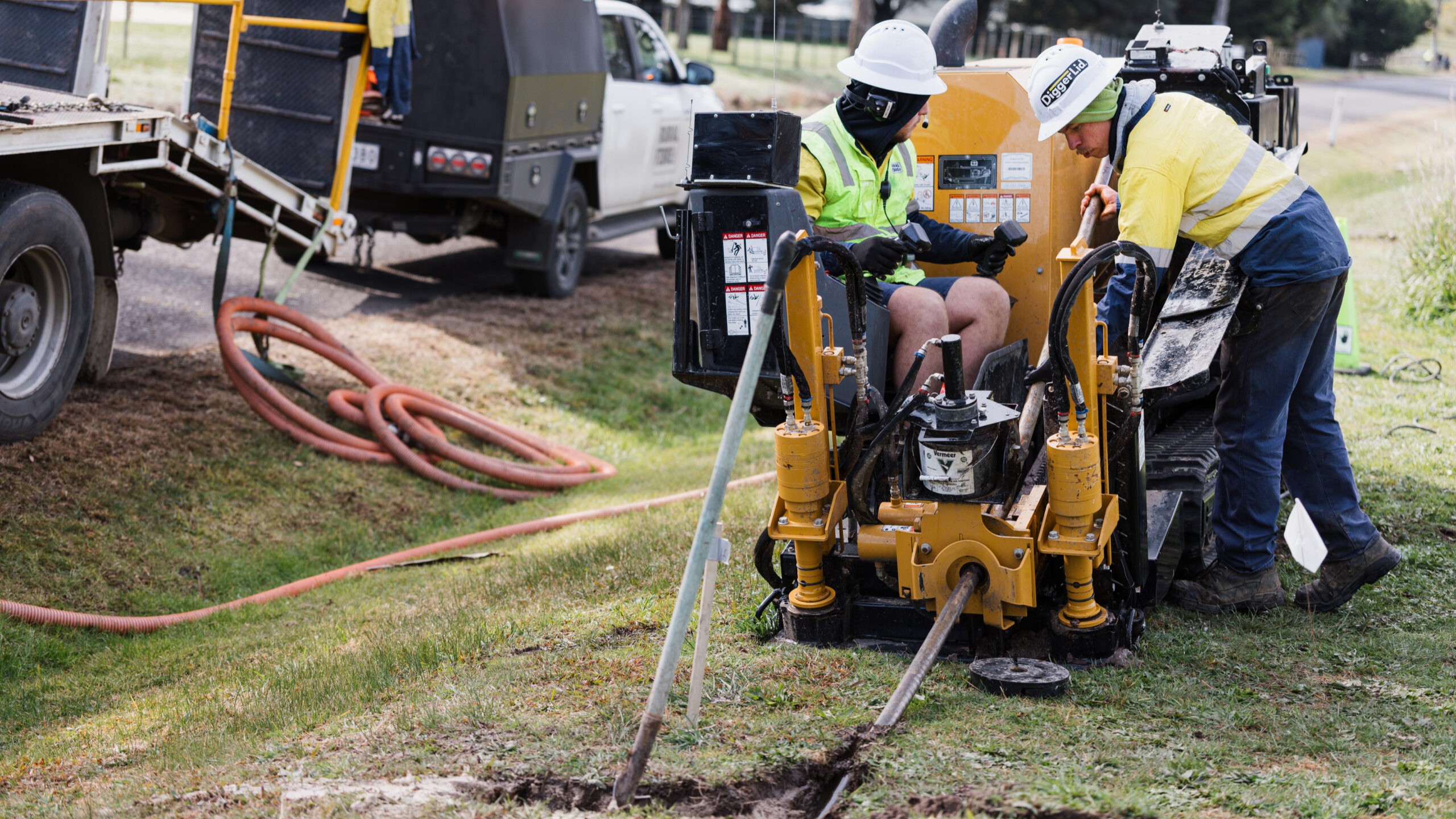
Construction has begin on the new fibre link. Photo: Supplied
For businesses, the network will offer 10Gbps, 100Gbps and 400Gbps backbone services, providing enough capacity to connect entire data centres to each other and the internet.
Britt believes that level of connectivity will put the region on a more equal footing with metropolitan areas when companies decide where to build their next facilities.
If you build it, they will come
Britt has already committed more than $20 million of his own money to get Rural Fibre Co moving and estimates another $40 million will be required to complete the project.
He also believes data centre operators will ultimately play a role in funding the expansion.
The Morwell area is already home to extensive power infrastructure, with current and former coal-fired power stations including Hazelwood, Loy Yang and Yallourn forming part of the region’s economic transition.
Britt sees that infrastructure, combined with available industrial land and skilled workers, as an opportunity to establish an AI data centre precinct.
“With coal-fired power being phased out, the core electricity infrastructure is still going to be there,” he said, “as are the skilled high voltage infrastructure workers that aren’t as plentiful in metro environments – and that’s where renewables are connecting as well.”
“It’s not like you’re going to turn a coal-fired power station site into farming land; it’s not going to be used for much, so there are lots of spots around the Valley that will work for building data centres here.”
The approach is already being pursued by New Zealand firm Datagrid, while Britt’s discussions with overseas data centre operators have also gained traction.
Singapore asset manager Keppel Ltd has already committed to building a $10 billion data centre facility in the Latrobe Valley that will tap Rural Fibre Co’s backbone fibre.
Domestic data centre operators, however, have been harder to convince.
“Most of the interest seems to be coming from offshore,” Britt said, because “they have a whole different investment philosophy in that they’re far more risk-on than big Australian firms.”
Local data centre operators, particularly publicly listed companies, “want returns on capital in months, not years,” he said.
“But when you’re building this sort of infrastructure, you’re talking years-long investments.”
Can Gippsland solve the data centre impasse?
The prospect of data centre investment comes at a critical time for Gippsland, which has spent years grappling with the economic impact of coal-fired power station closures.
At the same time, the rapid expansion of AI is driving a surge in demand for data centre capacity across Australia.
But that boom is increasingly running into opposition from residents concerned about the facilities’ enormous power and water requirements, as well as their impact on local communities.
Projects in Western Sydney, WA and Melbourne have faced opposition, while some major technology companies have paused or reconsidered planned Australian data centre investments.
The federal government has also been under pressure to address concerns that data centres could put additional strain on the electricity grid, increase emissions and push up power prices.
Prime Minister Anthony Albanese has floated, and subsequently softened, policies including an expectation that data centres bring their own power.
For Britt, those pressures could make regional locations such as Gippsland increasingly attractive.
The region has land where operators can build solar and battery infrastructure, extensive existing electricity infrastructure and access to industrial water.
And, critically, Rural Fibre Co is building the fibre connectivity that has been missing.
What started as a “bread and butter” project to bring fibre broadband to regional households could therefore become the foundation for a much larger industrial transformation.
The full network could take up to six years to complete, but strong investment could accelerate the build to “probably three years”, he said.
“If we get enough residential business onboard, it covers our operator costs – and then we can just continue to build forever,” Britt said.