
Australian women founders are leading the work from home revolution.
A report released in January found nearly 80 per cent of female founders choose to work from home, with many reporting launching a startup in part to access flexible work.
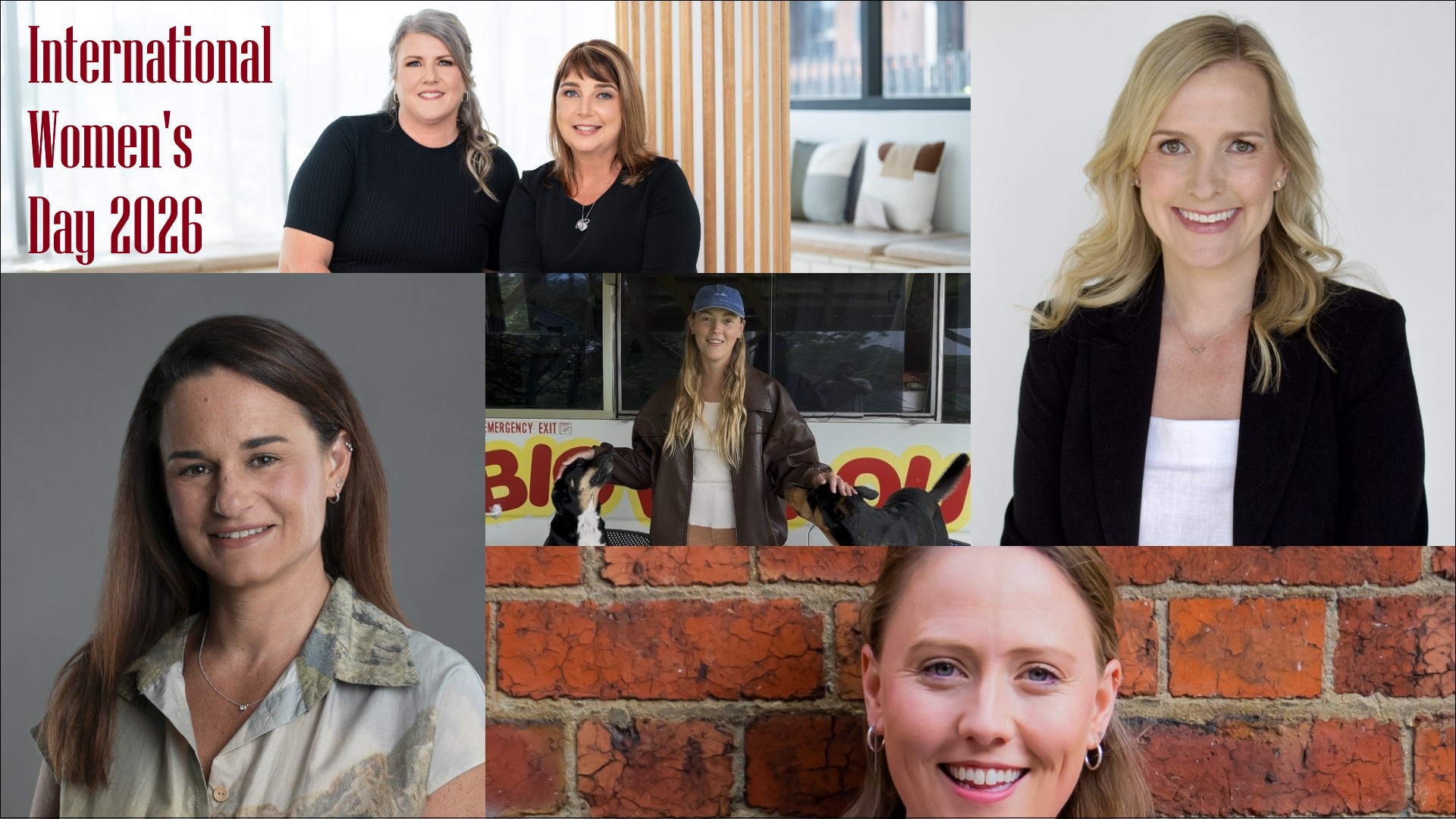
Ahead of International Women’s Day on 8 March, Information Age speaks to some of these women to find out more about the work they do, the tech they use to run their businesses from home, and advice they have for other female founders.
From dating apps to dog toys, here are just some of the incredible ways Aussie women are breaking new ground from their own backyards.
Nicole Walker, founder and CEO of Lightning Bolt Consulting
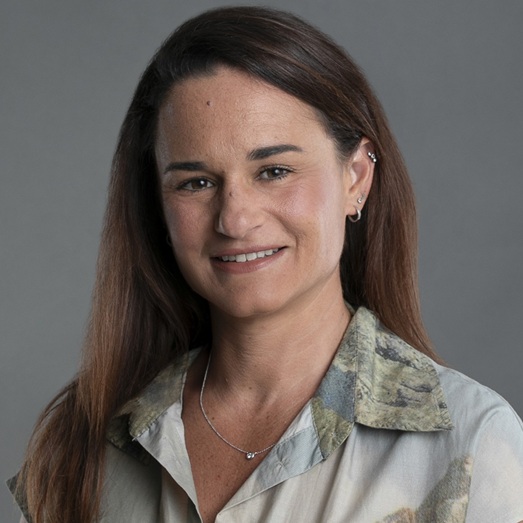
Nicole Walker brings almost two decades of experience to Lightning Bolt Consulting. Photo: Supplied
After 14 years in business events and leadership roles, Nicole Walker saw a real need for practical, experience-driven consultancy in the sector.
This led her to found Lightning Bolt Consulting, a strategic advisory firm for the events and associations sector focused on helping businesses navigate change and build sustainable, future-ready organisations.
“We specialise in governance, operational excellence, strategy and stakeholder engagement,” explained Walker.
As an ambitious person, Walker said returning to full-time work after having her first child was a challenge.
Now, she finds running her business from home energising and empowering.
“I really needed flexibility around my family, because half the time I am a single parent.”
She said this freedom allows her to deliver exceptional client service while balancing family life, personal commitments and professional growth.
“I dropped my kids off at school this morning, I went to the gym because physical health is really important to me, and then I’ll probably work until 10 o’clock at night after the kids go to sleep, but that’s fine, because it means that I can then show up for my children, I can look after my own physical health and wellbeing, and I can still get the job done.”
AI fuelling efficiency
Walker said her approach to technologies focuses on cost, efficiency and return on investment.
“Microsoft 365 is my foundation system, and the use of Copilot has increased my efficiency even further,” she shared.
Using Copilot almost as an executive assistant, Walker has found taking the time to train it has helped her get more from the technology.
“Like when you onboard a new team member, you need to spend the time to train them, teach them how you work, what your expectations are, and that’s exactly what AI is,” she said.
She also leverages LinkedIn, as she’s found it’s the best place to reach potential clients.
“LinkedIn is certainly the key platform for Lightning Bolt Consulting to really target those associations, both in Australia and overseas.”
Advice for female founders
Striking out on your own can be overwhelming and daunting, said Walker, but building a positive, supportive network of peers and mentors can make all the difference.
“By surrounding yourself with positive people, you then feed off their energy to grow as well.”
And, especially for women and parents, she added, the feeling of always sacrificing something can be a real challenge.
“I’ve always taken the approach that whilst I work really hard, and there’s sometimes I’m traveling quite a bit and I don’t get to see my kids, I’m showing them what hard work and dedication looks like.”
“So just back yourself and have the confidence.”
Sara Gibson, founder of Kelpy Bone
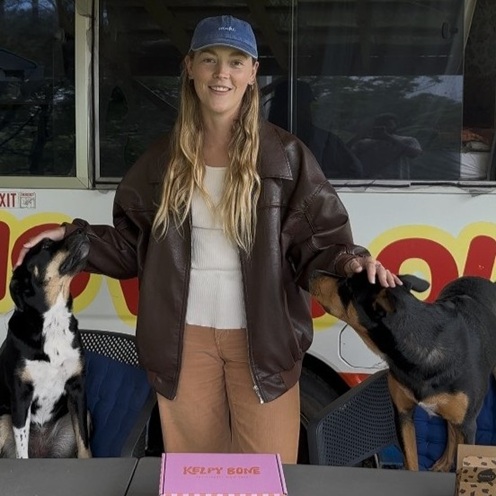
Sara Gibson with her dogs Cisco and Lenny. Photo: Supplied
“My full-time job is in the climate space, so I have been hearing all about the effects of plastics on the environment and human health for a few years,” shared Sara Gibson.
“One day, I watched my dog Lenny chewing on his plastic chew toy, and I thought to myself, ‘Why does this exist with all the knowledge we have on plastic?’”
It was this spark that led Gibson to create Kelpy Bone, an all-natural dog toy made from seaweed.
Now, it’s her mission to replace harmful plastic toys with seaweed-based alternatives that are better for both dogs and the environment.
Tech making things possible for rural entrepreneurs
Living on a bus on a dairy farm in rural Australia, Gibson said the ability to work from home has been essential.
“Living rurally, you don’t always get the same work opportunities, so prioritising remote work has totally changed my life and has allowed me to live in the country that I love and still chase the career I want.”
She also finds the ability to work from home helps her to be far more productive with her time, making it easier to run her business, stay on top of life admin and keep up an active social life on weekends.
“As an entrepreneur, there really never is enough time in the day, so being able to work at the same time is a game-changer.”
Gibson leverages a wide range of tech to run her business, including Starlink, Shopify and Xero, as well as Notion for project planning, Miro for product development, Slack for communication and Google Workspace for figure tracking and documents.
When it comes to social media, Gibson focuses her efforts on Instagram, Facebook and TikTok.
“I use it to help share the reality behind building a brand, the ethos of Kelpy Bone, educating people on the harmful effects of plastics, eco-friendly dog mum tips and just generally connecting with the amazing dog community,” she explained.
“I have found building on social media with founder-first content has really helped me to convert people to our newsletter.”
Advice for female founders
Gibson’s biggest piece of advice for other founders is to screenshot and save nice reviews and comments to look back on during hard times.
“I would also add, action creates momentum and confidence, and is the antidote to imposter syndrome,” she said.
“The more you enter those rooms you were scared to or do the thing you were nervous about, the more you’re giving yourself evidence that you absolutely can do it.
“We need more female founders in the world,” she added.
“When one of us wins, we all win.”
Laura Simmons, founder of Theratrak
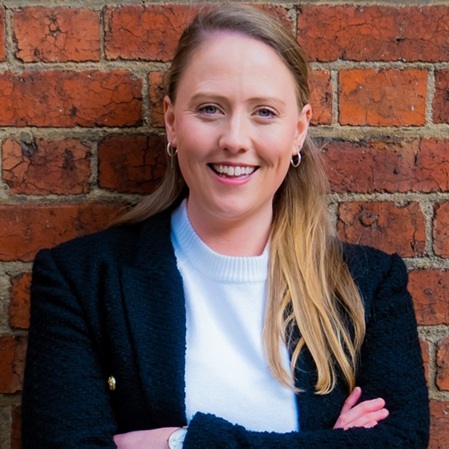
Laura Simmons founded Theratrak to make home programs easier for therapy users. Photo: Supplied
A pediatric occupational therapist (OT), Laura Simmons has always been a problem solver.
So, when she noticed many of her regular patients weren’t seeing progress, she recognised something was wrong.
“The biggest fall down when seeing a therapist is, we do 45 minutes or we do an hour session, and then we don’t see you for a week, or we don’t see you for two weeks, or we don’t see you for a month,” she explained.
After realising many of her patients were finding it difficult to adhere to home programs, Simmons set out to solve this problem herself, founding Theratrak.
“Theratrak is a digital health platform for allied health practitioners, so OTs, speech therapists, psychologists, physiotherapists that work in the disability sector.”
The platform allows therapists to take what they’ve done in their therapy session and send it home to parents and carers, helping them streamline home therapy while reducing admin.
Cloud for the crowd
For Simmons, remote working was a natural choice, saving her both on the costs of an office space and time on her commute.
“I love working from home, I love the fact that my dog is sitting on the floor next to me right now,” she said.
Working with a fully remote team also means she has access to a wider variety of talent not limited to her geographical area.
When it comes to technology, Simmons and her team rely a lot on cloud technologies to collaborate from wherever they are.
“We use Slack, Asana, Google Drive,” she shared.
She also prefers to use Zoom for video conferencing because it allows her to share her phone screen, which comes in handy for demonstrating the Theratrak platform on sales calls.
And, for reaching her target audience, Simmons primarily uses Instagram, Facebook and LinkedIn, but has also found blogs have helped them reach new clients.
“We’re now getting referrals of people Googling and then ChatGPT recommending Theratrak, and I think that’s because of the SEO that we’ve done and the blogs that we’ve written,” she explained.
Advice for female founders
For Simmons, being a founder is a great experience, where there’s always something to do and a problem to solve.
“It’s very rewarding, it’s very fun, it’s very interesting, and no two days are ever the same, which I personally really love.”
But, she added, it’s important you’re prepared to be in it for the long haul.
“It’ll take longer than you think it’s going to take to get to where you want to get to, but then time will go really fast.”
Karen Keynes and Karen Taylor, founders of Kx2 Management Group and the SALT directory
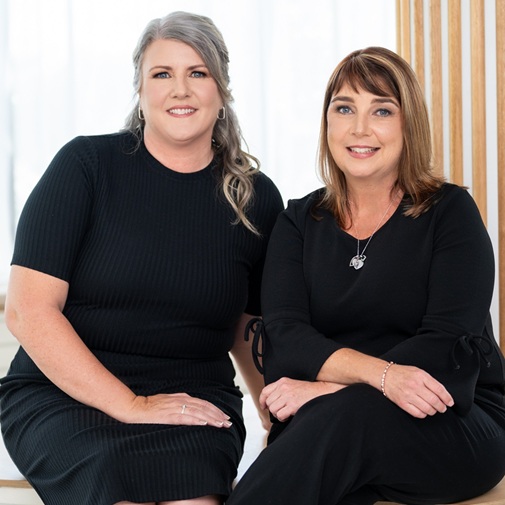
Karen Taylor (left) and Karen Keynes (right) run two successful businesses from their homes. Photo: Supplied
With backgrounds in finance and business management, Karen Keynes and Karen Taylor have pooled their knowledge, expertise and skills to launch two very different businesses together.
“One is Kx2 Management Group, so Karen times two, and that’s a digital transformation consultancy,” said Keynes.
Through this, they operate as a managed service provider for digital, offer project and change management services, and run a Mastermind Series to help C-suite leaders upskill for the digital revolution.
Their second business is the SALT Directory, a passion piece born from their shared experiences of helping their parents through their aging transition.
“It stands for senior and aged care living transitions,” said Keynes.
“We bring together businesses across Australia who help support seniors and their families, whether they are downsizing, moving into retirement living, moving into aged care or beyond.”
Virtually in the office
While running two businesses keeps them busy, Taylor said working from home allows them to be more productive.
“I think it’s more efficient actually, because you don’t have travel time, you don’t have to go to and from the office, you’re just straight in.”
Keynes added it also gives them more flexibility, which makes it easier to fit in everything from exercise to school events.
As digital transformation specialists, Keynes and Taylor leverage a range of technologies in their businesses, including Teams and a project management tool, as well as Facebook and LinkedIn.
They’ve also deployed a bespoke version of an app called Looking Glass, which functions as a virtual office space for their team.
Taylor explained each team member is connected to the app via an iPad on their desk, and while you can see them on the screen, the sound is inactive and the vision is blurred, ensuring privacy is maintained.
“If I need to speak to any of our staff, or I need to speak to Karen, I just press on her screen, and we are immediately in a private conversation,” Taylor shared.
“It would be as if I got up from my desk, walked into her office and sat in her chair.”
Advice for female founders
Keynes recommended investing time in networking, especially for founders working from home.
“It’s not something that’s as easy as if you were working in more of a business environment,” she added.
“We’ve had to very purposefully lean into going to networking events regularly.”
Taylor agreed, adding, “It’s hard being a founder of a company, building your brand, building your exposure.”
“The connections you have take away your isolation of working from home and bring it into the business world, so connection is really key.”
Rachel Harker, founder and CEO of Tribal

Rachel Harker is using psychology to take on the youth loneliness epidemic. Photo: Supplied
With a background in clinical psychology and youth mental health, Rachel Harker said she was concerned about the rising rates of loneliness and isolation among 18- to 25-year-olds.
“They’re the most digitally connected generation, but lonelier than any generation before them,” she said.
This led Harker to found Tribal, an evidence-based, psychology-backed platform to help people connect with others who share their core values.
“We launched as one app, but we’ve now split into two separate apps,” Harker explained.
“One is purely relationships and one is purely friendship and community, but it’s all around using technology in that much more positive way to bring people together.”
Users of Tribal complete a questionnaire to identify their values, interests and personality, which is then used to match them with others based on compatibility.
“And photos are blurred for 72 hours, so we’re really trying to kind of eliminate or remove that superficial snap judgment.”
Taking back time through tech
For Harker, running her business remotely has both pros and cons.
“You can do your washing or do stuff that you might not otherwise get to do during the day, which means when you do have free time or downtime later, you can actually use that properly.”
“But I also think it can be isolating as well.”
Harker said AI and platforms like Slack and Motion have allowed her to streamline her workload, freeing up valuable time.
“I definitely use ChatGPT as my little EA,” she shared.
“If I could find a way to find out how many hours that has saved me, it would be probably thousands.”
When it comes to advertising, Harker is active on TikTok and Instagram and has been fortunate enough to do some PR work as well.
“Our brand message is that it’s evidence-informed and psychology-backed, so we’re trying to be a trusted voice in those forums as well, rather than just adding to the noise of it all.
Advice for female founders
For founders who work from home, it’s all about finding the right balance, said Harker.
“Definitely use working from home and that flexibility, whether you have kids or you just like it, if that’s important for you, but make sure you have that social connection as well.”
“My whole business is about social connection, so I’m particularly passionate about it.”
And it’s all about having a ‘yes’ attitude, she added.
“I said yes to every meeting, every opportunity, just because you never know where it’s going to take you.
“Sometimes, what you might think is insignificant or the smallest thing can actually be the biggest.”