
Chipmaker Nvidia says its new PC “superchip” called RTX Spark will bring on-device AI agents to consumers running Microsoft’s Windows operating system this year, in what’s seen as a major challenge to the likes of Apple, Intel, and AMD.
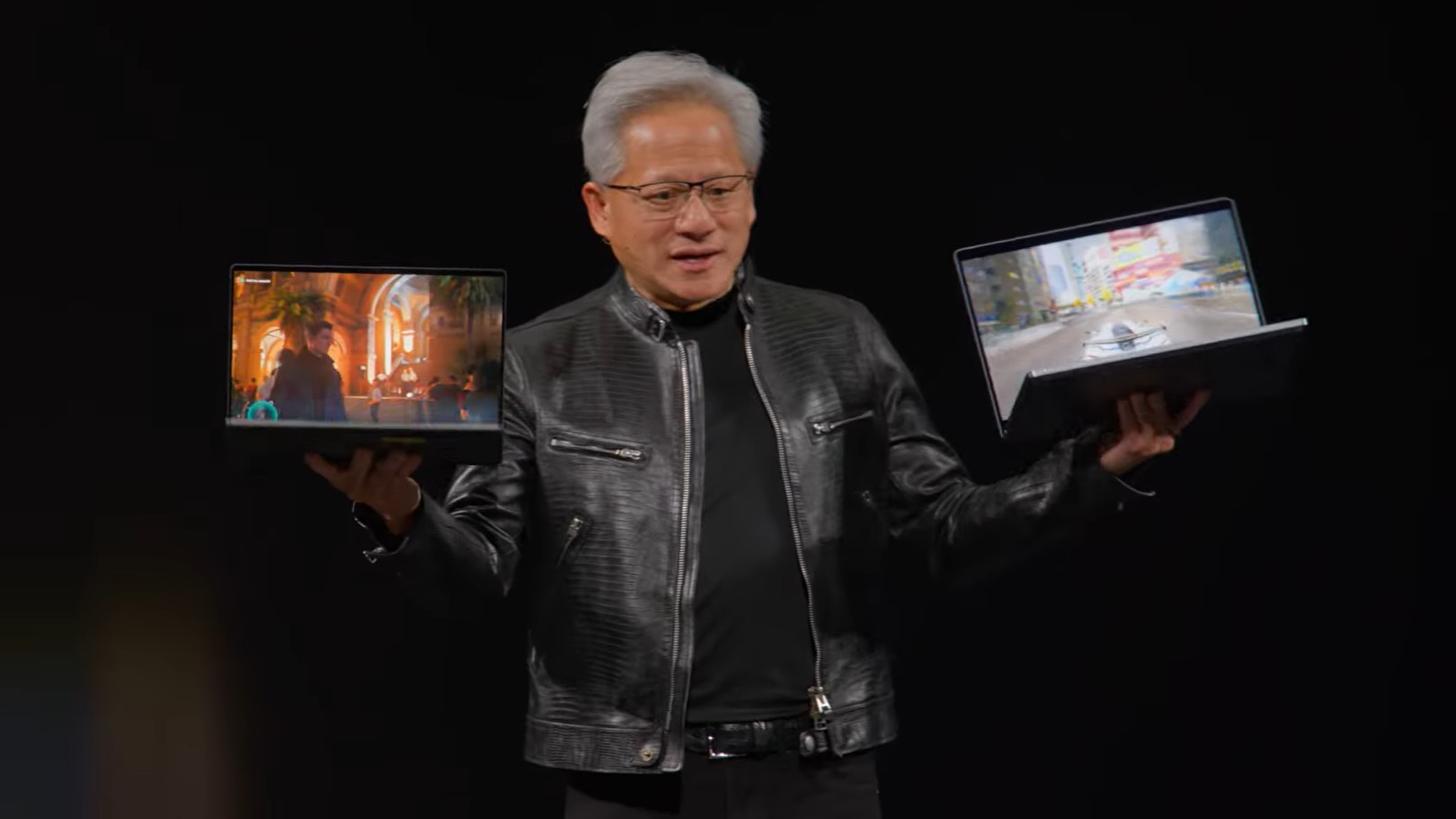
Nvidia CEO Jensen Huang unveiled the RTX Spark chip at the Computex AI conference in Taiwan on Monday.
"Microsoft and Nvidia are going to reinvent the PC" using Nvidia’s chip technology and a Windows platform for agents, Huang told the crowd.
The RTX Spark chip includes an Nvidia Blackwell RTX graphics processing unit (GPU) with 1 petaflop of AI performance, according to the company.
It also contains a 20-core central processing unit (CPU), 128 gigabytes of unified memory, and a total of 70 billion transistors.
“This is the most amazing chip the world has ever built,” Huang said.
RTX Spark is designed to run graphically intense video games and complex scientific calculations, as well as local AI agents to reduce reliance on cloud-based AI services.
The chip is expected to begin appearing from September in laptops and some desktops from PC manufacturers including ASUS, Dell, HP, Lenovo, Microsoft Surface, and MSI, followed by Acer and GIGABYTE.
“This is the first completely reengineered, reinvented line of PCs that has happened in 40 years,” Huang said.
While pricing is yet to be announced, RTX Spark’s high-end technical specifications and ongoing RAM price hikes largely driven by AI demand mean PCs with the new chip are almost guaranteed to be expensive.
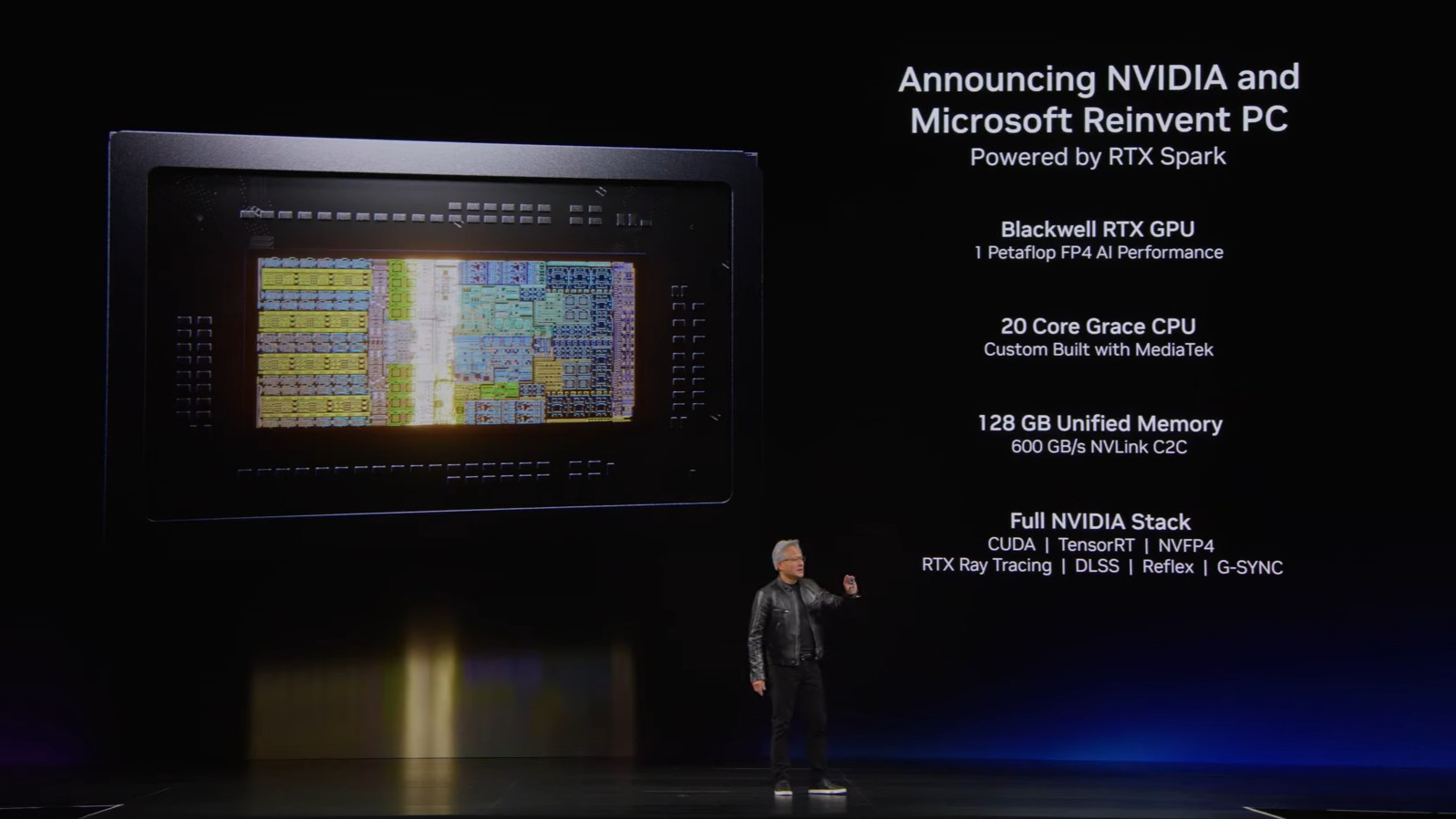
RTX Spark combines a GPU, CPU, and 128GB of unified memory. Image: Nvidia / YouTube
The ‘completely different’ PC of the future
While AI agents can already run locally on some Windows devices, they typically require some technical know-how to install and operate safely, such as through the popular open-source agent platform OpenClaw.
Nvidia’s vision of the future would see AI agents – including the likes of OpenClaw, Anthropic’s Claude, and Nous Research’s Hermes Agent – allowed to complete tasks for users by controlling PCs autonomously.
Traditional mouse, trackpad, and keyboard inputs could later become less important, with conversational agents enabling a “completely different” PC over the next decade, Huang suggested.
“I could totally imagine that someday there’s actually an AI supercomputer in your house, and it’s running all of your agents, it’s running all of your assistants, and they’re doing all kinds of things for you, all the time,” he said.
“... These, in time, become a lot more like [Star Wars droid] R2-D2 to you, it becomes a lot more [Star Wars droid] C-3PO to you, than it feels like a PC to you.
“There is no question this reinvention of the computer is as big of a deal as the reinvention of the phone into what we now know as the smartphone.”
Huang said Nvidia and Microsoft had worked on the RTX Spark project over the past three years, and would bring agents directly to the Windows taskbar user interface.
Microsoft CEO Satya Nadella said, “Our goal is to deliver unmetered intelligence to every home and every desk with Windows.
“RTX Spark marks a real breakthrough towards that vision.”
Few Australians are using AI agents
Around one in 10 Australians are running AI agents on a dedicated device, according to a recent survey of more than 2,000 people, released on Tuesday by local technology analyst firm Telsyte.
“Among those who chose a computer for this purpose, more than 40 per cent opted for Apple silicon, a share considerably above Mac's overall market share in Australian households,” the firm said.
Less than a third of Australians aged over 16 would be comfortable with AI managing more of their everyday lives, Telsyte’s Australian Artificial Intelligence Study found.
Most respondents were concerned about the possible privacy and security implications of giving AI greater control and more access to their personal data.
Senior Telsyte analyst Alvin Lee told Information Age that trust, security, and privacy remained “the primary barriers to full AI autonomy”, but local AI agents may alleviate some of those concerns.
“More powerful on-device processing could give consumers the control they need,” he said.
Fundamental features such as battery life and performance remained the “dominant purchasing considerations” for Australians, Telsyte said.
“Only one in three Australians say their next smartphone or computer must include advanced AI features, as the market is currently dominated by cloud-based AI services,” Lee added.
Around 40 per cent of respondents said they were interested in hypothetical devices from the likes of major AI chatbot companies such as OpenAI, Anthropic, and xAI – which are yet to release their own consumer hardware products.