




AI experts have questioned the validity of OpenAI president Greg Brockman’s claim that the era of artificial general intelligence (AGI) has begun with the American company’s latest state-of-the-art model, GPT‑6 Astra.
AGI – usually defined as an AI system that is equally as intelligent as humans – has been a theoretical and much-debated concept for years, and a stated goal of several generative AI companies, including OpenAI.
Brockman reportedly told major media outlets during a briefing about Astra last week, “I think it’s not unreasonable to feel that we are now in the AGI era.”
“If we fast forward a couple years, and we look back and say ‘when was it really that AGI was created?’ I think it’s going to be about this time, and I think it might be about this model,” he said.
Brockman reportedly added that Astra’s ability to control a user’s computer to accomplish tasks was particularly important, because it “can zip through spreadsheets, fill out forms, and navigate across web pages often at superhuman speed”.
Jensen Huang, CEO of chipmaker Nvidia – a major partner of OpenAI – added his thoughts on Monday, writing on social media that “AGI has arrived” with Astra’s release.
Chief scientist of the University of New South Wales AI Institute, Toby Walsh, told Information Age he is skeptical of Brockman’s claim that Astra has ushered in “the AGI era”.
“I’d be amazed if it really has matched all human cognitive capabilities,” he said.
“Indeed, I’d eat my hat if we didn’t find trivial things that an eight-year-old can do that Astra fails at.”
AI evaluation and governance expert Dr Rebecca Johnson from the University of Sydney said “OpenAI’s own definitions [of AGI] expose serious flaws in the claims now being made around Astra”.
OpenAI’s charter defines AGI as “autonomous systems that outperform humans at most economically valuable work”.
Johnson said this definition includes “a value judgement” about what “economically valuable work” is.
“What counts as economically valuable depends on labour markets, institutions, wages, regulation, organisational practice, technological infrastructure, and what societies choose to reward,” she said.
“It privileges economic productivity over other forms of value, including ethical judgement, care, responsibility, democratic reasoning, and social knowledge.
“Why should economic value define the threshold for general intelligence in the first place?”
OpenAI has also defined AGI as “AI systems that are generally smarter than humans”, which Johnson said “creates a different problem”.
“What does ‘generally smarter than humans’ actually mean?
“Which humans? Smarter at what? Across which environments? Under what conditions? Using what tools, memory, or other forms of scaffolding?
“‘Smarter’ sounds intuitive until you try to turn it into something scientifically measurable.”
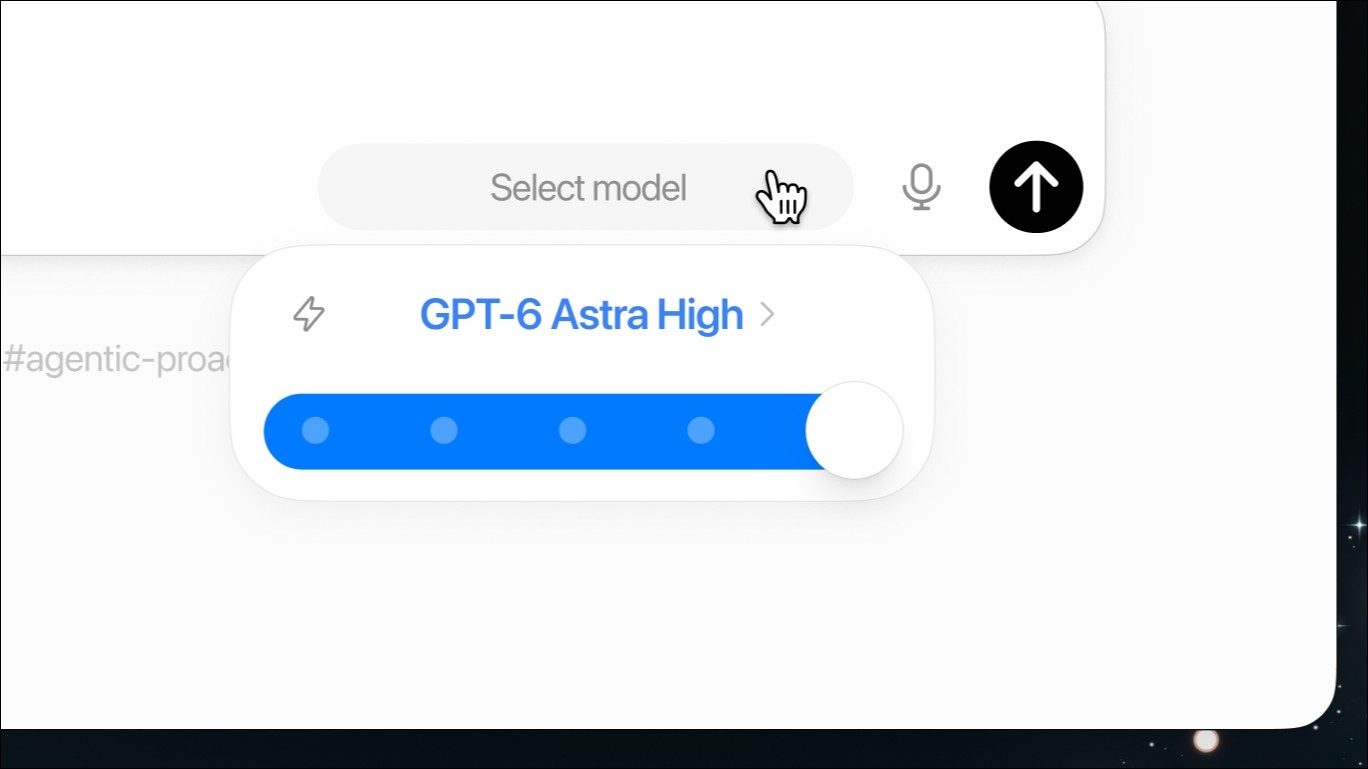
OpenAI says GPT-6 Astra 'represents a generational leap in capability'. Image: OpenAI / Supplied
'A philosophy-of-science problem masquerading as a benchmark problem'
Brockman boasted about Astra scoring highly on an AI testing benchmark called ARC-AGI-3, which the ARC Prize Foundation uses to compare AI performance against human performance.
After testing Astra, the group said “while we believe Astra represents meaningful progress towards generalisation, we are not claiming that it is AGI”.
Walsh said ARC-AGI-3 “measures a very specific part of AGI – fluid intelligence and adaptive efficiency – rather than all of human intelligence ”.
“It doesn’t measure many other aspects of AGI,” he said.
“We really don’t have a single test yet for AGI – indeed, the G [for ‘general’] in AGI probably means there will never be a single test.”
arc-agi-3 is now saturated https://t.co/sD4ePv5cws
— Greg Brockman (@gdb) September 3, 2026
“The hype around Astra is misleading because it moves far too quickly from performance on particular tests to claims that we have entered an ‘AGI era’,” Johnson said.
She does not believe Astra has achieved AGI, based on the public evidence, “because there is no sufficiently stable definition or measurement construct against which to make that judgement”.
“AGI has a philosophy-of-science problem masquerading as a benchmark problem,” she said.
“Astra may demonstrate remarkable new capabilities, but those capabilities are visible through tests designed to measure particular things.
“... A high benchmark score can establish strong performance on that benchmark.
“It cannot by itself establish that a system has crossed into a fundamentally different category of intelligence.”
AGI now 'an irrelevant marketing term', Altman says
OpenAI CEO Sam Altman recently described AGI as “a very poorly defined” and “irrelevant marketing term” on an episode of the Sources podcast.
But the chief executive still suggested AGI is “sort of” here – or is “close, at least”.
“I think there are many people that would look at current models and say like, ‘Okay, it’s there,” Altman said.
Asked prior to Brockman’s AGI comments about how significant a declaration of AGI would be, Altman said, “I don’t think it matters – there isn’t any [significance].”
“If you listen to the words [OpenAI] people use, they would talk much more about this continuous ramp of superintelligence – and all the ways that’s going to benefit the world, and what the challenges are going to be – than ‘are we, or are we not at AGI?’” he said.
While Walsh agreed with Altman’s description of AGI as an "irrelevant marketing term”, he suggested AGI is “not so meaningless to OpenAI, who need to ‘achieve’ it to continue to raise funds successfully”.
Now valued at more than $US852 billion ($1.18 trillion), OpenAI is preparing to make an initial public offering on the US stock market, just like its major rival Anthropic.
Johnson said the term AGI can “absolutely” be misused to generate marketing hype.
While spruiking an AI model’s performance generally includes empirical claims such as benchmarks, declaring the world has reached an AGI era “carries a much larger cultural and commercial meaning”, she said.
OpenAI said Astra “represents a generational leap in capability" due to its “state-of-the-art performance on computer use, browser use, software engineering, cybersecurity, science, and professional work".
The company said it is “strengthening protections against misuse” of Astra in cybersecurity due to the model’s capabilities, and in the wake of its AI agents escaping a testing environment in July to hack the AI platform Hugging Face.
But the firm also plans to roll out less restrictive safeguards for Astra “in the coming weeks”, after testing the new model with its partners.
“Astra is our most aligned model yet, with substantial improvements in understanding user intent, exercising care, respecting task boundaries, and communicating transparently,” OpenAI said.
GPT-6 Astra will be made available to all ChatGPT Plus, Pro, Business, and Enterprise users, the company confirmed – as well as through the OpenAI API and AWS.