




Canva announced a major restructure on Wednesday affecting more than 1,200 staff – or 22 per cent of its global workforce – in what CEO Melanie Perkins says is "the hardest moment" in the company's history.
The Australian design software giant would not confirm how many of the affected staff are expected to lose their jobs, when contacted for comment.
Some employees will be asked to change roles or relocate to centralised hubs, Perkins confirmed in a note to staff, in which she told workers she is "deeply sorry for the pain and disruption this will cause for everyone affected".
The decision to restructure Canva was made "after months of thinking through how to set Canva up for the next chapter", said Perkins, who cited 2026 as the company's "hardest year yet", as its growth has slowed for the first time in a decade.
"After exploring a wide range of alternatives, I've come to the difficult conclusion that small changes won’t be enough," Perkins said.
"To set ourselves up for the next decade, we need to refound Canva, getting back to our roots of small, empowered teams with the freedom to make decisions, take ownership and focus on what matters most for our community."
Avoiding the AI elephant in the room
Perkins cited "new technology" as "transforming what people can create, how they create it, and what they expect from the products they use", but did not directly refer to generative artificial intelligence (genAI) in her note to staff.
While Canva has created its own genAI systems such as image generators and AI agents, the company – like many other software-as-a-service (SaaS) firms – faces disruption from free genAI tools which allow people to complete projects they once needed dedicated software or web applications for.
The rise of such tools is also changing the skills Canva requires from its workforce and how the company structures its teams, Information Age understands.
The company laid off most of its technical writers in 2025, and reportedly cut more than 30 finance roles earlier this year.
Canva will now bring its product, growth, and platform teams together to reduce complexity, after trying "many ways" to do so in recent years, Perkins said.
"We want to get back to spending more time building, and less time navigating how work gets done," she said.
The company is also "reducing subspecialisation", "collapsing layers to broaden ownership" of its products, and "consolidating overlapping responsibilities", Perkins said.
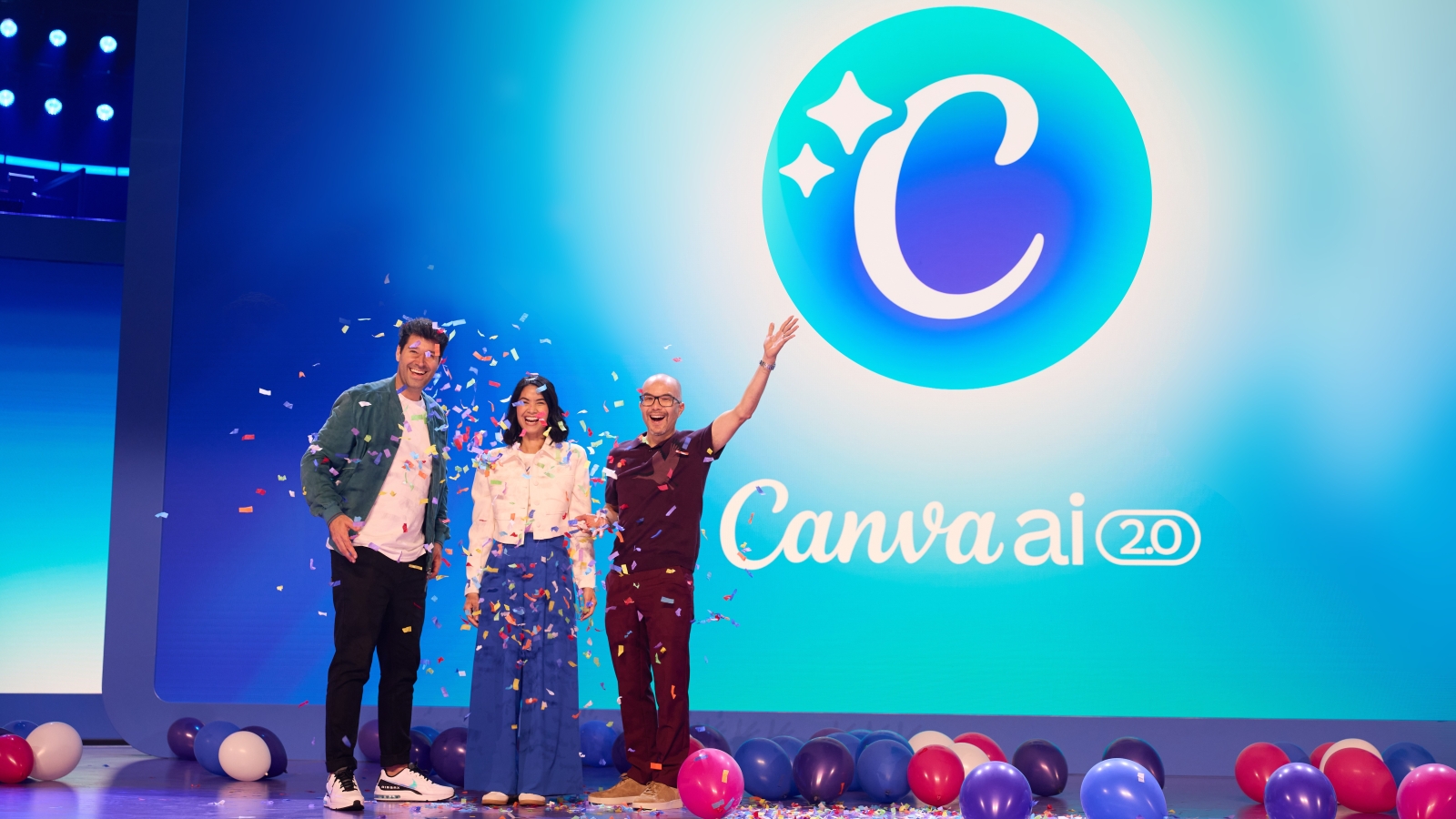
Canva co-founders [L to R] Cliff Obrecht, Melanie Perkins, and Cameron Adams. Image: Supplied
Workers called back to the office
Canva will make Sydney the primary home for more of its product teams and specialists, with some staff asked to relocate and most of its hybrid workforce expected to attend their local office "two to three days" per week from January 2027.
While working across 37 countries had " brought enormous benefits and talent", it had also "made it harder to bring the right people together to solve complex problems", Perkins said.
"We know relocating is a big decision for those being asked to consider it, and we're committed to making the process as smooth as possible with comprehensive support," she added.
Workers who leave Canva will be supported with "at least six months of salary, inclusive of statutory entitlements, regardless of location", Perkins said.
The company will also offer career support, grants of $US10,000 (around $14,000) for former staff's startups, and will allow outgoing workers to keep their Canva-supplied Apple MacBook laptops.
"Our immediate priority is to make time for the conversations with everyone directly impacted by these changes," Perkins said.
"Those impacted will receive a calendar invite for an individual meeting with a senior leader in their area to discuss the next steps and support available should they wish to attend."
Outgoing Canva staff will have access to their work Gmail and Slack accounts until the end of this week, said Perkins, who added that the company will hold an all-staff meeting on 10 November "to talk through these changes, answer questions, and share more about the path ahead".
"To those who will be leaving Canva: I wish I could adequately express how grateful I am for everything you've contributed," she said.
"... Please know these decisions do not diminish your talent, the value of your contributions, or the difference you've made here.
"We will do everything we can to support you in what comes next, and I hope the work we do from here will be worthy of what you've helped build."
Canva is expected to list on the US stock market in 2027, but its estimated value was recently downgraded by around 20 per cent.
The company's restructure announcement follows recent Australian technology job cuts at the likes of the Commonwealth Bank, Microsoft, Uber, Atlassian, and WiseTech.