

Businesses accepting card payments online and offline will benefit from overhauled Reserve Bank of Australia (RBA) payment rules that are expected to save Australian consumers $1.6 billion annually by eliminating surcharges for most debit, prepaid and credit card purchases.
As announced by the RBA’s Payments System Board (PSB), the new policy will ban card surcharges for payments using eftpos, Mastercard, and Visa debit, prepaid and credit cards – from 1 October.
There will also be caps on the fees that can be levied for processing foreign cards – a potential boost for Australian companies selling to overseas customers online, or to tourists making purchases in Australian retail outlets.
“Consumers and businesses find the rules complex and confusing, surcharges are often not well disclosed, and most consumers want surcharging to stop,” RBA governor Michele Bullock said in announcing the release of a Conclusions Paper outlining the changes.
The new regulations were after a public consultation process that began with the release of an Issues Paper in October 2024 and a formal consultation paper last July.
The changes are “a win for consumers, who will benefit from clearer, more transparent pricing at the checkout during a cost-of-living crisis,” FinTech Australia CEO Rehan D’Almeida said as the new policy was announced.
Just 13 per cent of consumers in a recent RBA survey said they are always told about surcharges when they shop, and 76 per cent want surcharging to stop – reflecting the RBA’s view that the existing surcharging framework “is no longer achieving its intended purpose”.
Card fees in a cashless society
When it was introduced over two decades ago, that framework was designed to incentivise customers to use “more efficient payment choices” – read: cash – but the dominance of card payments in recent years has made that purpose moot.
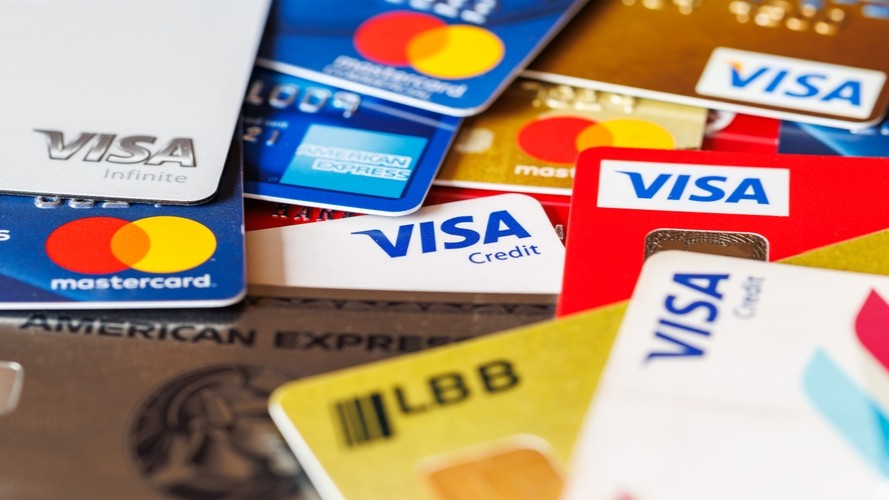
Pesky card surcharges will be scrapped from 1 October 2026. Photo: Shutterstock
“The increased prevalence of businesses surcharging all cards at the same rate, challenges with enforcing the current surcharging framework, and consumers using less cash have reduced the effectiveness of the surcharging regime,” RBA said.
Australian consumers made nearly 321 million card purchases worth $37.8 billion in January this year alone, according to RBA data – up from 300 million card purchases worth $34.3 billion a year earlier, and 188 million card purchases worth $23.1 billion a decade ago.
These purchases are extracting $1.6 billion in fees from consumers every year – an amount equal to 89 per cent of the $1.8 billion total card payment surcharges that are levied each year – but most no longer carry cash that they could use to avoid the fees.
Studies suggest the use of cash has dropped off a proverbial cliff in recent years, cash declining from 27 per cent of payments in 2019 to just 13 per cent of consumer payments, according to the most recent data from the Australian Payments Network (AusPayNet).
AusPayNet is designing policies to support the use of cards and access to cash “during a systemic crisis”, while consumer groups want Bunnings, Kmart and McDonald’s to be added to recent mandates requiring supermarkets and petrol stations to continue accepting cash.
Businesses benefit as well
The PSB warns that the 16 per cent of merchants that currently surcharge “may increase their advertised prices to cover the cost of accepting card payments” – but sees this as an improvement from current practices that “obscure the total amount consumers are paying.”
Businesses will benefit overall from the changes, the RBA said, since the new policy will also reduce the interchange fees that businesses pay to process debit and consumer credit card payments, and require card issuers to publish standardised details of the fees they charge.
Interchange caps will reduce the amount merchants pay banks and other card issuers by around $910 million per year – money that, the PSB said, has often been effectively subsidising card issuers’ loyalty programs and other incentives that benefit their brands.
Lower caps will also benefit small merchants that tend to pay “much higher” interchange fees than larger rivals, while elimination of surcharges will allow card issuers to compete with competitors, such as buy now pay later (BNPL) providers, that don’t add surcharges.
Since “acquirers operate within an opaque system,” D’Almeida said, “improving transparency acquirer fees is important [but] this must be implemented carefully to ensure merchants can make like-for-like comparisons and that competition is not inadvertently distorted.”
RBA argues transparency measures will enable card networks to compete more effectively, allowing businesses to better evaluate what they are paying to process cards and whether there are better deals elsewhere.
“Merchants need tools so they can shop around for better deals” from payment providers, Bullock said, “so we will publish merchant fees to make it easier for businesses to check if they are paying high fees… and [get] the information they need to get accurate quotes.”
RBA will start a new public consultation by midyear to evaluate the case for regulating other parts of the retail payments system including mobile wallets, three-party card networks like American Express, BNPL services and e-commerce platforms.