



Australian AI firm SharonAI Holdings has made an auspicious debut on the US Nasdaq stock exchange, listing under the ticker SHAZ, for a valuation of over $1 billion ($US727 million) as it announces a significant deal with Nvidia to expand its Australian sovereign data centres.
The company, which was founded by Australians James Manning and Nick Hughes-Jones in 2024, describes itself as a “neocloud” and has managed investments in over 300 megawatts of high performance compute (HPC) capacity in data centres here and in the US.
Sharon Holdings subsidiary Sharon AI rents computing capacity – along with preconfigured systems running the likes of DeepSeek, PyTorch and Docker – to firms that need lots of power for visual computing, data analytics, AI large language models (LLMs), and AI training.
That has put it in the front row of the AI explosion, which has seen fast-growing AI startups and tech hyperscalers clamouring for new data centre capacity as the likes of Amazon, OpenAI and Microsoft dramatically ramp up their AI capabilities.
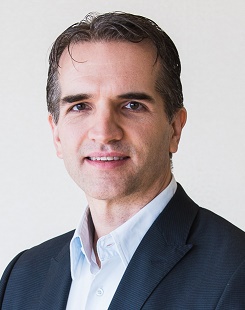
Sharon AI has moved rapidly to shore up its position in this market, with Manning – who was appointed CEO in January – saying the firm had built “a strong [financial] foundation” and is “well positioned to deliver sovereign high-performance compute infrastructure at scale.”
Gartner has predicted worldwide AI infrastructure spending will reach $1.9 trillion ($US1.4 trillion) this year, up 42 per cent over last year as the main driver of an AI investment explosion that will see total AI spending reach $3.6 trillion ($US 2.52 trillion) this year.
Investors pile onto the AI bandwagon
Sharon AI’s $177 million ($US125 million) Nasdaq debut has already rewarded early investors, with subscribers to a December pre-IPO funding round – who paid the equivalent of $US12.50 per share – finding their shares suddenly worth $US30 on Nasdaq.
It’s a bright start to Manning’s tenure as CEO, which saw a flurry of announcements as the company geared up for the listing and built momentum towards a planned April float on the ASX – whose value will be guided by US investors’ sentiment towards SharonAI Holdings.
The Nasdaq listing gives Sharon AI access to a new source of capital, supplementing other recent moves – including a $283 million ($US200 million) investment from Digital Alpha, strategic partnership with Cisco, and $700 million ($US500 million) debt facility from USD.AI.
In January, Sharon AI also secured a deal to deploy 1,000 of Nvidia’s flagship B200 chips at NextDC’s M3 data centre – a move Manning said would give APAC “AI natives, research, enterprise and government organisations… immediate access to world-class compute.”
“This expansion is about more than just raw capacity,” he added, but “about providing the specialised, sovereign architectural depth that the next era of AI requires.”
Clouds dump an ocean of computing power
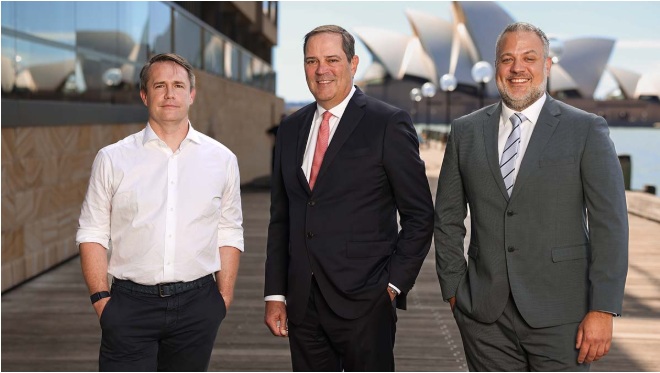
With the ink on Sharon AI’s Nasdaq prospectus barely dry, the company this month joined Cisco to announce that it would launch Australia’s first Cisco Secure AI Factory – a model that will see the company rolling out another 1,024 Nvidia Blackwell Ultra processors.
‘AI factories’ are Nvidia’s marketing term for integrated ‘full-stack’ AI data centre infrastructure, with VAST Data storage and Cisco adding security and monitoring capabilities designed to make the offering a plug-and-play solution for businesses adopting AI.
The model “enables enterprises and governments to harness their data for differentiation,” said Cisco ANZ VP and general manager Stefan Leitl, “unlocking innovation and competitive advantage by strengthening sovereign capabilities and building a trustworthy AI ecosystem.”
Deployment of the Blackwell Ultra chips – which have been benchmarked at up to 50 times the performance per watt of Nvidia’s previous platforms – will expand and diversify Sharon AI’s pipeline of AI infrastructure, allowing Australian AI firms to access capacity onshore.
Sovereign AI capacity has become increasingly important as Australian businesses look to stay compliant with data handling laws, and as regional businesses eye Australia’s fast-growing AI infrastructure as a relatively stable, secure destination for their own systems.
Australia must make “substantial investment in infrastructure” and the workforce to run it if it wants to “seize the economic opportunities available through AI,” Science and Technology Australia (STA) said after the government’s December launch of its National AI Plan.
Warning that Australia’s AI investments to date “are a drop in the ocean compared to other countries,” STA CEO Ryan Winn urged Australia to “invest in sovereign AI capability to ensure systems are purpose-built, safe, and secure.”