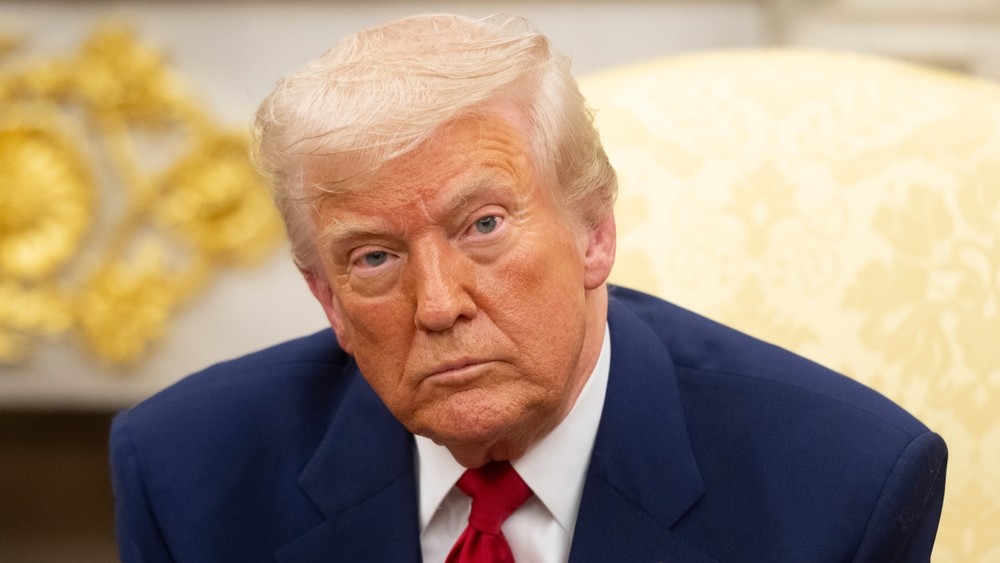

A coalition of education and research groups has taken legal action against the Trump administration’s imposition of a $150,000 application fee for a visa popular among the tech sector.
The group, led by the American Association of University Professors and a range of labour unions, are suing the US government over the H-1B visa fee increase, saying it is unconstitutional and unlawful, and have urged the courts to return to the previous process.
The unions represent workers in higher education, healthcare, primary education and the religious sectors.
‘Catastrophic setbacks’
In mid-September US President Donald Trump announced that a $150,000 ($US100,000) fee would be imposed for H-1B visa applications, sending the tech and research sectors into chaos and confusion.
The new fee, which was imposed less than 48 hours after the announcement, will apply only to new applications, and not to renewals or those who hold a visa but are re-entering the US.
The H-1B visa is popular among tech firms, with the top 10 companies using it including Amazon, Microsoft, Meta, Apple, Google, AWS and Oracle.
The lawsuit, filed earlier this week, claims that the fee increase may lead to “catastrophic setbacks” for research in the US and create “sharp cutbacks in the employment of highly talented foreign workers and severe setbacks for university research, graduate programs and clinical care”.
In the lawsuit, the groups argue that the fee hike is unconstitutional as Congress had already put in place a “clear framework” for the fees employers must pay for H-1B visa applications.
“The Constitution assigns the ‘power of the purse’ to Congress, as one of its most fundamental premises,” the lawsuit said.
“Here, the president disregarded those limitations, asserted power he does not have, and displaced a complex, Congressionally-specified system for evaluating petitions and granting H-1B visas.”
Risks to innovation
The lawsuit also claims that the fee change is arbitrary and that the administration “failed to consider how extorting exorbitant fees will stifle innovation” and failed to “coherently explain” important information about the policy change.
“The President has no authority to unilaterally alter the comprehensive statutory scheme created by Congress,” it said.
“Most fundamentally, the President has no authority to unilaterally impose fees, taxes or other mechanisms to generate revenue for the United States, nor to dictate how those funds are spent.”
They are seeking the judge to rule the new fee structure is unlawful and to force the Trump administration to return to the previous process.
They argue the fee hike has “thrown employers, workers and federal agencies into chaos”.
“When the government makes it prohibitively expensive or impossible for these professionals to come to America, or for current H-1B workers to transition to a more permanent status, the universities and entire communities lose – patients wait longer for care, students have fewer teachers, and local economies miss out on the innovation and jobs these experts create,” the lawsuit said.
“The H-1B program has a carefully crafted fee and oversight system set by law.
“The president cannot rewrite it overnight or levy new taxes by proclamation.”
In the lawsuit, the groups also raise concerns that exemptions under the new scheme are open to misuse.
“The Proclamation transforms the H-1B program into one where employers must either ‘pay to play’ or seek a ‘national interest’ exemption, which will be doled out at the discretion of the Secretary of Homeland Security, a system that opens the door to selective enforcement and corruption,” it said.
They argue that the “exorbitant fee is unprecedented and unjustified, and the exception process is ripe for abuse”.
In announcing the fee increase, Trump and US Commerce Secretary Howard Lutnick claimed that the scheme had been hijacked by tech firms and was allowing foreign workers to take the jobs of Americans.
The proclamation by Trump said it had been “deliberately exploited to replace, rather than supplement, American workers with lower-paid, lower-skilled labour”.