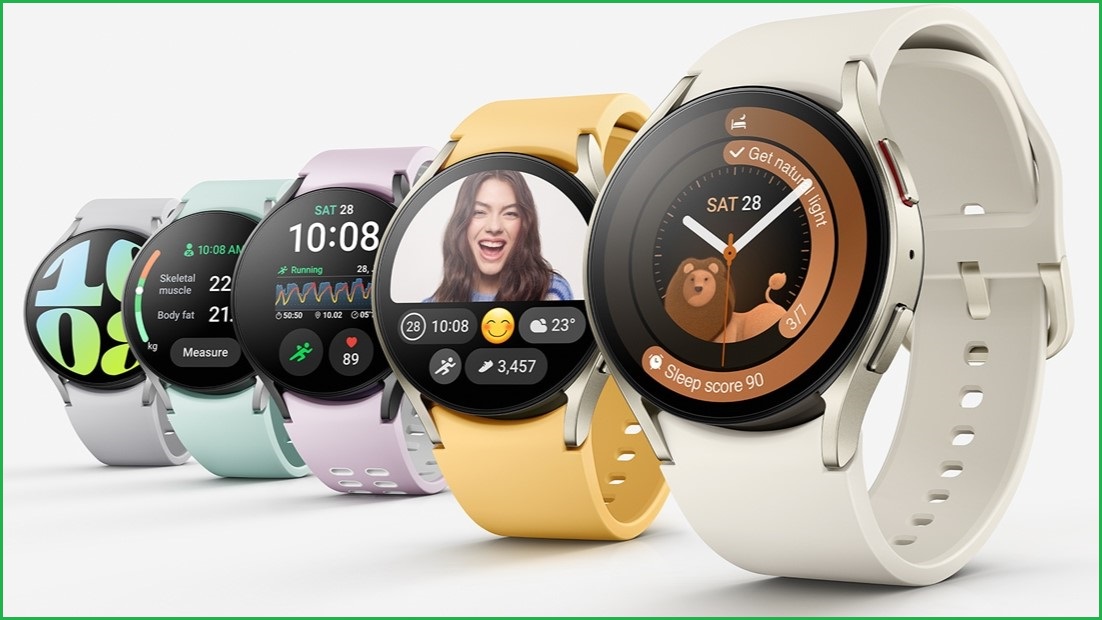

Two Queenslanders have won a legal battle against Samsung Electronics Australia after they were refused a refund when a smartwatch they purchased allegedly did not live up to the company’s advertised battery life.
Camille and Liam Jensen, who represented themselves at the Queensland Civil and Administrative Tribunal (QCAT) in July, argued the Samsung Galaxy Watch6 they purchased in September 2023 was defective and the tech giant had failed to comply with consumer guarantees under Australian Consumer Law.
While Samsung has advertised the Galaxy Watch6 as having “up to 40 hours” of battery life, the Jensens provided evidence that their watch only lasted between 6.5 and 10.5 hours, even when it was not running memory-intensive apps.
The tribunal agreed with the pair in its decision on 23 September, which was published last week and first noted by tech newsletter The Sizzle.
QCAT ordered Samsung to pay the Jensens the $649.00 cost of the watch and the $90.10 cost of their application to the tribunal.
Samsung declined to comment, and Information Age attempted to reach the Jensens for comment.
Samsung challenged pair's findings, denied refund
The cellular smartwatch in question, which was worn by Camille Jensen, was fully charged each night between 12 September 2023 and 19 March 2024, the pair told the tribunal.
But the device’s 300 mAh battery would routinely die between midday and 3pm, QCAT heard.
“The applicants say that this was a regular occurrence,” read the decision by senior QCAT member Ian Brown, who heard the case.
The Jensens said they returned the watch to Samsung in March 2024, when the company replaced the battery — but “issues with short battery life persisted”, the tribunal heard.
The pair then recorded the watch’s battery performance over a two-month period.
Statistics provided to the tribunal from May 2023 showed the watch routinely lasted less than 10 hours on a full charge.
Battery testing conducted by Camille and Liam Jensen (Samsung Galaxy Watch6 40mm, LTE model)
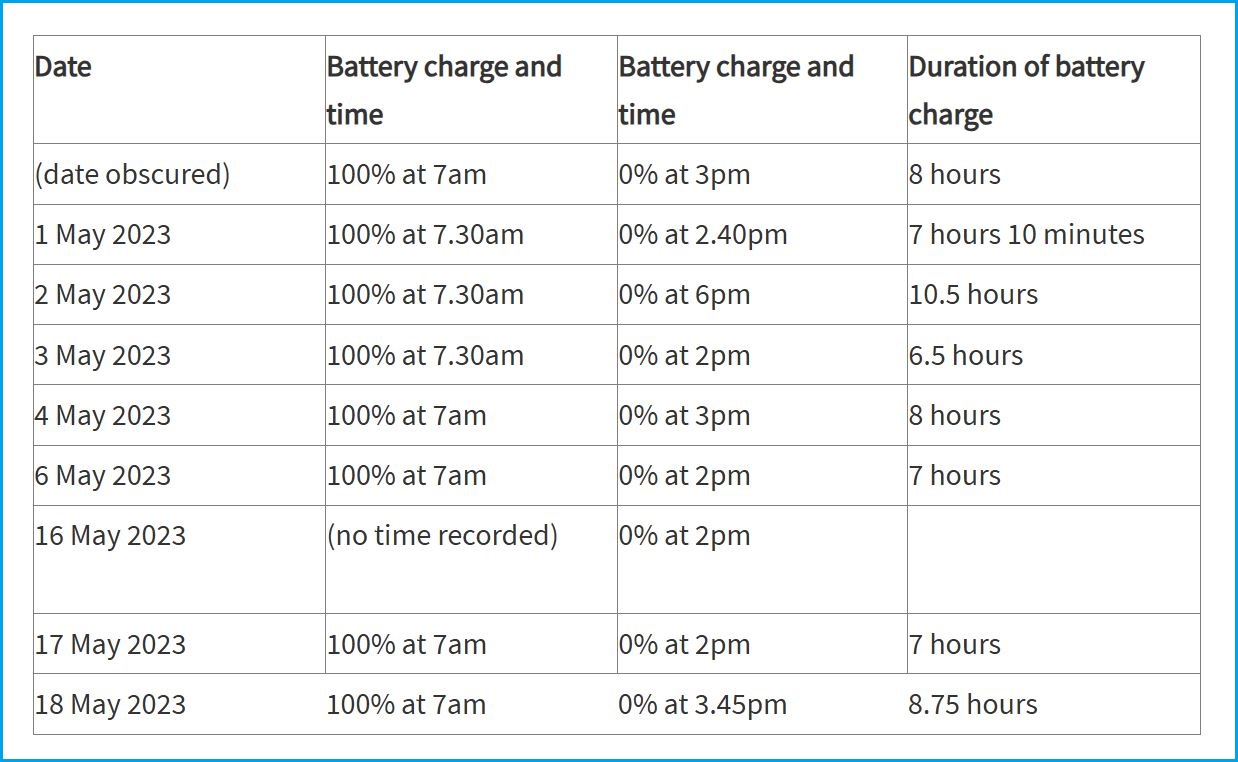
Image: QCAT / Supplied
When the Jensens attempted to get a refund for the watch in late May 2024, a Samsung representative allegedly told them the device needed to be tested again.
Later that month, Samsung told the pair its authorised repairer could not find any defects with the watch and Samsung would not refund their purchase.
The company allegedly argued to the tribunal that the Jensens had no expert evidence of a fault or defect, nor any evidence that the watch was not of acceptable quality.
Smartwatch 'could not be used for an average day'
The Jensens said they "were led to believe by the respondent’s marketing that the battery life was up to 40 hours", Brown from QCAT wrote in his decision last month.
“I find that the actual battery life of the watch was much less than this,” he said.
“… The battery life of the watch was such that it could not be used for an average day as would be expected.”
Samsung states on its website that "actual battery life may vary depending on network environment, usage patterns and other factors”.
The company’s technical report on the Jensens’ watch allegedly found their device had not been running multiple applications at the same time, and did not have any issues with storage space or charging.
“I find that the watch was used by the applicants within the parameters for which it was designed and that no applications were run which would have caused the battery to drain faster than it otherwise would or should,” Brown wrote.
He added that “a reasonable consumer … would not regard the watch as being of acceptable quality”.
“What then is the value of a watch with a battery life of between 6.5 hours and 10.5 hours which cannot be used on a daily basis without being recharged?” he asked.
“In my view, such a watch is effectively of no value.”