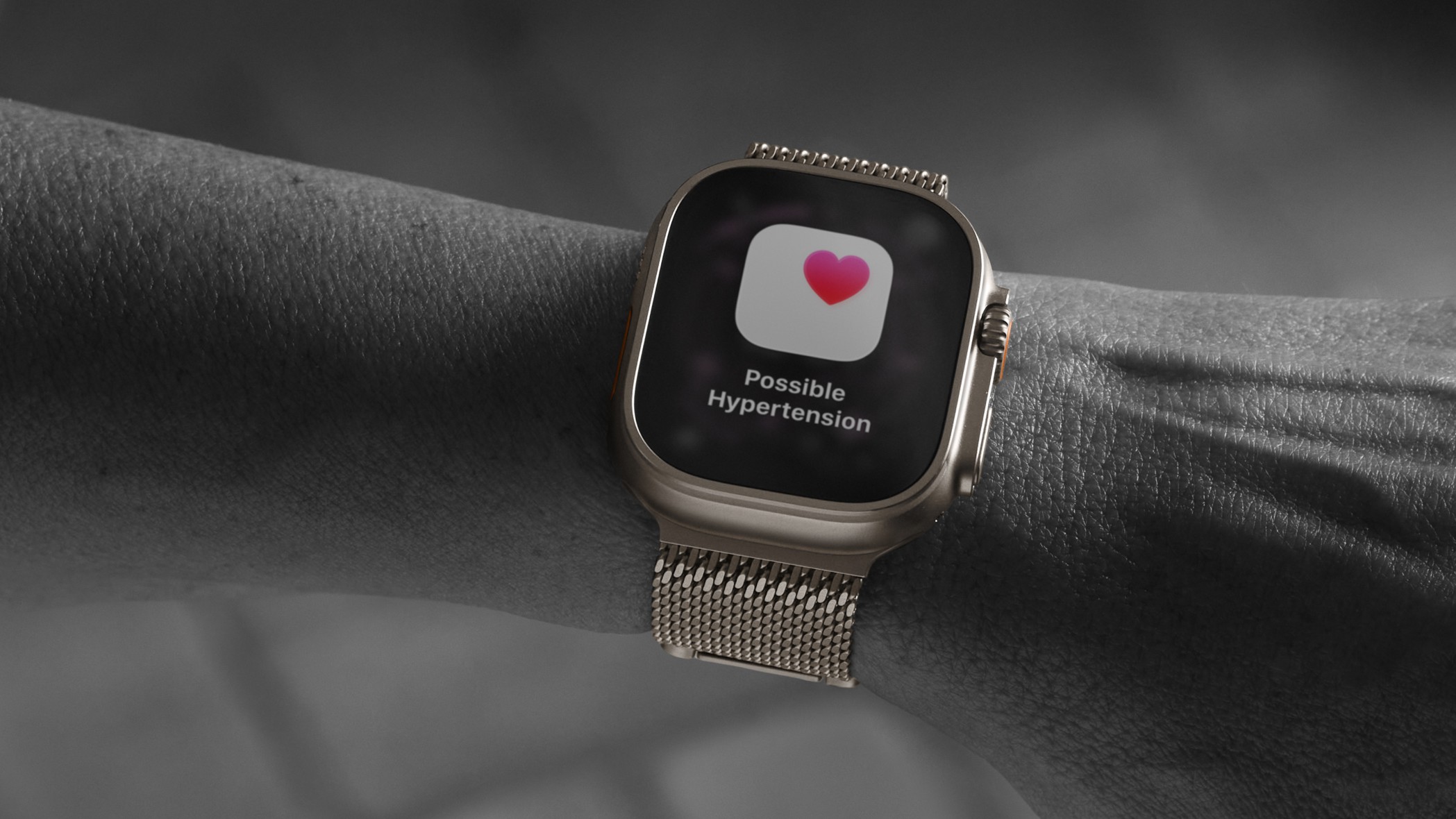

Medical regulator the Therapeutic Goods Administration (TGA) has approved the Apple Watch's hypertension notification feature, which detects signs of high blood pressure, for use in Australia.
The feature, which was announced in September and has been available in more than 150 countries for months, was listed as a medical device on the Australian Register of Therapeutic Goods (ARTG) on Thursday, 4 December.
Apple did not respond to a request for comment on when the feature would become available for use by Australian Apple Watch users, but similar health features have previously been enabled by later software updates or direct activation by Apple.
Hypertension can be a major risk factor for heart attack, stroke, kidney disease, and other health impacts.
While 11 per cent of Australians self-reported hypertension in the latest Australian Bureau of Statistics data from the 2022 National Health Survey, around a third of the adult population has been estimated to have high blood pressure.
Cardiologist and chief medical advisor at the Heart Foundation, Professor Garry Jennings, told Information Age the TGA’s approval of Apple’s hypertension feature was “a good thing”.
“This approach is not the solution [to hypertension], but it’s one of the things that could help raise awareness of high blood pressure in some people,” he said.
“… It’s part of a growing trend to make health more outward looking, to bring consumers into the game at an earlier stage, and to give them an opportunity of keeping an eye on their own risk for future heart attacks, strokes, and other consequences of hypertension.”
How does the Apple Watch hypertension feature work?
Apple's hypertension notification feature is designed for use by adults aged 22 and over who are not pregnant and have not been previously diagnosed with hypertension.
It requires an Apple Watch Series 9 and later or an Apple Watch Ultra 2 and later running watchOS 26, and an iPhone 11 or later running the latest version of iOS.
The feature uses the optical heart sensor on the back of compatible Apple Watch models to analyse how the wearer’s blood vessels respond to the beats of their heart over 30-day periods.
Users are then notified if the system detects consistent signs of possible hypertension.
Apple has previously said users who were found to have signs of possible hypertension were then recommended to log their blood pressure for seven days using a blood pressure cuff and share the data with their doctor.
Professor Jennings said there was “no guarantee” that someone did not have hypertension if their Apple Watch did not alert them to it.
“And vice versa —there’s no guarantee if it alerts you to this that you do have it,” he said.
“But it certainly will select out a group at high risk for hypertension, and they should then go to their GP and have it confirmed and have all of their other risk factors measured.”

Apple Watch users with possible hypertension are encouraged to use an upper-arm cuff to check their blood pressure for seven days. Image: Apple
The Apple Watch feature was designed using machine learning — a branch of artificial intelligence — and data from several studies involving more than 100,000 people, Apple said in September.
“Its performance was then validated in a clinical study of over 2,000 participants,” the company said.
“While hypertension notifications will not detect all instances of hypertension, with the reach of Apple Watch, the feature is expected to notify over 1 million people with undiagnosed hypertension within the first year.”
The feature cannot detect heart attacks and is “not intended to replace traditional methods of diagnosis, to monitor hypertension treatment effect, or to be used as a method of blood pressure surveillance”, according to its listing on the ARTG.
Samsung’s latest Galaxy smartwatches also have a Blood Pressure app which is designed for users 22 and older, but it requires calibration using a TGA-approved upper-arm, cuff-based blood pressure monitor.
Google is also reportedly carrying out a study in order to enable hypertension screening on its Pixel Watch devices.
Other consumer devices such as blood pressure monitors and some smart rings were also useful for alerting people to possible hypertension, as well as for those already being treated for high blood pressure, Professor Jennings said.
“Whilst [detection via smartwatch] is an innovation, it’s not the only one in the field.”
Australian Apple Watch users still without 5G
The latest Apple Watch models still do not have access to 5G connectivity in Australia, despite the faster cellular technology having been available for several months on recent models in markets such as the US, UK, Spain, India, and China.
Apple did not comment on when Australian Apple Watch users could expect 5G to become available on their cellular-enabled devices, but Information Age understands the company is awaiting regulatory approval and must also reach deals with local telecommunications providers.
Earlier this year, Australian Apple Watch users waited almost two months to use the company's sleep apnoea notifications feature on their devices after it was approved by the TGA in late May.
Local Apple Watch users previously waited more than two-and-a-half years for some of the device’s heart health features to be approved by the TGA and enabled for local use.
Apple’s electrocardiogram (ECG) and irregular heart rhythm notification features were launched in the US in December 2018, but were only made available to Australian users in May 2021.


,%20john%20ternus%20(right)%20hello%20apple%20instagram.jpg.transform/320x180/img.jpg)