



A two-decade veteran of the Australian Signals Directorate and Cyber Security Centre has been appointed as Australia’s new cybersecurity ambassador.
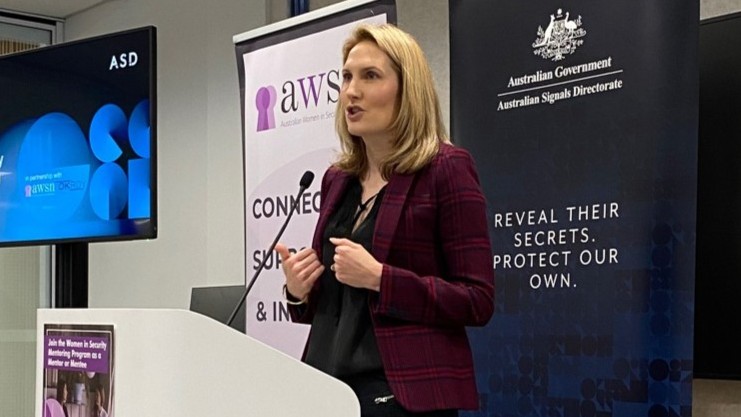
Jessica Hunter, who was most recently head of cyber threat operations at the Australian Cyber Security Centre (ACSC), will be Australia’s ambassador for cyber affairs and critical technology, with Foreign Affairs Minister Penny Wong announcing the appointment over the weekend.
The ambassador role “leads Australia’s international engagement on cyber affairs and critical technology issues, while delivering cyber capacity and resilience building, and incident responses across our region,” Wong said.
“Cyber and critical technology affect all aspects of international relations.
“They underpin our national security, the protection and realisation of human rights and freedoms, global economic prosperity, sustainable development and international stability.
“For Australia, cyber and critical technology – including the rapidly evolving domain of artificial intelligence – are foreign policy priorities.”
Australia’s new cyber ambassador
Hunter has been at the Australian Signals Directorate (ASD) and ACSC for 20 years.
She has also worked at the United Kingdom’s government communications headquarters and was seconded to the US National Security Agency as the deputy Australian liaison officer.
In a post on X, Hunter said she was “delighted” to be appointed to the role, and was “looking forward to working with partners to strengthen the cyber resilience of our region and our efforts to meet cyber and [critical technology] challenges”.
Hunter replaces Brendan Dowling in the role, who served as cyber ambassador since 2023.
In August, Dowling shifted to serve as deputy secretary for critical infrastructure and protective security in the Home Affairs department, with cyber affairs and critical technology brand assistant secretary Hugh Watson acting in the role in the months since.
The position of Cyber Affairs Ambassador was first created in late 2016, with Tobias Feakin serving as the inaugural ambassador.
Critical technology was added to the role in early 2020, and Feakin was replaced by Dowling in the position in 2023.
Australia’s cyber strategy
The cyber ambassador will steer engagement under the federal government’s $586 million 2023-2030 Cyber Security Strategy, and will also aim to boost Australia’s role as a trusted and influential global cyber leader in the region.
The cyber strategy outlines a plan to protect Australia by building six “cyber shields”: strong citizens and businesses; safe technology; threat sharing; protecting critical infrastructure; sovereign capability; and global coordination.
It aims to make Australia one of the most cyber secure nations in the world, and was unveiled at a time when the country was reeling from a series of major and damaging data breaches, including at Medibank and Optus.
The strategy stopped short of banning the payment of ransoms to hackers, but did provide a ransomware “playbook” for businesses and mandated the reporting of attacks.
Hunter has been appointed cyber ambassador also at a time when many Australians are grappling with being victims of significant data breaches.
Earlier this month cybercriminals published 153GB of alleged Qantas customer data after they exploited a third-party call centre and gained access to the information in June.
The group released the data online after Qantas refused to pay a ransom, claiming it comprised five million records of data.
In August a breach of an order management system leaked the details of around 280,000 customers of internet service provider iiNet.
The company recommended its customers “remain vigilant” for “unusual communications” from scammers.
Last week, a breach of telecommunications providers Dodo and iPrimus saw the email and mobile phone accounts of some Dodo customers obtained.