




Australia’s national science agency CSIRO says it welcomes a $233 million funding boost announced by the federal government on Wednesday, but maintains it still needs to cut more than 300 full-time roles.
Treasurer Jim Chalmers said he was “very proud” of the extra funds for CSIRO released in the government’s Mid-Year Economic and Fiscal Outlook (MYEFO), but added that how the agency decided to use the money was “a matter for them, and for their board”.
CSIRO, which announced in November it would cut up to 350 more roles, said while it welcomed the “significant” funding boost, keeping the agency sustainable amid rising costs “will require a sustained and significant investment over the next decade”.
“CSIRO must retain the savings that will come from the recently announced changes to our research portfolio – which include an estimated reduction of 300-350 [full-time] roles – while also investing at least an additional $80-135 million per annum over the next 10 years into essential infrastructure and technology,” the agency said in a statement.
CSIRO’s appropriation funding had risen by 1.3 per cent per annum over the last 15 years, it said, while inflation had risen by 2.7 per cent over the same period.
Chalmers argued the government had not cut CSIRO’s funding — which stands around $1 billion per annum — but acknowledged its costs had escalated.
“From the government’s point of view, we’ve been increasing their resourcing — $45 million extra last time, $233 million extra this time — and that’s because we believe in the crucial role that science broadly, and the CSIRO, plays in the future of our economy,” he said.
The government also used its mid-year budget update to confirm $225.2 million in funding over four years for its recently announced Australian Public Service AI Plan.
It includes $166.4 million to expand the commonwealth’s GovAI platform and build a secure AI chatbot dubbed GovAI Chat, as well as almost $59 million for other work on AI capability and establishing an AI Review Committee “to provide expert advice on high‑risk government AI use cases”.
CSIRO job losses don’t pass 'pub test’, union says
The CSIRO Staff Association, which is part of the Community and Public Sector Union (CPSU), welcomed the government’s funding announcement but urged CSIRO management to “ensure further job cuts are abandoned” following what it said has been 818 job losses under the Albanese government.
The association’s secretary, Susan Tonks, said the suggestion that a $233 million boost would not prevent even a single job cut “just fails to pass the pub test”.
“This funding injection does not address the long-term funding problems facing the CSIRO,” Tonks said.
“CSIRO’s permanent funding arrangements have not kept pace with the cost of doing science.
“And as a percentage of GDP, their funding has gone backwards.”
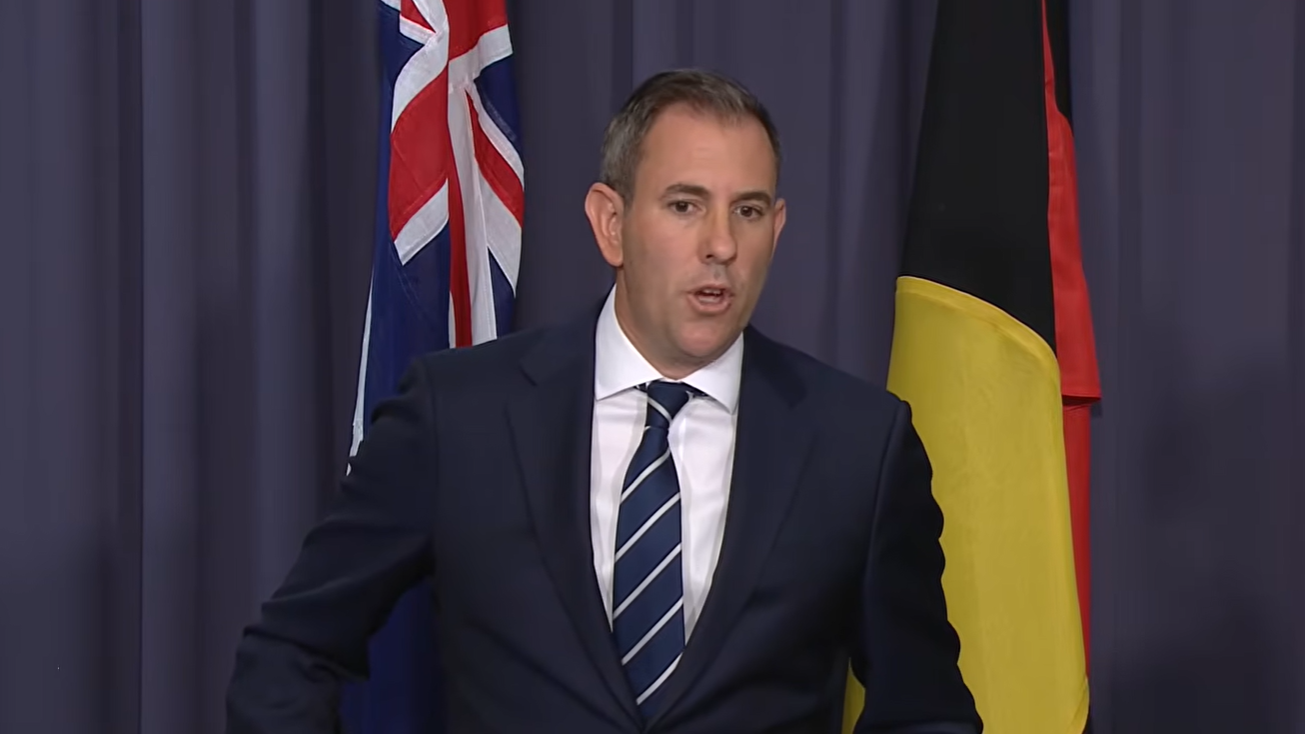
Treasurer Jim Chalmers says the federal government has been increasing CSIRO's resources. Image: ABC News / YouTube
Information Age exclusively reported in November that the heads of CSIRO's digital and manufacturing research arms — which have both seen job losses — decided to leave the agency simultaneously.
That was after the agency confirmed in August that “hundreds more” jobs were to be cut as CSIRO rearranged its research teams to do “fewer things, better”.
CSIRO Chief Executive Dr Doug Hilton said the agency needed to “continue to align our science to Australia’s most pressing challenges and focus our resources to tackle them at scale”.
“These strategic changes are difficult but essential to ensure we can continue to deliver the science Australia needs in the years and decades ahead,” he said.
Industry awaits R&D review
Peak body Science and Technology Australia (STA) said while it welcomed CSIRO’s increased funding, the nation’s investment in research and development (R&D) was “not keeping up with rising costs”.
CEO Ryan Winn said there was “a clear case for putting R&D at the heart of economic reform” given CSIRO’s economic benefits and discoveries, which have included technologies such as high-speed Wi-Fi and polymer banknotes.
“If you don't invest in R&D, you don't innovate, and you don't create new products and services,” Winn said.
“You lose your best ideas to overseas and productivity will collapse.
“More than a decade of decline in national investment has flattened the batteries of the economy.”
The federal government is expected to release a major independent review of the nation’s R&D sector in 2026, which it commissioned Tesla chair Robyn Denholm to lead more than 12 months ago.
Australia’s “siloed” R&D system and “a business community that is largely indifferent” meant the nation’s economy was “unprepared to achieve sustained growth”, her expert panel said in a discussion paper released in February.
“R&D is essential to lifting Australia's economic complexity, advancing our industrial base, boosting productivity, creating jobs, and addressing intergenerational inequity,” said STA's Winn.
“This is a once-in-a-generation opportunity to act with courage and invest in the economy-boosting power of research and development."