
The federal government’s claim that several hundred Freedom of Information (FOI) applicants’ requests to the eSafety Commissioner last year were “AI bot-generated” is false, according to eSafety's publicly available documents.
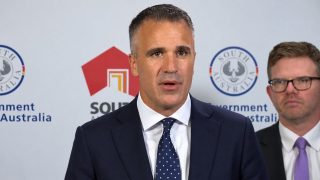
“We're frankly being inundated by anonymous requests … many of them we're sure are AI bot-generated requests,” Minister for Health and Ageing Mark Butler said at a press conference on Tuesday while defending a bill to ban anonymous FOI requests and charge an application fee.
The “public sector resources” spent responding to FOIs ballooned to “one million hours” in 2023-24 and one agency received 600 requests from a single entity over three months, Attorney General Michelle Rowland said in a statement on Tuesday – “that agency was eSafety” she added during the bill’s second reading on Wednesday.
Prime Minister Anthony Albanese also said during question time that a single individual generated the hundreds of FOIs.
“The eSafety Commissioner … in 2023-24, saw a more than a 2,000 per cent increase in FOI requests … artificial intelligence means it is possible for someone to disrupt an agency completely.”
FOI tool, not AI bots
The requests that the cabinet ministers were referring to were submitted over an online tool that launched last year to assist applicants to compel the release of documents held by eSafety related to their name or social media handle.
Documents on eSafety’s disclosure log acknowledge that the hundreds of applications were made by multiple real people and subsequently produced several dozen documents related to several dozen different people.
The Free Speech Union (FSU) of Australia co-founder Dr Reuben Kirkham told Information Age that the applicants “put in their email and the requests were sent from a no reply email address".
“The Commissioner refused to reply to three quarters of them because they used an X [social media] handle as a return address. We contend this is unlawful.”
He added that the tool is a “web form which is more or less 1990s technology… it doesn’t use any AI.”
Even if Rowland had accidentally referred to AI when describing “technology enabling large volumes of vexatious, abusive, and frivolous requests” and had actually meant platforms that automate administrative tasks involved with managing FOIs, FSU’s tool is not the first to offer this.
Since its launch in 2007, Australians have sent several thousand requests over Right to Know which also provides users templates, sends the FOI to the right address, and notifies users when the agency responds.
Former Senator and now FOI specialist Rex Patrick told Information Age that the government was “putting up erroneous and misleading claims relating to the administration of the FOI regime” to “distract the public from what they’re really trying to do”.
“This bill introduces significant changes to exemptions the government can use to ensure secrecy is increased over significant and controversial topics being deliberated on by public servants, or considered by ministers.”
The FOIs returned reports from Meltwater, eSafety’s social media insights provider, with images of posts the applicants had made that mentioned eSafety or Commissioner Julie Inman Grant.
As the applicants were often publicly critical of eSafety, their concern was that the office was profiling them or proactively scanning their content with the intention of issuing takedowns or blocking accounts.
However, Inman Grant responded that “proactively monitoring the internet” and deleting illegal and offensive content it detects is not in eSafety’s remit; takedown orders can only be enforced in response to reports submitted to the Commissioner’s portal.
“We are certainly not using social listening tools like Meltwater to measure anything other than how eSafety’s conversation is being recorded," Inman Grant told Senate Estimates.
“There are no names or searches for Australian individuals. That is deliberate misinformation.”
Transparency versus secrecy in FOI reform
Despite eSafety’s denial — with other Australian agencies using social media surveillance in high-stakes, punitive functions like assessing protection visa applications and investigating failures to report Facebook Marketplace sales or changes in relationship-status to Centrelink — the users wanted to be sure and still sent the FOIs.
Rowland said that measures like a discretionary refusal for documents that are estimated to take longer than 40 hours to collect and process were necessary to rein in the costs of operating the FOI Act, which were $86.2 million in the 2023-24 financial year.
In contrast to the bill’s proposed hurdles, the Information Commissioner has recommended making the system more efficient by reducing “the need for citizens to make a formal” FOI, including by increasing “proactive disclosure” and offering informal information access schemes like the ATO’s service for supplying historical tax documents.
The Attorney-General's Department, Rowland, and Butler did not reply to requests for comment.