
Critics were quick to lambaste Optus as yet another outage cut off customers from Triple Zero services – but investigations confirmed the cause was not telco incompetence, but damage from copper thieves plundering telecommunications networks.
Victorian Premier Jacinta Allan issued a please-explain and Greens Senator Sarah Hanson-Young called for an “urgent review” of Optus’s telco license after the company said a fibre cut had left 14,500 customers in Victoria’s Frankston and Mornington Peninsula unable to access Triple Zero services.
It was the third interruption to Triple Zero access over Optus’s network in as many months, with human error blamed for a September outage linked to four deaths and a subsequent mobile phone tower failure cutting emergency services calls for nine hours in Dapto, NSW.
Australia’s second-largest telco also paid a $12 million fine after thousands of customers were unable to reach Triple Zero during an all-day network outage in November 2023.
Optus is prioritising profit over safety and “are clearly not capable of providing this essential service,” a livid Hanson-Young said, blaming regulator ACMA for being “asleep at the wheel” as the industry awaits Dr Kerry Schott’s Optus-commissioned review of the incident.
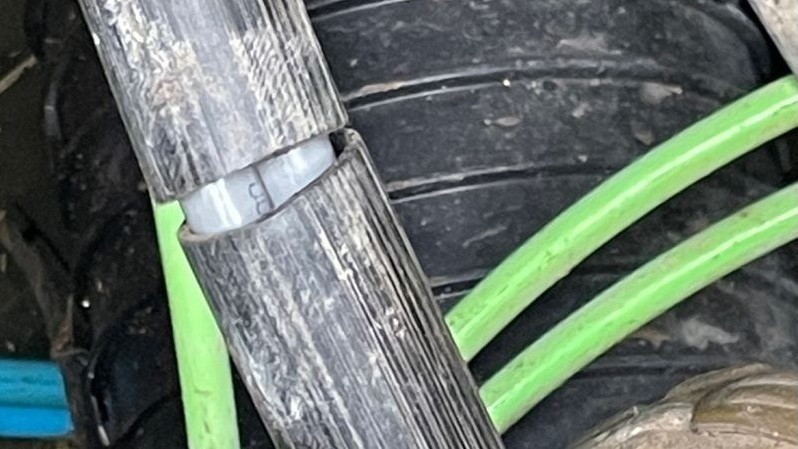
Yet as details emerged it became clear that the latest outage was not an Optus error but the work of vandals, who damaged the Optus aerial fibre line – cutting its outer sheath to look inside – while stealing copper wiring from the poles.
This took the fibre out of commission – forcing mobile customers’ phones to access other networks to call Triple Zero – until it was fixed by Optus repair crews over two hours later.
Networks are generally designed with redundancy to survive such incidents but in this case, Associate Professor Bill Corcoran of Monash University’s Electrical and Computer Systems Engineering department said, the backup seems to have been missing.
Thieves are showing they’ve got the mettle
Accelerating construction of homes, telecommunications networks and data centres have driven the price of copper skyward in recent years, with prices surging from around $10.80 per kilogram ($US3.20 per pound) in mid-2022 to $16.83 per kg ($US5 per lb) today.
That has made copper pipes, data and electrical wires appealing for thieves who sell them to metal recyclers for up to $10 per kg – with three Sydney contractors charged last year for robbing building sites of over 300 tonnes of copper wiring worth up to $3.5 million.
In July, ACT police caught a man who broke into a Gungahlin construction site and stole a vehicle, tools, and copper wire; he was ultimately charged with stealing over 1.6 tonnes of copper.
Solar farms, telcos and utilities are being extensively targeted – as are remote areas, with 77 homes in the Queensland town of Tara left without power for 16 hours after thieves cut live power lines with an axe and stole the copper wiring.
Roads in three WA towns went dark in June after thieves ripped cabling from remote street lights, while Queensland’s City of Moreton Bay saw thefts from sporting field upgrades, street lighting projects, and a train station hit five times over the course of six weeks.
NSW Police have established a dedicated unit called Strike Force Element to investigate copper theft from water meters and pipes, with many arrests made and 154 reports of such incidents between August and November this year alone.
But everyday residents ultimately pay the price
Copper theft takes planning: to access an AT&T cable vault in Los Angeles in January, thieves had to move a 725kg manhole and severed 32 cables – cutting mobile and emergency services to 80 per cent of local residents – while stealing spare copper stockpiled for repairs.
And last year, Victoria Police arrested three men who were dressed in hi-viz and had cordoned off a telecommunications pit, and were using their vehicles to pull copper wiring out from underground – one of thousands of copper thefts recorded nationwide each year.
Such skulduggery can have tragic consequences: theft of telco cabling “is much more serious than just the simple act of vandalism,” Australian Telecommunications Alliance CEO Luke Coleman recently told ABC Radio, calling it “the difference between life or death.”
“This is not robbing a handbag,” he said. “This is causing millions of dollars’ worth of economic damage – and when you cut a critical telecommunications backbone, you could be taking a hospital offline, taking police stations offline.”
“This is a serious crime…. but offences vary and thieves might just get a slap on the wrist.”