

Utility companies may be less loathed than in the past, but 4 million Australian homeowners are set for disappointment as energy retailers all but stop buying their solar power – blowing out the promised return on investment (ROI) and pushing customers towards costly batteries.
Solar customers in Victoria, in particular, recently received notifications from their retailers that their feed-in tariff (FIT) had been slashed as of 1 July, with deregulation leading regulators to abandon the previous minimum guaranteed 4.9c per kilowatt-hour (kWh).
Red Energy, Lumo Energy and Nectr each now pay 1c per kWh, while four firms pay less, and five others – Sumo Energy, Dodo, Tango Energy, GloBird Energy, and Pacific Blue – no longer pay customers for the solar power they generate.
That’s a significant change for homeowners, to whom the FIT has long been sold as a way of shortening the ROI period for solar panels that often cost $5,000 or more.
Early solar adopters were getting 60c/kWh, but each annual review of the FIT has reduced this as the number of solar panels soared – until deregulation meant the Essential Services Commission (ESC) no longer sets minimum FITs in Victoria at all.
The end of tariffs “reflect the widespread uptake and success of solar panels in the last few years,” the ESC said, explaining that with rooftop solar in Victoria increasing by 76 per cent since 2019, the increased supply “result[ed] in decreasing value of daytime solar exports.”
What does this mean for my bill?
Deregulation means power companies don’t have to pay you a minimum FIT, although the government believes encouraging competition between retailers will leave retailers to use FIT as an incentive if they want.
Larger operators like EnergyAustralia and AGL, as well as contender brands like ENGIE, CovaU and Electricity in a Box still pay FIT but the changes mean anyone with solar should review their plan to make sure they’re getting as much benefit as possible.
Solar systems keep detailed records of the amount of power generated and sold to the grid, so if you have an existing system dig into its reporting portal to find out exactly how much the new price drops will affect you.
One Melbourne customer reported that over 23 months their 12.5kW system generated 30,312 kWh and sold 12,535kWh of excess FIT.
That means 17,777kWh of solar power was used to power their home – saving $5,333 because that power wasn’t bought from the retailer – while 27,949kWh was purchased at night and on cloudy days.
Based on the previous minimum FIT of 4.9c/kWh, the customer made around $614 by selling excess solar power; losing that revenue will increase their bill by an average of $27 per month.
Another customer, who has a smaller 6.6kW system but lower power usage, reported selling 10,168kWh of excess solar over 24 months that was worth around $1,016 at a FIT of up to $0.10/kWh– with the loss of that FIT increasing bills by $42 per month on average.
Such increases are sure to anger homeowners already struggling with energy costs that have increased by up to 9.7 per cent – and while Roy Morgan’s latest net provider score (NPS) ratings showed a small uptick, overall perception of energy firms remains strongly negative.
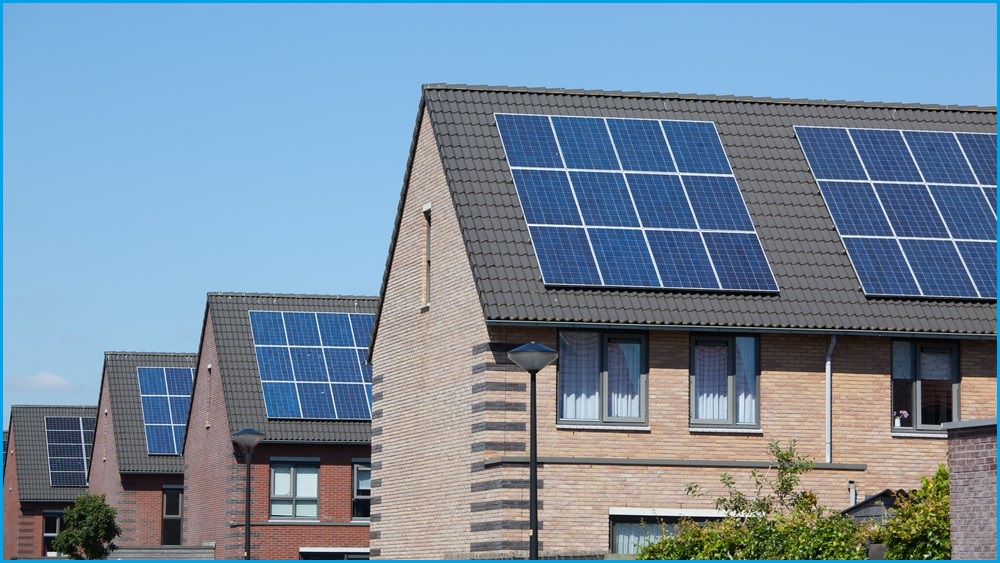
With energy providers paying paying next to zero feed-in tariffs, you'll notice your bill suddenly costs more. Photo: Shutterstock
So what are we supposed to do with all this extra energy?
ESC advises shifting electricity usage to daylight hours “during peak solar production times” for example by setting washing machines and dishwashers to start around 12pm, when solar production peaks, and to avoid running them during the 3pm-9pm peak.
If you can’t use the solar power you generate and it’s not worth selling, it may be worth considering a storage battery that lets you use that power at night or on cloudy days – saving you 30c or more for each kWh of power that doesn’t have to be bought from your retailer.
Batteries will also help you avoid incoming ‘sun tax’ imposts – which some power companies are introducing to prevent network overload by actually charging consumers for exporting solar energy to the grid during peak times.
“Batteries are coming a lot more into focus than in previous years,” said Cohen Robinson, director of energy consultancy Utilizer, noting they “act as a really good case to protect your solar investment and [enable] far better revenue mechanisms” like virtual power plants.
“There’s far more value in batteries than just selling energy back into the grid,” he said, “and this is an important move to start making people think more about when they use energy…. It encourages consumers to use energy during periods when it is actually cheap.”
The government’s Cheaper Home Batteries Program (CHBP) reimburses 30 per cent of the cost – but do your maths carefully: if your home uses most of the power you produce, or if you’re using excess solar to charge an EV, there may not be much left to fill your battery.
This will reduce the battery’s value and prolong its ROI – so before you spend thousands on a battery, check your solar generation, purchasing and FIT history, including evaluating your baseline nighttime power consumption to see how big a battery you actually need.
For example, if your home consumes 1.2kW throughout the night, providing this much power for 12 night-time hours would require a 14.4kW storage battery – and twice that or more if you run electric heaters at night during winter.
The further north you live in Australia, the closer to the equator you are – and the more likely that a solar system will produce excess energy that can more readily fill a battery.
“The business case for solar is going to change very rapidly,” Robinson said, noting that “where consumers are very used to seeing three- or four-year paybacks, it’s going to definitely move to a more realistic seven- or eight-year payback pretty quickly.”