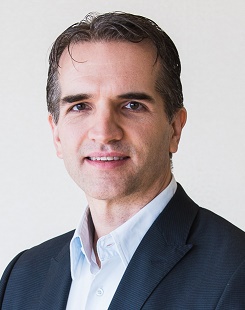

Dr Vikram Sharma, founder and CEO of quantum security pioneer QuintessenceLabs and ACS Fellow, has won the government’s annual Prime Minister’s Prize for Innovation, months after it invested $15 million into the company.
The $250,000 prize – one of eight Prime Minister’s Prizes for Science, which celebrate “demonstrated achievements” in science, innovation and commercialisation – recognises Sharma’s success commercialising “deep quantum science” research.
Canberra-based QuintessenceLabs’ (QLabs) quantum cybersecurity products are used by major businesses across four continents, which are tapping the innovative research of Sharma’s team to speed encryption of their data and protect it from quantum threats.
That research has helped QLabs build a product portfolio that includes a Quantum Random Number Generator for quantum-safe encryption, tools to manage crypto algorithms, and secure distribution of encryption keys using quantum techniques.
Calling the prize “a wonderful tribute” to QLabs researchers and “recognition well beyond anything one could have ever dreamt about,” Sharma believes the growing momentum behind the company is positioning it for growth over the next decade.
Quantum is “an incredible opportunity for Australia,” Sharma added, lauding researchers, innovators and policy makers “dedicatedly working together… to position Australia as the best place in the world to study, research and work in quantum.”
It’s far from the first recognition of QLab’s innovation, with the company attracting $25 million in a 2001 capital raising that helped it expand its business to reach major customers hungry for the massive jump in computational power it provides.
Earlier this year, the government’s $15 billion National Reconstruction Fund (NRF) contributed $15 million as lead investor in QLab’s latest most recent $20 million funding round – bringing total investment in the company to $430 million in under six months.
That funding is supporting QLabs’ new Canberra manufacturing site, enabling the company to expand local manufacturing of its qOptica product and supporting ongoing local manufacturing with the creation of up to 15 new specialist quantum jobs.
Honouring a wealth of scientific achievement
Sharma joins seven other prize winners in this year’s awards – including the new Prime Minister’s Prize for Aboriginal and Torres Straight Islander Knowledge Systems, which is offered this year for the first time – with other category winners including:
- PM’s Prize for Science: Queensland University of Technology Distinguished Professor Lidia Morawska, recognised for her translation of air quality research into actions that safeguard public health and the environment.

Queensland University of Technology Distinguished Professor Lidia Morawska. Source: Supplied
- Frank Fenner Prize for Life Scientist of the Year: Dr David Khoury, of UNSW’s Kirby Institute, used applied mathematics to translate research into actionable evidence that guided development of malaria drugs as well as mpox and COVID-19 vaccine policies.
- Malcolm McIntosh Prize for Physical Scientist of the Year: Adelaide University’s Professor Yao Zheng has developed techniques to produce clean hydrogen energy from seawater, supporting efforts to scale the hydrogen industry as part of net zero efforts.
- Prize for New Innovators: VeinTech and Lubdub cofounder Dr Nikhilesh Bappoo has been recognised for developing “novel and accessible medical technologies” that Bappoo founded to improve access to healthcare technologies.
- PM’s Prize for Aboriginal and Torres Strait Islander Knowledge Systems: Professor Michael Wear, a Malgana Traditional Custodian of Shark Bay, WA, founded Indigenous-owned sea cucumber fishery and marine restoration business Tidal Moon.
- PM’s Prize for Excellence in Science Teaching in Primary Schools: Paula Taylor, of the ACT Education Directorate’s Academy of Future Skills, is president elect of the Australian Science Teachers Association and has developed “innovative, real-life learning experiences” inspiring students’ passion for STEM.
- PM’s Prize for Excellence in Science Teaching in Secondary Schools: The “creative teaching methods” of Physics and Biology teacher Matt Dodds, from NSW’s Glen Innes High School, have helped teach STEM to rural and diverse students.
Past prize winners across the prizes’ 26 years include a who’s-who of ICT and STEM pioneers such as quantum innovator Professor Michelle Simmons AO, oceanographer Professor Trevor McDougall, and maths professor Cheryl Praeger.
The new, eighth prize “recognises the importance of Aboriginal and Torres Strait Islander knowledge systems alongside western sciences,” Minister for Indigenous Australians Malarndirri McCarthy said, calling Wear’s work “remarkable and unique”.
Wear’s team is tapping Aboriginal knowledge systems to restore damage seagrass beds in WA’s Shark Bay, with skilled Aboriginal divers sustainably harvesting health seagrass and replanting it in areas damaged after the major 2011/12 heatwave.
The new prize, Minister for Science Tim Ayres said, is significant as a way of “acknowledging and elevating the extraordinary contributions Aboriginal and Torres Strait Islander peoples have made and continue to make to science and our nation.”
Australian innovation on the world stage
The success of the honoured scientists spotlights the innovative work being done on Australia’ shores – as does the recent progression of Australian security innovator BankVault/Masterkey to the semifinals of the Slingshot 2025 science competition.
That company – whose abstraction layer applies secure passkeys to any business application – was one of 60 semifinalists in a field of thousands of startups from 150 countries, with Aussie/UK cybersecurity firm Goldilocks Secure ultimately prevailing.
Also recently announced were the Australian Institute of Policy and Science (AIPS) 2025 Young Tall Poppy Science Awards, with winners including Curtin University researchers, geologist Dr Denis Fougerouse and geospatial scientist Dr Yongze Song.
Strong research partnerships with government and universities “are fundamental to how we operate,” Sharma said, adding that “cutting-edge, early-stage scientific research is best undertaken by the brilliant minds in our universities.”
Entries for the 2026 Prime Minister’s Science Awards will remain open until December 18.