
With stubbornly high dropout rates threatening Australia’s skills pipeline, Victoria’s Swinburne University of Technology has introduced a novel solution: a new formal qualification available to those who fail to complete their full degree.
Rather than abandoning their university studies with no reward, the new Undergraduate Certificate of Higher Education Studies (UCHES) will be available to students at Swinburne who have completed four units of study, including at least two units at Swinburne.
Part of the university’s Ad Astra strategy – a plan that vice-chancellor and president Professor Pascale Quester reflects Swinburne’s goal to become “the prototype of a new and different university” – the new degree recognises the variety of learning pathways.
Students interrupt their studies for a range of reasons and the introduction of UCHES is intended to provide them with recognition for their efforts to date, allowing them to resume studies when they’re ready without penalising them.
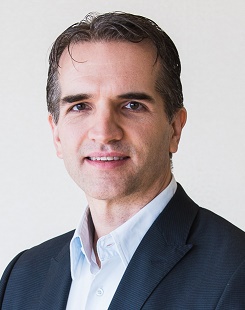
“The traditional educational model of studying a three or four-year higher education degree full time until graduation is outdated,” deputy vice-chancellor of education, experience and employability, Professor Laura-Anne Bull, said.
“Leaving university for any reason often comes with a negative stigma, but it shouldn’t…. Swinburne is proud to empower students to demonstrate their learning while providing a clear pathway to continue their education later without ‘starting over’.”
Early completion rates remain problematic
At Swinburne and across the world, suboptimal completion rates remain a significant issue: despite flat or slowly increasing overall enrolments, 38 per cent of Australian university students fail to complete their degrees within 6 years.
Overseas students were less likely to drop out than domestic students, with just 19 per cent failing to complete their studies.
With “a large and growing cohort of domestic students dropping out of their degrees before completion,” an Institute of Public Affairs (IPA) analysis warned that universities have “shifted away from education and towards the business of maximising revenue.”
IPA floated possible reasons including a decline in the student experience due to remote learning, lower academic standards, and the deterioration of on-campus culture, as surging overseas student numbers “negatively impact university culture”.
Many early leavers incur significant HELP debt that they lack the professional qualifications to repay, IPA warned – meaning that public university funding “is providing no benefit to the community because the student is not receiving a qualification.”
“Falling higher education standards are therefore an economic issue exacerbated by the increasing demand for highly skilled employees.”
Dropout, but not all out
Yet not everyone sees dropping out of university as a problem: anecdotes about uni dropouts becoming tech billionaires are well known, and indeed there is a school of thought that many students just aren’t suited for the constraints of university education.
Universities have long recognised that many dropouts eventually return to complete their degrees, with one analysis finding that 10 per cent of the 36 million American uni dropouts considered “potential completers” who tend to finish the second time around.
One Australian study found that around 30 per cent of students do nothing to change their situation once they’ve dropped out, with a range of “highly individualised and idiosyncratic” responses highlighting the range of individual circumstances.
The key, Swinburne recognised years ago, is for universities to avoid marginalising dropouts but rather to find new ways to engage with them that suit their individual learning paths and support their meaningful entry into one skills pipeline or another.
“Encouraging lifelong learning has never been more important and is the key to securing Australia’s future workforce,” Swinburne’s Bull said, adding that “our learners are diverse, and so are their needs.”
“Being able to engage with foundation concepts and academic practice in an agile way helps students build confidence in applying learning to real-world context, laying the groundwork for future academic and career success.”