




A University of NSW (UNSW) trial of OpenAI’s education-focused ChatGPT Edu platform has been so successful that the university has now purchased an enterprise licence giving 10,000 staff access to the generative AI (genAI) tool to use in their teaching.
Designed specifically for university and other educational environments, ChatGPT Edu is a fork of ChatGPT that was introduced last year to provide advanced data analysis, document summarisation and other capabilities with higher message limits and better language support.
All fixed term and permanent staff of the university – which has over 70,000 students, nearly 3,500 academic staff and over 4,100 professional staff across 45 schools – will have access to the AI platform to use during research and teaching, with the ability to build and share custom GPTs.
Unlike when using the mass-market ChatGPT, conversations and data used with ChatGPT Edu are kept secure, aren’t used to train the general-use ChatGPT large language model (LLM), and won’t be retained if the university later decides to discontinue the contract.
“Our priority is to introduce this technology in a way that is safe, reliable and supports our staff,” CIO Chrissy Burns said, lauding the “careful, staged rollout, supported by training and clear guidelines, so that staff can use AI responsibly and in ways that reflect UNSW’s values.”
UNSW’s decision to deepen its commitment to ChatGPT comes nearly a year after it first announced that around 800 staff and students would trial the genAI platform in what Burns called “a pivotal moment in our journey to integrate cutting-edge technology into the fabric of UNSW.”
That trial proved successful, with participants increasingly comfortable using genAI and 98 per cent saying they wanted to retain access to the platform – which was used for scenarios such as role-playing with ‘virtual CEO’ bots, course Q&A assistants, and content review tools.
In one course, 115 students used ChatGPT Edu for over 41,000 interactions in 10 weeks – while staff also used the platform to design “realistic” case studies, create data sets for use during classroom exercises, and to support scenario-based learning activities.
GenAI becomes fundamental to teaching and learning...
Universities’ active embrace of genAI comes as they struggle to maintain academic integrity against now ubiquitous AI tools, with UNSW – where up to 1 in 12 students was recently flagged as cheating with AI – warning that “unauthorised use of AI in assessments is a form of cheating”.
A recent UK analysis confirmed fears that broad AI adoption was driving a surge in academic misconduct, with thousands of university students using AI to cheat – and similar results reported at UNSW, which offers guidelines for responsible genAI use and attribution.

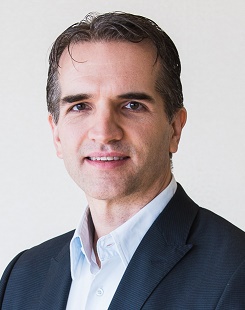
UNSW vice-chancellor and president Professor Attila Brungs. Photo: UNSW
UNSW identified 530 cases of genAI misuse last year, including 136 cases of serious plagiarism and exam misconduct – with business and engineering students most frequently found cheating and 12 per cent of the 2,000 students in UNSW College flagged for plagiarism and misconduct.
To rein it in, UNSW joins a growing fraternity of unis – others include London Business School, the University of Oxford, London Business School, Arizona State University, and US Ivy League institutions the University of Pennsylvania and Columbia University – adopting ChatGPT Edu.
The agreement “will give our UNSW community access to secure, practical tools that can support their work, whilst ensuring they can be used responsibly and in line with our values,” UNSW vice-chancellor and president Professor Attila Brungs said.
“As we introduce these technologies, our focus is on helping staff explore how AI can add value in teaching, research and operations, while maintaining the highest standards of ethics, privacy, and academic integrity.”
...but at what cost?
UNSW’s investment comes as a recent RedBridge Group poll of 2,008 voters found young Australians increasingly optimistic about AI, with 63 per cent of 18 to 35 year olds believing AI will improve their working lives – well ahead of the 37 per cent of 50 to 64 year olds who felt the same.
New use cases are emerging as students experiment with genAI – and with a new deal set to give all South Australian high school students a Microsoft-developed genAI tool called EdChat next term, unis can expect future students to arrive with genAI already built into their learning process.
Yet for all its benefits and the varied use cases that emerge with its widespread use, spending massive sums on genAI tools may be seen by some as an extravagance in a time of increasing financial pressure on universities here and abroad.
UNSW declined to share the cost of its OpenAI contract, but similar deals overseas have raised eyebrows – with California State University recently committing $25 million ($US17 million) to bring ChatGPT Edu and training to its over 500,000 students at 22 campuses statewide.
Coming at a time when those unis have been increasing tuitions and cutting classes to close a $3.4 billion ($US2.3 billion) budget shortfall, the decision to commit significant funding to OpenAI raised concerns – although administrators said the decision was made to ensure equitable access for all.
Australian universities are under similar cost pressures, with government caps on valuable overseas students only recently being relaxed as the institutions grapple with what Universities Australia recently called “unprecedented financial strain”.
The cost will come back to students and staff many times over, OpenAI head of education in APAC Raghav Gupta said in welcoming UNSW’s “thoughtful rollout” and calling AI “a powerful ally, freeing up more time for the truly human work of teaching.”