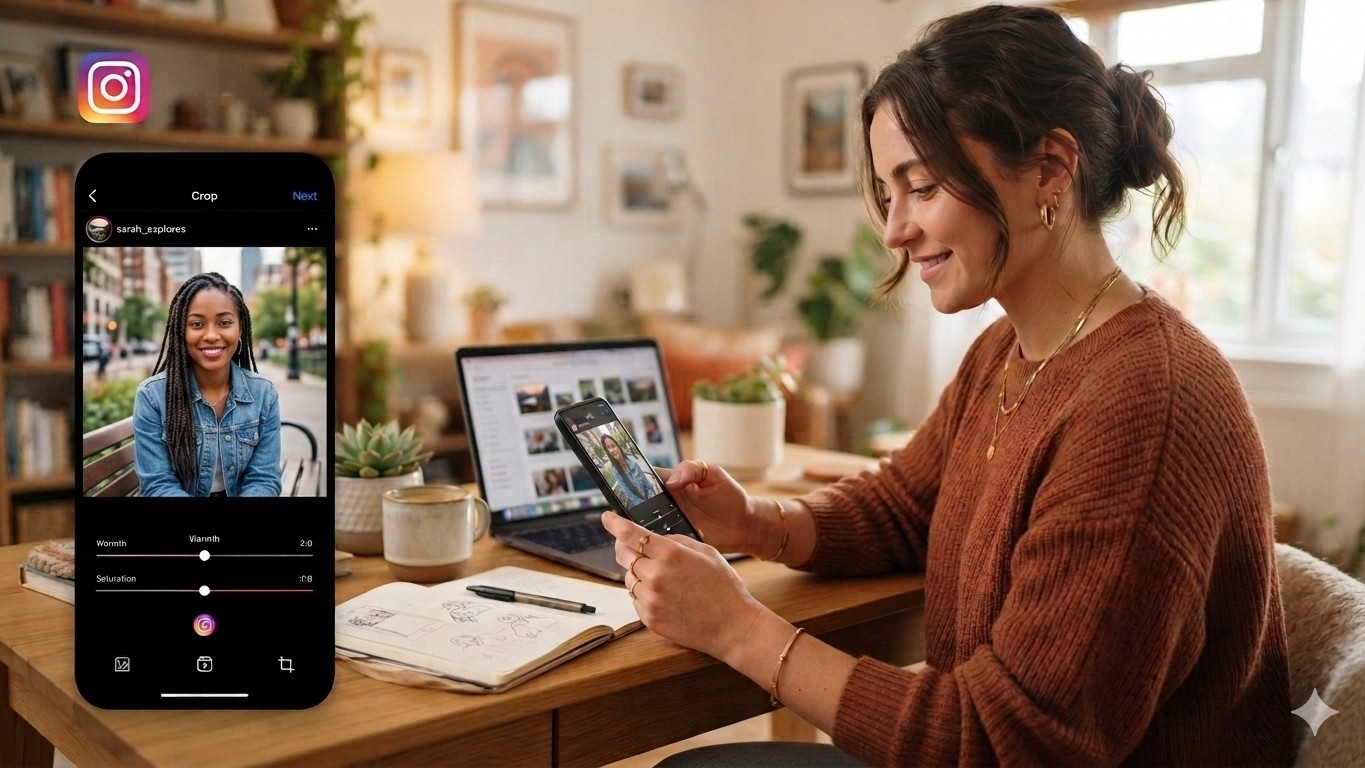

Meta has backflipped on plans to let Instagram users take photos from public accounts to create AI-generated images without the owner's knowledge or consent, following a global backlash that erupted within days of the feature being announced.
Late last week, the tech giant unveiled Muse, the first image generator developed by its Superintelligence Labs division.
Muse will use the Spark large language model to reason through user prompts, search the internet and generate an image based on the request.
It will be available on the Meta AI app, Instagram and WhatsApp, and eventually on Facebook and Messenger.
‘No longer available’
Most controversially, Meta initially announced Muse would allow users to “@-mention” another public account and use their photos in their AI-generated images as references.
Under the proposal, account owners would not have been required to give consent and would not have been notified if their photos were used.
Users who wanted to prevent their content from being used in this way would have needed to either switch their account to private or actively opt out.
The feature quickly triggered a global privacy backlash from advocacy groups, unions and high-profile individuals.
Just three days after making the announcement, Meta said it would be walking away from the plan and admitted that it had got this one wrong.
“Our intent was to provide a useful creative tool and to give people control over whether their public content could be referenced in this way,” the Meta blog post said.
“We’ve heard the feedback that this feature missed the mark, so it’s no longer available.”
Global backlash
Before the U-turn, the SAG-AFTRA union, which represents Hollywood actors and other media professionals, came out against the feature and urged its members and the public to opt out of it.
“Anything other than a clear and conspicuous opt-in for these types of uses of Instagram users’ images is unacceptable, and an utter miscalculation of public sentiment regarding the obvious dangers and harms inherent in such use,” the union said in a statement.
Emmy-winning actor Hannah Einbiner was also vocal in criticism of the AI tool and recommended her followers opt out of it.
In Australia, Electronic Frontiers Australia had called on the Office of the Australian Information Commissioner (OAIC) to investigate the AI image generator to see if it was in breach of Australian privacy laws.
Electronic Frontiers Australia chair John Pane issued an “urgent warning” about the feature.
“Australian citizens should not wake up to find their faces, their children’s photos and their personal creative outputs treated as free raw material for some random strangers’ generative AI experiments,” Pane said.
“This rollout completely bypasses the core tenets of informed consent and privacy-by-design principles.
“Make no mistake, this is a purposefully designed breach of privacy and not a product engineering error.”
Whilst not commenting on this specific complaint, the OAIC emphasised that companies must be mindful of their privacy obligations, and the expectations of the general public.
“Individuals should be provided practical, fair choices to control their personal information, including obtaining genuine consent for secondary uses, especially where AI systems are involved,” a spokesperson for the OAIC told Information Age.