
Australia’s privacy watchdog has been urged to investigate Meta’s new AI image generator, which will allow users to pull photos from other public accounts without the owner giving consent or even knowing about it.
Meta announced Muse, the first image generator developed by its Superintelligence Labs division, on Thursday.
It works with the Muse Spark large language model, which replaced the existing Llama model, to reason through prompts, search the internet and generate an image based on the request.
The tool will be available across the Meta AI app, Instagram and WhatsApp, and eventually Facebook and Messenger.
“It uses advanced reasoning to understand complex prompts seamlessly blending multiple photos into high-quality creations you can download and share anywhere – including directly to your chat, story or feed,” a Meta blog post read.
“[It is a] creative partner that knows your world, making it easy to turn your ideas into high-quality visuals that you can download and share anywhere, including directly to your feed, story or chat.”
Opting out
Most controversially, Meta Muse will allow users to “@ mention” other Instagram accounts and use their public photos as part of an image it generates.
To avoid this, users will have to either make their profiles private or change their settings around how people can reuse their content for AI.
Public accounts will have a new setting to “allow people to reuse your content on Instagram and with AI features at Meta”, that must be turned off if users don’t want their content to be manipulated.
The new function has been criticised by privacy-focused organisations around the world.
Electronic Frontiers Australia has issued an “urgent warning” to Australian social media users and called on the Office of the Australian Information Commissioner to investigate whether the new tool complies with the country’s privacy laws.
“Australian citizens should not wake up to find their faces, their children’s photos and their personal creative outputs treated as free raw material for some random strangers’ generative AI experiments,” Electronic Frontiers Australia chair John Pane said.
“This rollout completely bypasses the core tenets of informed consent and privacy-by-design principles.
“Make no mistake, this is a purposefully designed breach of privacy and not a product engineering error.”
A spokesperson for the OAIC said the agency does not comment on individual complaints, but that it's important for companies handling personal information to be "mindful of their privacy obligations and community expectations".
They said a recent OAIC survey had found that trust in the social media and AI sectors was "miniscule", with nearly 80 per cent saying that they felt like they had little or no control over how their personal information was collected and used.
"Individuals should be provided practical, fair choices to control their personal information, including obtaining genuine consent for secondary uses, especially where AI systems are involved," the OAIC spokesperson told Information Age.
X’s AI platform Grok has previously been mired in controversy over its ability to generate deepfakes, particularly non-consensual sexual images.
‘Follows instructions faithfully’
Meta said Muse was its “most advanced image generation model yet”.
“It follows instructions faithfully, edits with precision, composes from multiple references, and draws on Instagram for social context,” the company blog post said.
“It also brings agentic tool use capabilities to image generation and integrates with Muse Spark.”
Muse can create designs for invitations and postcards, the blog post said, and can also redesign rooms based on images from Facebook Marketplace.
“Ask it to mock up an image of you in front of a historical landmark, cleanly erase a photobomber from the background of a shot or write a custom prompt to build a functional QR code,” the blog post said.
“It will also render text cleanly inside your visuals, meaning you can ask for a how-to guide or a detailed infographic on a specific subject, and the test comes out legible and styled to match.”
It will also be used in the 30 new AI effects which will shortly be coming to Instagram Stories.
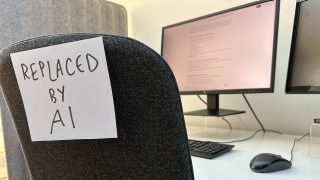
Meta has been doubling down on AI usage in recent years, and earlier this year laid off 8,000 staff, equating to about 10 per cent of its global workforce.
In an email announcing the layoffs, Meta CEO Mark Zuckerberg said that AI would be central to everything the company does.