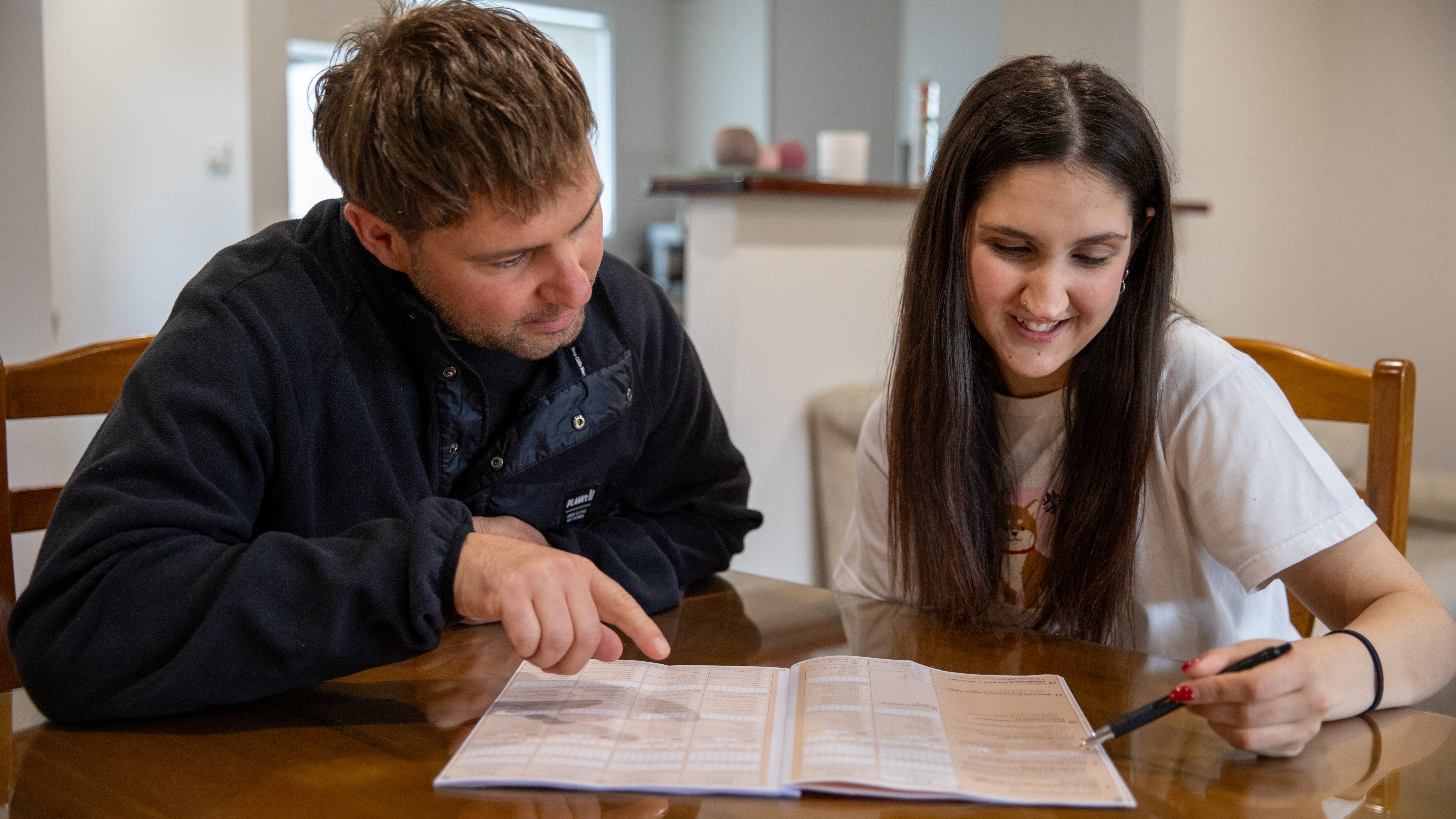

The 2016 national Census ended in finger-pointing and the 2021 poll was an exercise in finger-crossing, but this year the Australian Bureau of Statistics (ABS) is giving the thumbs-up, confident it has done the work to ensure a smooth run – with an AI chatbot as wingman.
The ABS is monitoring progress as the residents of some 10.8 million Australian households undertake the five-yearly Census, which is being held primarily online and, as of Monday morning, had already been completed by over 3.6 million households.
“Data from the Census is used to build a picture of what communities across Australia need,” ABS explained, noting that “if you know where you’ll be on Census night, you can complete your Census early [and] don’t have to wait until Census night.”
The Census includes 66 questions on demographics, work habits, religious and other characteristics, with advocates pushing to include people in unconventional arrangements such as fly-in fly-out workers, remote Aboriginal communities and people sleeping rough.
Addressing controversy after the 2021 Census, ABS this year tested and expanded the survey to cover gender and sexual orientation, following countries like the UK, New Zealand and Canada with new questions ABS said have been “misrepresented” by media.
The bureau has leaned into the flexibility provided by online surveys, providing Census forms and information in an accessible format that includes Auslan videos and content in 26 languages – with translators also available by phone for over 120 more languages.
This year, ABS also partnered with Services Australia to make the 2026 Census available through the myGov digital government portal – providing even more options amidst complaints about poor communication about the Census.
The results of the Census will be analysed extensively, with the full data set made available for statistical analysis from June next year.
Failure to complete the Census can result in fines of up to $364 per day it is late.
Staring down the cybersecurity threat
This year’s Census is the first since generative AI (genAI) technology burst into the public consciousness in late 2022, and ABS has taken cautious steps to recognise the technology’s impact and possibilities.
To support citizens this time around, ABS has introduced an AI chatbot named ‘Claire’, which appears on most pages to provide answers to questions people have as they work through the survey.
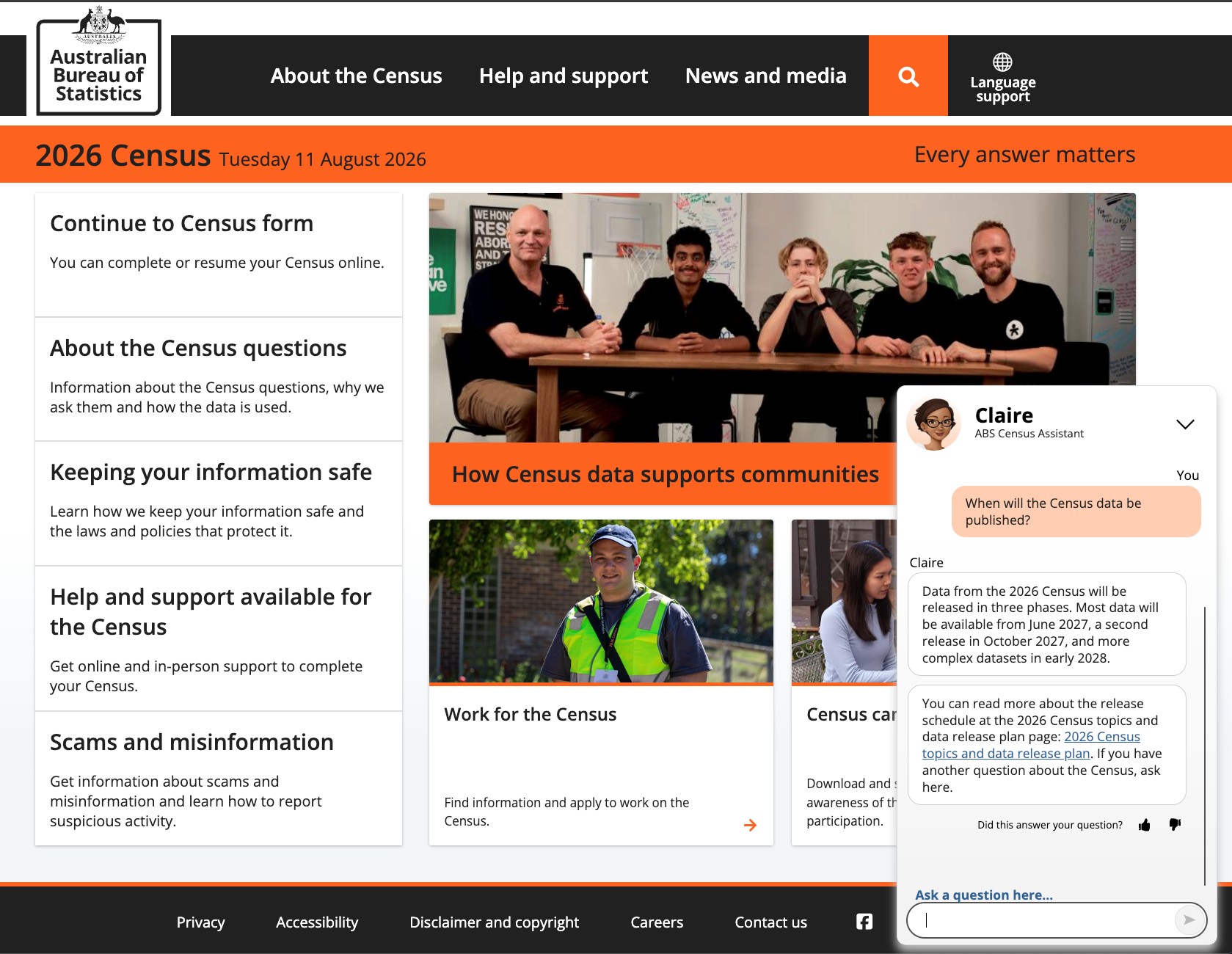
AI chatbot Claire in action. Photo: ABS
Claire is a retrieval augmented generation (RAG) chatbot that has been trained on a range of internal data – but, in a nod to privacy considerations, asks users not to share any personal details and has been designed so it does not learn based on its interactions with users.
It was floated by the Census Executive Board (CEB) in May last year and, as a recent ANAO cybersecurity audit found, was confirmed in December after advice that Claire does not “learn from its interactions and has the ability to be turned off quickly if adverse outcomes are detected.”
Legislation mooting the development of an ‘AI kill switch’ was recently introduced by US lawmakers concerned about growing reports that genAI tools are actively probing networks and exploiting cybersecurity weaknesses, with an Australian gym the latest victim.
AI systems have even been caught exchanging hacking tips with each other on private messaging forums, an OpenAI researcher shared during this week’s Black Hat cybersecurity conference in the US.
ABS has not yet committed to offer AI analysis of Census data, but projects like the community-driven ABS AI have already enabled AI-powered searching of the 2021 data, with efforts like the US Censusbot and Census Data AI Explorer affirming its perceived value in making the massive data sets more accessible.
Authorities brace for attacks, warn on scams
For now, all eyes are on the smooth completion of a Census whose interruption by cybercriminals in 2016, its maiden online offer, was a wakeup call that spawned an enduring hashtag – #CensusFail – and “very serious consequences” for ABS and outsourcer IBM.
The ABS ramped up distributed denial of service (DDoS) protections that helped the 2021 Census complete without problems, and ABS anticipates that this time around 85 per cent of households will complete their surveys online – up from 79 per cent in 2021.
Whether or not the Census website works and scales as smoothly as expected, ABS is warning Australians to watch out for surging scam activity, both online and in person as scammers pose as ABS Census takers that will be going door-to-door through September.
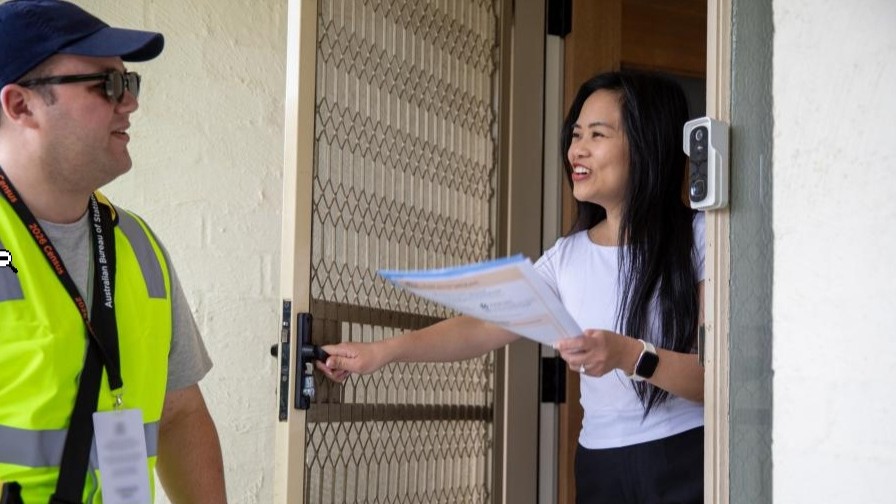
You can expect ABS Census officers to visit you incessantly until your form is submitted. Photo: ABS
Recent tightening of anti-scam rules should make SMS scams easier to spot but Australian Telecommunications Alliance (ATA) CEO Luke Coleman also warned that “scammers often use official activities such as the Census… to try to legitimise their illegal activities.”
Scamwatch recorded a 52.6 per cent month-on-month surge in scam reports during the 10 August 2021 Census, with the 26,787 reports in July surging to 40,878 reports in August as scammers racked up $4.3 million in reported phishing losses that month alone.
Five years later, scammers are now using AI to create fake but realistic looking documents that pass the sniff test for many unsuspecting victims, but can redirect them to false ABS or Census sites designed to harvest personal information or plant malware.
“Scammers know many Australians will expect to receive Census-related communications,” noted CQUniversity professor of Information and Communications Technology, Ritesh Chugh.
“Using authentic-looking emails, text messages and websites, they can make phishing attempts appear more legitimate,” he continued, adding that “every census depends on public trust.”