



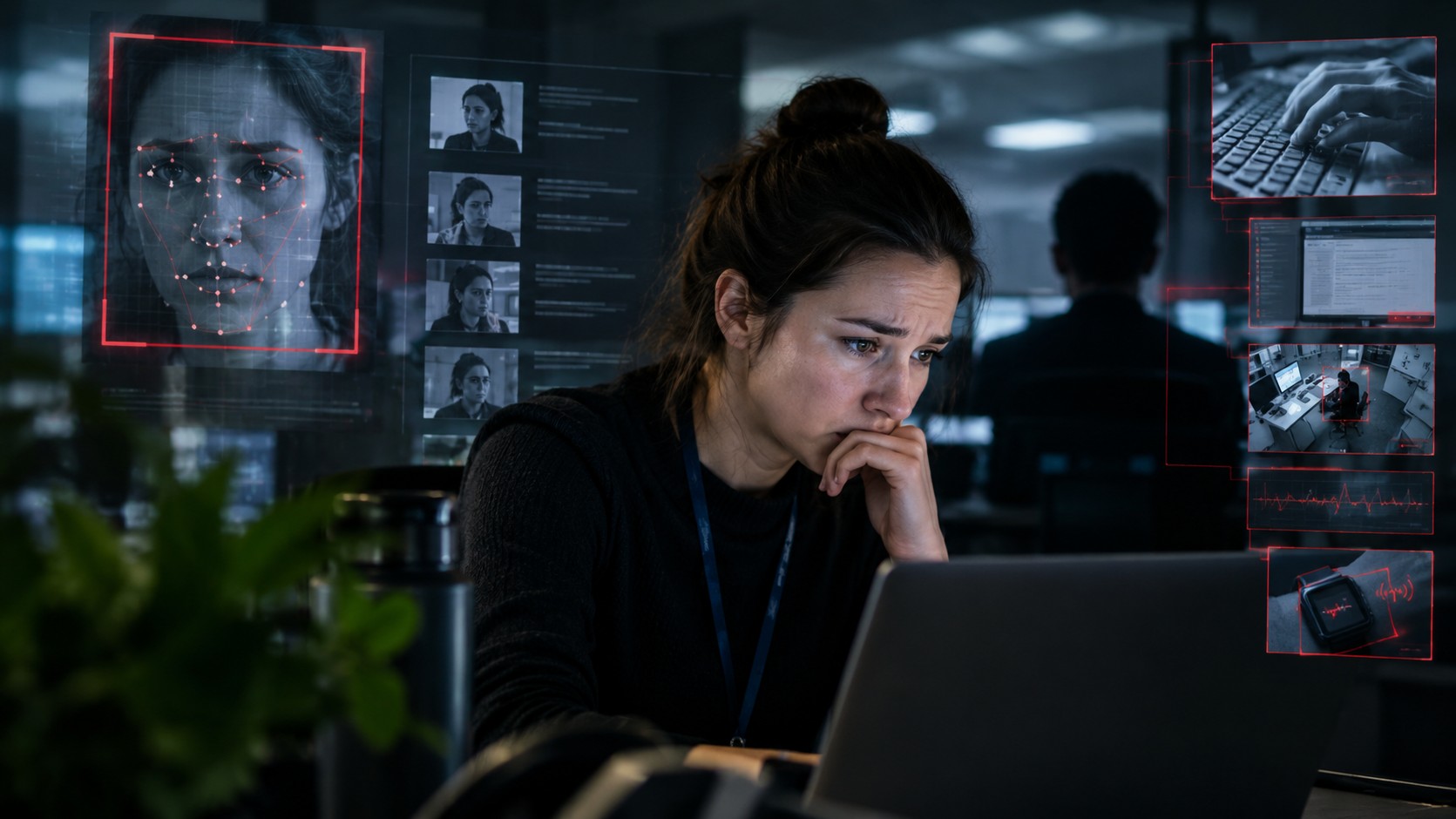

Artificial intelligence is “supercharging” the surveillance of Australian with the federal government urged to urgently strengthen protections for workers, according to a new report.
The University of Technology Sydney’s Human Technology Institute has released a report examining the growing use of technology to monitor employees and outlining reforms to address the risks.
The report calls on the federal government to simplify what it describes as “confusing and complicated” workplace surveillance laws, introduce a “fair and reasonable” test for monitoring workers, and allow employees to take privacy complaints to the Fair Work Commission.
Human Technology Institute co-director Ed Santow told the Joint Select Committee on AI this week that advances in AI had enabled a proliferation of new workplace surveillance tools.
“AI is supercharging an extraordinary rise in the surveillance of workers,” Santow told the public hearing.
“All too often workers from all sectors are being subjected to almost constant surveillance on their work-issued or personal devices, and that’s causing real harm.”
Awareness gap
The report identifies a growing range of technologies being used to monitor workers, including keystroke tracking, screen capturing, internet monitoring and filtering, email and message monitoring, wearable tracking devices, AI-enabled webcams, fingerprint scans and wearable neurotechnology.
“These tools are being rolled out across the full range of Australian workplaces,” the report said.
“While workers increasingly report harm from unreasonable surveillance, most workers simply don’t know the true extent of surveillance they are subjected to. This awareness gap is quickly closing.
“There is growing concern, especially from Australian workers and unions, about unchecked surveillance.”
The report found that workplace surveillance can blur the boundaries between work and home, damage human dignity and wellbeing, and raise concerns about bias and discrimination.
Evidence cited in the report included examples of surveillance systems having serious consequences for workers' mental health.
The Australian Workers Union described a warehouse distribution centre where a productivity monitoring tool was affecting workers' mental health “in really serious ways”, with some employees reportedly experiencing panic attacks before entering the workplace.
“We have [heard] how dehumanising it is to be monitored second to second, to have their toilet breaks monitored, and just how they feel very resentful and often very ashamed,” the union said.
The Victorian Trade Halls Council described a young worker who was required by their employer to remain on Zoom throughout every hour of her working day.
“She found the constant surveillance extremely intimidating and left her job without having another one lined up,” they said.
Filling the gaps
The report described Australia's workplace surveillance laws as “complicated, confusing and riddled with gaps”, arguing that the federal government should lead efforts to establish consistent protections.
One recommendation is to amend the Fair Work Act to require workplace monitoring to be “fair and reasonable”.
The report also called for workers to be able to bring complaints about unreasonable or harmful surveillance to the Fair Work Commission.
It recommended that more detailed, workplace-specific surveillance requirements be addressed through enterprise bargaining agreements and modern awards.
“The Australian government has a clear mandate to undertake this reform, having put workers at the centre of the National AI Plan,” the report said.
“Protecting workers from the harms of surveillance is not only about ensuring the safety of individual workers.
"It is about restoring trust, fairness and dignity to the way we work.
"If we get these basics right, Australia can weather the storm of technological change and uphold our core values.”
Some state governments have already taken steps to strengthen protections against digital workplace surveillance.
In July, the Victorian government proposed a suite of measures aimed at preventing companies from “spying on workers at work”.
The proposals included requiring biometric data to be collected only when there are no “less intrusive” alternatives available, as well as banning the use of biometrics to read workers' emotions.
The NSW government also introduced legislation late last year targeting the use of AI and automated systems to allocate work, while giving unions the ability to investigate digital work systems.