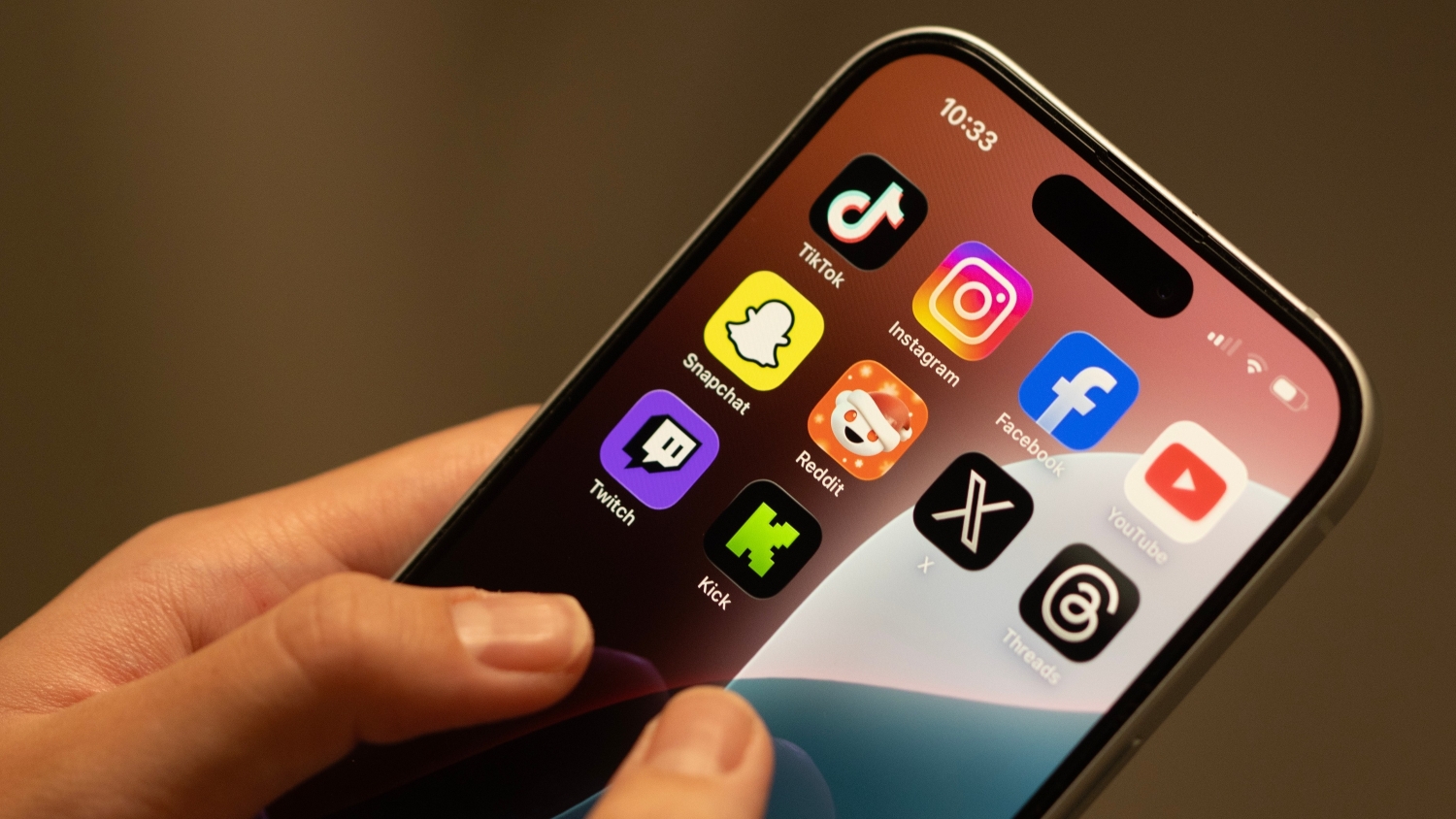

Nearly 5 million online accounts believed to be held by children aged under 16 were deactivated, removed, or restricted around the launch of Australia’s landmark social media age ban on 10 December 2025, the federal government says.
The statistics, based on figures provided to the eSafety Commissioner by the 10 social media platforms initially covered by the ban, were released on Friday as evidence the controversial policy was off to a good start.
The platforms – Twitch, Kick, YouTube, Threads, Facebook, Instagram, Snapchat, X, TikTok, and Reddit – said a total of 4.7 million accounts were restricted in the first half of December, when the ban came into effect.
The government has not detailed how many accounts were affected on each individual platform.
Meta revealed earlier this month that it had blocked nearly 550,000 accounts across Instagram, Facebook, and Threads that it “understands to be” run by children.
This included just over 330,000 Instagram users, nearly 175,000 Facebook users, and 40,000 Threads accounts.
It had been estimated that 16 per cent of Australia's 24.3 million Facebook users and 4 per cent of its 16.2 million Instagram users were aged under 16.
‘Source of Australian pride’, Albanese says
The social media age ban requires relevant platforms to take “reasonable steps” to stop those aged under 16 from holding accounts, or risk fines of up to $49.5 million.
The policy has been controversial, with critics arguing children will find ways around the ban, will migrate to other platforms, and will be negatively impacted by the lack of social media access.
Prime Minister Anthony Albanese said the figures on restricted accounts showed the policy was “working” and that it was a “source of Australian pride”.
“A little more than a month ago, Australia took action to protect our kids, to give kids back their childhood and to give parents peace of mind, to make sure that social media companies understood that they had a social responsibility,” Albanese said.
With 4.7 million under-16 social media accounts gone, we're giving kids a childhood and parents peace of mind. pic.twitter.com/S7wJZaSNJO
— Anthony Albanese (@AlboMP) January 15, 2026
The data indicated social media companies had taken proactive action because of the Australian legislation, eSafety Commissioner Julie Inman Grant said, but many accounts were still active.
“While some kids may find creative ways to stay on social media, it’s important to remember that just like other safety laws we have in society, success is measured by a reduction in harm and in re-setting cultural norms,” she said.
“Speed limits for instance are not a failure because some people speed. Most would agree that roads are safer because of them.
“Over time, compliance increases, norms settle, and the safety benefits grow.”
Tech companies on notice
The eSafety Commissioner said while there were “encouraging signs” all of the covered platforms were complying with the ban, it was too early to determine whether there was full compliance.
“We are still at the very beginning of this journey, and it is evident platforms are taking different approaches based on their individual circumstances, resulting in variations in the data and outcomes currently surfaced,” Inman Grant said.
“Of course, while some positive changes will be clearly evident today, some of the longer-term normative changes and related positive impacts on Australian children and families may take years to fully manifest.”
Inman Grant’s office also confirmed emerging social media sites Bluesky and Lemon8 had self-assessed themselves as being subject to the social media age ban.
Bluesky introduced age assurance measures the day before Australia’s legislation took effect in December, despite not being designated under the laws.
While tech giants appeared to be complying with the changes, many have been highly critical of Australia’s policy.
Meta earlier this month said claims the “algorithmic experience” on social media amplified harmful content were “false”, and that the ban was “not meeting its objectives of increasing the safety and wellbeing of young Australians”.
The ban is facing a High Court challenge from digital freedom advocates and another from Reddit, which has argued the new rules are not “reasonably appropriate and adapted” to achieve the aim of protecting children from harm, and “infringes the implied freedom of political communication”.