

The Australian government’s world-first banning of under-16s from holding social media accounts is being challenged in the country’s High Court, ahead of new laws due to take effect on 10 December.
Advocacy group Digital Freedom Project announced on Wednesday that it and two teenage plaintiffs had filed the legal challenge, which argued the age ban “improperly robs 2.6 million young Australians” of their implied right to freedom of political communication.
Libertarian Party member John Ruddick, who is president of Digital Freedom Project, said the age ban was “disproportionate” and would “trespass either directly or indirectly upon the rights of every Australian”.
“Come December 10 all kids will be banned, and all the rest of us will have to prove our age and potentially provide ID just to access social media,” Ruddick said.
“… It is not the government's role to parent children, it should be up to families to decide when their children are ready for social media.”
The two 15-year-old plaintiffs, Noah Jones and Macy Neyland, were named in the High Court challenge as being “representative” of those who will be impacted by the social media age ban.
The legislation will ban under-16s from holding accounts on platforms including Facebook, Instagram, Reddit, TikTok, Snapchat, YouTube, and Twitch, which will need to implement age assurance checks for users.
Neyland said young people were “the voters of tomorrow” and should not be banned from expressing their views online.
“Driving us to fake profiles and VPNs [virtual private networks] is bad safety policy,” she said.
“Bring us into safer spaces, with rules that work: age‑appropriate features, privacy‑first age assurance, and fast takedowns.”
Jones described the government as “lazy” and said, “They should protect kids with safeguards, not silence.”
Google reportedly told the government in July that it could challenge the social media ban in court over its procedural fairness and the implications for Australians' political communication.
An exemption the government had previously created for Google’s video streaming platform YouTube was dropped in the same month, despite the company’s legal threat.
Government will ‘stand firm’, minister says
Communications Minister Anika Wells made reference to legal challenges during Question Time at Parliament House in Canberra on Wednesday.
"Despite the fact that we are receiving threats and legal challenges by people with ulterior motives, the Albanese government remains steadfastly on the side of parents, and not of platforms," she said.
"We will not be intimidated by threats, we will not be intimidated by legal challenges, we will not be intimidated by Big Tech.
“On behalf of Australian parents, we stand firm."
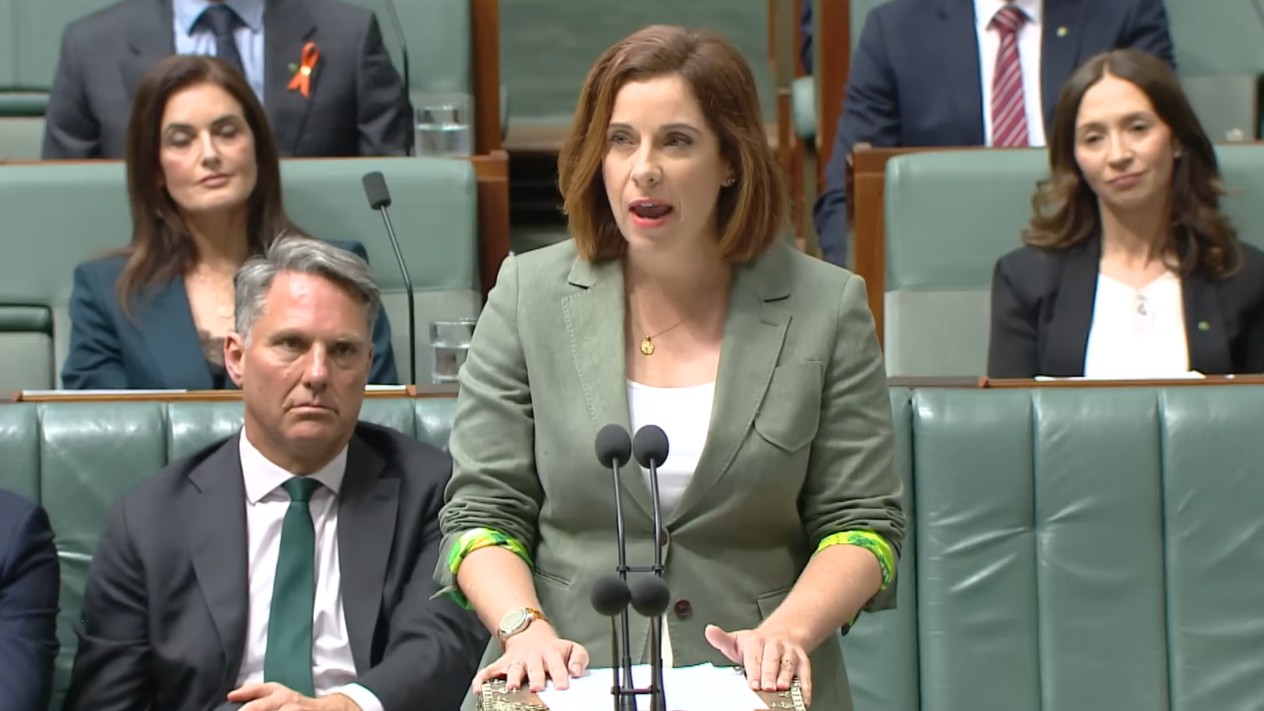
Communications Minister Anika Wells says the government is 'on the side of parents, and not of platforms'. Image: Australian Parliament / YouTube
Shadow minister for communications, Melissa McIntosh, said on Wednesday that she was “really concerned about the social media ban”, and believed there was “great risk” it would fail or face “extensive legal cases”.
This was despite the Coalition being the first party to suggest an age ban and supporting the government’s legislation.
"It is rushed, the government is unprepared, the minister has not been straight with the Australian people, and we are now just weeks away,” she said.
Opposition leader Sussan Ley said on Thursday that while the Liberal-National Coalition wanted to “protect children against Big Tech”, it also sought to “hold this government to account for the promises it has made”.
“We are just days away from those new laws taking effect, and we want to see that they’re actually going to work in the interests of children,” she said.
Senate committee recommends delay
A Senate committee which had examined the social media ban recommended on Wednesday that the beginning of the legislation be delayed until 10 June 2026.
This would “allow time for the issues in implementation and compliance to be properly considered and an education campaign for young people affected to be rolled out”, it said in its final report.
The committee also recommended the government ban digital platforms from “harvesting and exploiting the data of minors” through their content algorithms and targeted advertisements.
The government said it had already spent more than $10 million on a national advertising campaign about the ban and had rolled out educational material through the eSafety Commissioner’s office.
United Australia Party Senator Ralph Babet also introduced a bill on Tuesday in an attempt to repeal the government’s social media ban legislation.
“The ban will push young people off mainstream platforms and into darker, less regulated corners of the internet,” he said.