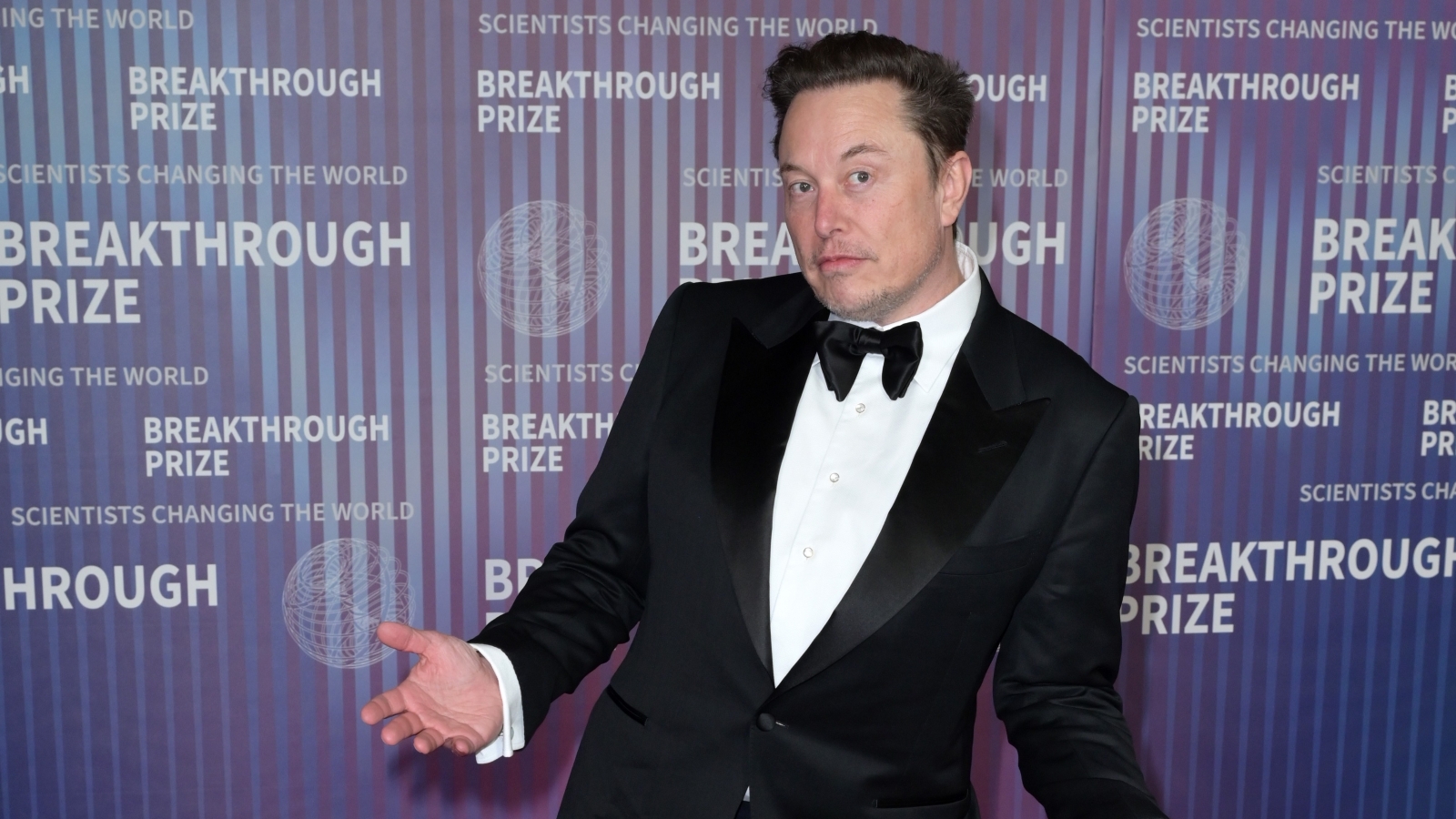

A federal court in the United States has ruled against Elon Musk in his lawsuit against artificial intelligence firm OpenAI, after a jury found the billionaire had waited too long to file his case and missed a statutory deadline.
Musk, the world’s richest person, had sued OpenAI – which he co-founded – and accused the company and its CEO Sam Altman of enriching themselves by moving from a nonprofit to a for-profit company while using some of Musk’s money.
After a three-week trial, a nine-person jury took only two hours of deliberation on Monday (US time) to find that Musk’s 2024 lawsuit was too late, as it came after the three-year statute of limitations – given he allegedly knew about OpenAI’s plans years earlier.
The jury’s advisory decision was accepted by US District Judge Yvonne Gonzalez Rogers, who reportedly said in court, “There's a substantial amount of evidence to support the jury's finding, which is why I was prepared to dismiss [Musk’s case] on the spot.”
Despite the judge’s suggestion that Musk may have difficulty challenging the decision, the leader of companies including Tesla and SpaceX said he would appeal, writing on his social media platform X that “creating a precedent to loot charities is incredibly destructive to charitable giving in America”.
Musk, who has an estimated net worth of around $US700 billion ($975 billion), also argued “the judge and jury never actually ruled on the merits of the case, just on a calendar technicality”.
“There is no question to anyone following the case in detail that [Sam] Altman & [OpenAI president Greg] Brockman did in fact enrich themselves by stealing a charity,” he wrote.
“The only question is WHEN they did it!”
‘A hypocritical attempt to sabotage a competitor’
While OpenAI and Sam Altman did not immediately comment on the court’s decision, the company’s lawyer William Savitt said OpenAI was “delighted by the outcome”.
He described Musk’s lawsuit as “nothing more than an after-the-fact contrivance that bears no relationship to reality”.
He also argued Musk – who owns his own AI firm, xAI (which is now part of SpaceX) – was threatened by OpenAI’s success off the back of its popular chatbot ChatGPT.
“The finding of the jury confirms that what this lawsuit was, was a hypocritical attempt to sabotage a competitor and to overcome a long history of very bad predictions about what OpenAI has been, and will become,” Savitt said.
He added that OpenAI was committed to developing “safe AI for the benefit of all humanity”.
Outside court, Musk’s lawyer Marc Toberoff compared the case to battles during the American Revolution which were won by British forces, who ultimately lost the war.
He confirmed Musk would appeal the court’s decision, and argued the ruling was “a travesty”.
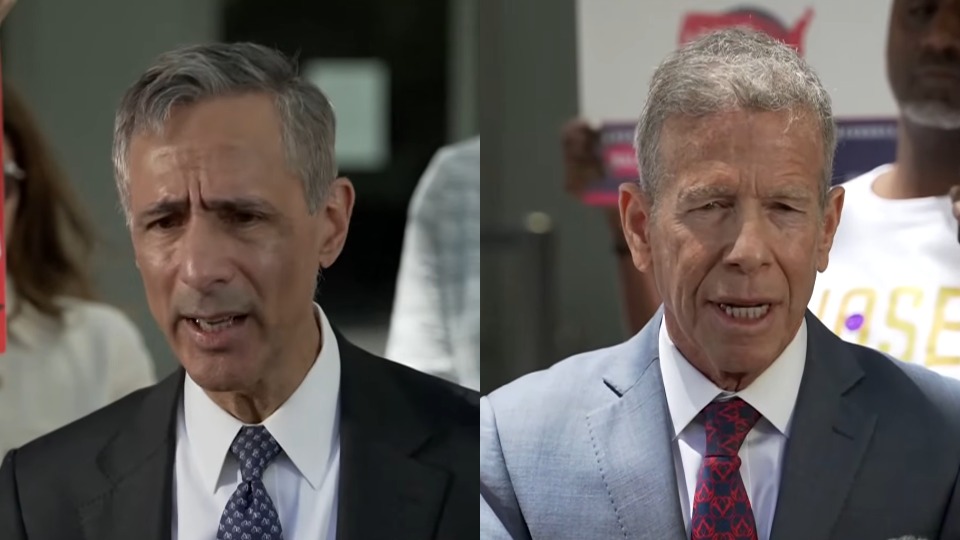
OpenAI lawyer William Savitt (left) and Musk lawyer Marc Toberoff (right) spoke outside court. Images: Reuters / YouTube
The fight over OpenAI
The trial in Oakland, California, featured testimony from the likes of Musk, Altman, and Brockman, as well as Satya Nadella – the CEO of Microsoft, which is a major investor in OpenAI and a codefendant in Musk’s lawsuit.
Musk had sought damages to be directed to OpenAI’s charitable arm, and for the company to effectively return to a nonprofit with Altman and Brockman removed from their senior positions.
The case took place as OpenAI reportedly prepares one of the largest initial public offerings in history, which could value the company at more than $US1 trillion ($1.4 trillion).
Musk invested around $US38 million ($53 million) in the early years of OpenAI, but resigned from the organisation’s board in 2018, before it established its for-profit business.
OpenAI argued during the trial that Musk knew the firm would not always be a nonprofit, and suggested he was angry about not having control of the rising company, which shot to mainstream success with the release of ChatGPT in November 2022.
Musk’s xAI launched its Grok chatbot as a competitor to ChatGPT in November 2023.
Both Altman and Musk said in court that they had concerns about the other being in control of OpenAI, and possibly one day of artificial general intelligence or AGI – a still theoretical technology which has equal intelligence to humans.
“Part of the reason we started OpenAI is we didn’t think AGI could be under the control of any one person, no matter how good their intents are,” Altman reportedly told the court.
Microsoft told US media it also welcomed the court’s decision.