



Analysts are weighing the broader economic implications after Nvidia’s shares plummeted on the news that CEO Jensen Huang had resigned, shortly after revelations that he had extramarital affairs with two employees as well as a supplier executive who was days ago outed as a Chinese spy.
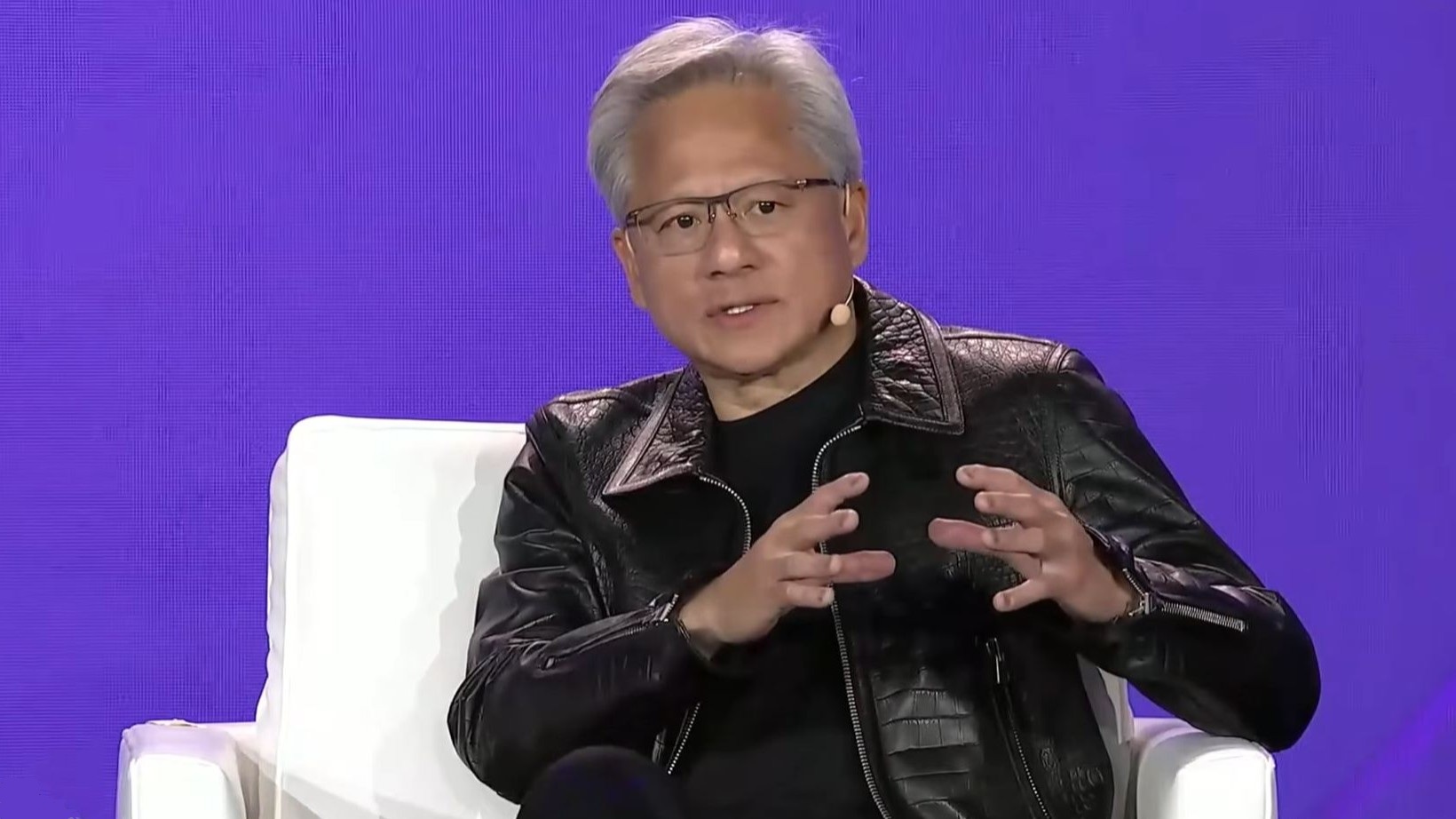
Shares in market bellwether Nvidia dropped by 13 per cent after news that Huang had stepped down after days of intensifying speculation about his multiple affairs, which had led to a crisis of confidence among shareholders and a board of directors that was loathe to dismiss him.
The board, which has initiated an independent investigation into recently surfaced allegations that Huang had an affair with Chinese tech executive Alice Huang, announced on Thursday that Huang had resigned after 33 years at the helm of the gaming chip company he co-founded back in 1993.
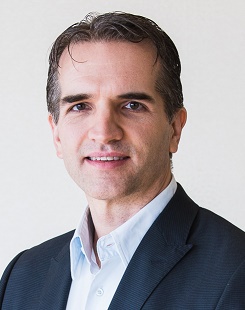
Taking his place is Colette Kress, a current executive vice president and CFO who joined Nvidia in 2013 after nearly 25 years in finance roles at companies including Cisco and Microsoft.
The now interim CEO Kress “has helped lead Nvidia through a period of extraordinary growth and has a deep understanding of our business, customers, operations and financial position,” Nvidia chairman of the board Harvey Jones said.

Nvidia's Colette Kress will helm the chip giant as interim CEO. Photo: Supplied
The statement obliquely addressed concerns that Nvidia would struggle without the “profound” and “immeasurable” contributions of high-profile Huang, who Jones said had built Nvidia into “one of the most consequential technology companies in the world.”
Kress “is supported by an experienced leadership team that has been instrumental in executing Nvidia’s strategy and advancing its technology roadmap,” Jones said, and “we expect the company’s operations, customer commitments and product roadmap to continue without interruption.”
Aftershocks reverberating through global markets
The world’s second largest company, Nvidia began as a maker of specialised graphics chips for games and has become the dominant supplier of chips powering the global AI industry – last year driving it to a $5.9 trillion (US$4 trillion) market capitalisation that outpaced even Microsoft.
The market capitalisation of Nvidia has plummeted by $2.6 trillion (US$1.8 trillion) from its record highs just a month ago, as a precipitous investor selloff drove its shares to their lowest level since March – costing Huang, who owns around 3.6 per cent of Nvidia, around $93.6 billion.
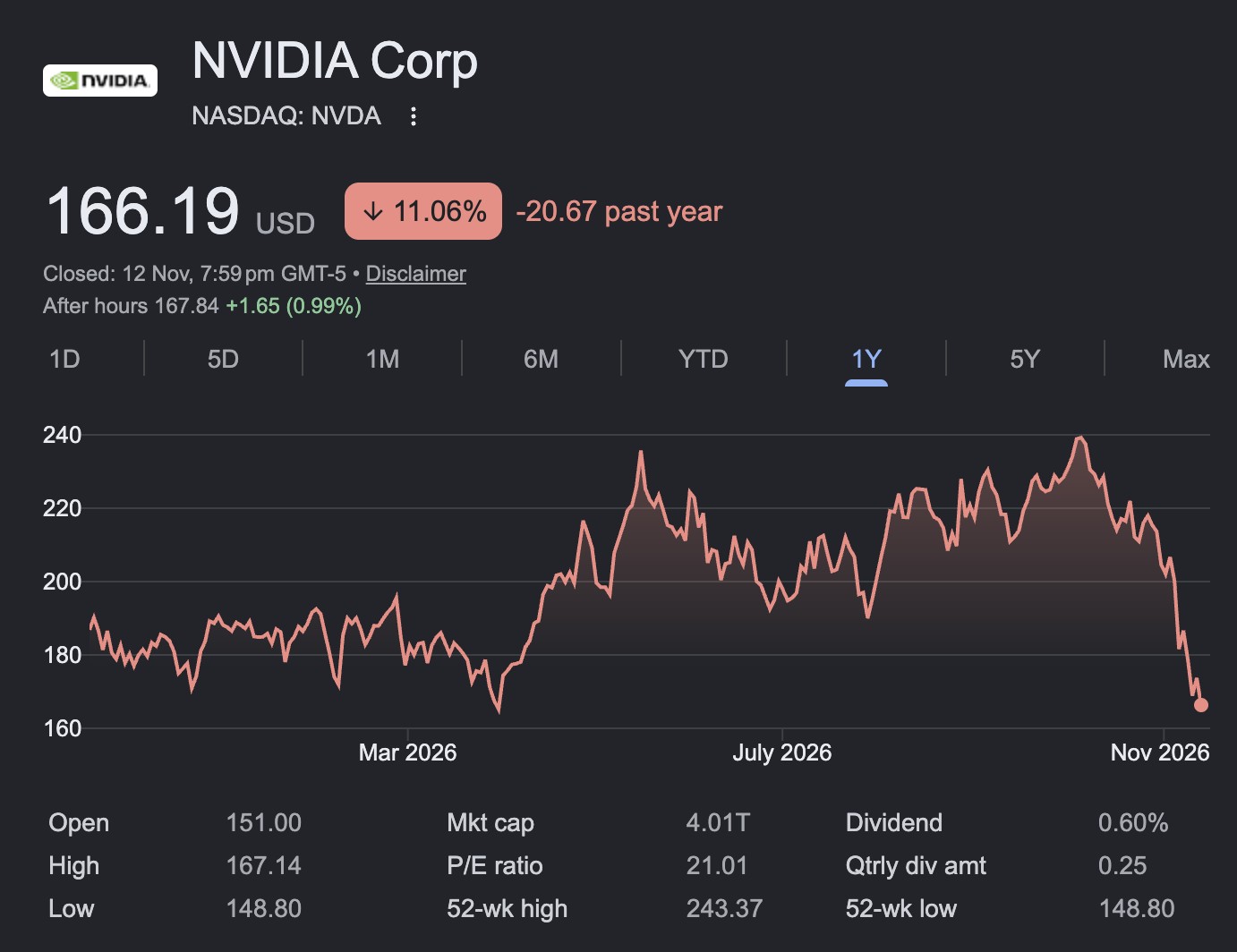
Nvidia shares have fallen dramatically since its early October record high, destroying $2.6 trillion (US$1.8 trillion) in market value as sharemarkets price Huang's indiscretions and analysts contemplate the implications. Source: Google.
The departure of such a key executive, at a company so large that a major decline has serious implications for pension and superannuation funds around the world, has sent analysts into a frenzy as they process the significant implications of the week’s fast-moving events.
Morningstar senior equity analyst Brian Colello, for one, slashed his fair value estimate of Nvidia shares by 19 per cent after what he called the “swift, stunning downfall of the only CEO [Nvidia] has ever known”, warning Kress “will have tough work restoring trust with customers and financial partners.”
Research firm The Kobeissi Letter – which had publicly urged the Nvidia board not to fire Huang, noting that similar previous CEO dismissals tended to bode poorly for their companies – called Huang’s resignation “a massive mistake” that “will ultimately be a net negative” for Nvidia and investors.
“This will go down as the most costly mistake of the AI Revolution,” the firm said in a post on X.
Where to from here?
Huang may no longer be in the CEO role but he may not be unemployed for long, with some pressuring Elon Musk to hire Huang and Musk responding that it would be “an honor” to do while warning that Huang’s departure will create supply chain issues across the AI industry.
There is even an active petition – which currently contains more than 100,000 signatures – to bring Huang back to Nvidia.
And as sharemarkets digest the implications of Kress’s appointment – and the ensuing global executive search that may see an outsider brought into replace her – shareholders are already filing lawsuits and market watchers have begun contemplating what Nvidia looks like moving forward.
Huang’s direct management style will complicate the transition: while many companies develop broad leadership structures with clear lines of succession, Huang managed Nvidia through direct relationships to a large number of executives.
Now that he’s no longer at the top of the pyramid, the lack of formal lateral relationships and executive support could threaten continuity – and create new market opportunities for chipmaking rivals like AMD and Broadcom, whose shares surged after news of Huang’s resignation.
So significant is Nvidia that the US Senate Banking Committee has requested Huang testify over the latest developments at the company, whose dominance of the AI chip market had made it so pivotal to the US-China AI race that US President Donald Trump has Huang on speed-dial.
Huang is the “central nervous system” of the US technology market, Yorkville Ives partner Dan Ives said earlier in the week, warning that if Huang left Nvidia “the whole thing changes because no one else could do” the role that Huang has played in global technology.
“The situation is bigger than Nvidia [and] bigger than Jensen,” Ives said, “[and] I would almost argue like it’s the US tech ecosystem that actually depends on it.”