



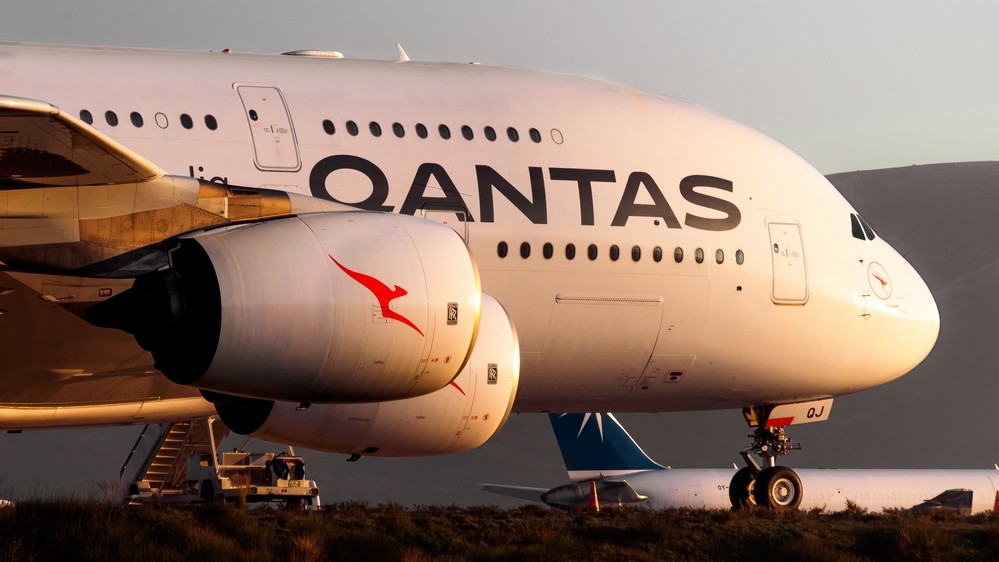

Qantas will cut around 850 jobs over the coming years as part of a new partnership with technology consulting giant Accenture that will see the airline shift some back-office services to India and ramp up its use of AI and automation.
The airline announced the partnership on Tuesday morning, saying it would modernise its back-end systems, processes and data.
Qantas Group CEO Vanessa Hudson said around 850 roles would be impacted, with the first wave of changes targeting finance, procurement, people and marketing by the middle of next year.
“We know this will be difficult news for some of our people and this decision is not a reflection of their contribution or commitment,” Hudson said in the statement.
“We are focused on providing redeployment into other roles across the group where possible, including new roles we’re creating in Australia, as well as reskilling, retraining and ongoing support and care.”
Under the deal, most Qantas back-office functions will be delivered by Accenture teams in India, with “some” work remaining in Australia.
The airline said these functions would eventually be further transformed through automation and AI.
‘Right to an explanation’
Rumours of the partnership emerged earlier this year, with the deal dubbed “Project iQ”.
In August, the Australian Services Union (ASU) said Qantas had assured it there were no plans to offshore Australian jobs.
ASU assistant national secretary Scott Cowen said workers deserved an explanation of what had changed since then.
“Earlier this year, Qantas told us directly there was no plan to offshore any jobs,” Cowen said.
“Today, they’ve come out and told hundreds of staff members that their work will now be delivered mostly from people overseas.
“Qantas staff have the right to an explanation.”
Hudson said the partnership would involve Qantas “fundamentally redesigning” how the work behind the airline gets done, with AI and automation playing a central role.
“The scale and speed of change in this space is unprecedented and unlike anything businesses have seen in generations,” she said.
“Leading organisations around the world are well progressed in using technology and AI to completely transform how they work, and standing still is not an option for us.”
Union meeting
The ASU will meet with its Qantas members on Tuesday to discuss the announcement.
“AI is having a huge impact on workers across the country, but the cost of technology change should not be borne by the workers who have kept the airline running for years,” Cowen said.
“Sending more jobs overseas is not in the spirit of Australia.
“Our priority is keeping as many of these jobs as possible in Australia and ensuring that every affected worker has a real choice about their future at the airline.”
Qantas said it invests more than $1 billion in technology each year, including through its new Qantas Product Innovation Centre in Adelaide.
The job cuts announcement comes just days after the airline revealed it was assessing potential data exposure following a cyberattack on a third-party travel technology provider that affected several global airlines.
Last year, Qantas was also impacted by a data breach that exposed the personal information of more than five million Australians, with some of the information later published on the dark web.
The Office of the Australian Information Commissioner eventually ruled the available evidence did not support the likelihood that Qantas had breached its privacy obligations.
Accenture has struck similar partnerships with large organisations to automate business processes and provide technology services from offshore locations.
Early last year, Telstra signed a similar partnership with Accenture, establishing a joint venture to “rapidly accelerate data and the AI roadmap”.
The telecommunications giant subsequently axed hundreds of jobs, including in its enterprise and international divisions.
The partnership involves developing AI tools to support Telstra workers and “reinvent business processes through new capabilities like agentic AI, enabling teams to work with intelligent AI ecosystems to optimise key tasks end-to-end”.