

Social media giants Meta and YouTube have been found liable for damages worth millions of dollars after a California jury decided the companies had designed platforms which were dangerous for young people, in a case that could influence other similar lawsuits.
Meta, which owns Instagram, Facebook, WhatsApp, and Threads; and YouTube, which is owned by Google, had designed addictive platforms without concern for the mental health of young users, the jury found.
The case was brought by a now-20-year-old female plaintiff known by her first name Kaley and her initials KGM, who reportedly testified that her social media use began as a child, and her addiction worsened her mental health.
Kaley allegedly told the jury she began using YouTube at age six, and Instagram at age nine, and was on social media “all day long” as a child.
Her lawyers claimed she went on to develop “anxiety, depression, self-harm and body dysmorphia”.
A majority of jurors in the five-week Los Angeles trial found Meta and YouTube knew their platforms were likely to be dangerous for minors and had failed to warn them of that danger.
The jurors suggested Kaley be awarded $US3 million ($4.3 million) in damages, as well as a further $US3 million in punitive damages – but a judge will have final say on the end amount.
Meta was found to be responsible for 70 per cent of the damages, while YouTube was found liable for 30 per cent.
Both companies challenged the jury’s verdict.
In a statement, Meta said it disagreed with the decision and would launch an appeal.
“Teen mental health is profoundly complex and cannot be linked to a single app,” the company said.
“We will continue to defend ourselves vigorously as every case is different, and we remain confident in our record of protecting teens online.”
A Google spokesperson said the company also disagreed and planned to appeal.
“This case misunderstands YouTube, which is a responsibly built streaming platform, not a social media site,” they said.
The case previously included social media firms Snap and TikTok, but they chose to settle for undisclosed amounts of money prior to any legal proceedings.
Case ‘sent a message’ to social media firms, lawyer says
Lawyer Mark Lanier, who led the team representing Kaley, said outside court that while his client did not wish to appear publicly, she wished to “express her appreciation publicly for the work of the court, for the work of the jury, and for the work of the media”.
Lanier added that the case was important for not only Kaley but “to a generation of people who have been affected”, and the jury’s decision had “sent a message” to social media firms.
“There are so many families who have been tragically hurt through the addiction of social media,” he said.
“… Just because of the features alone that drive addiction, these companies can be held accountable – that's a huge message for these companies.”
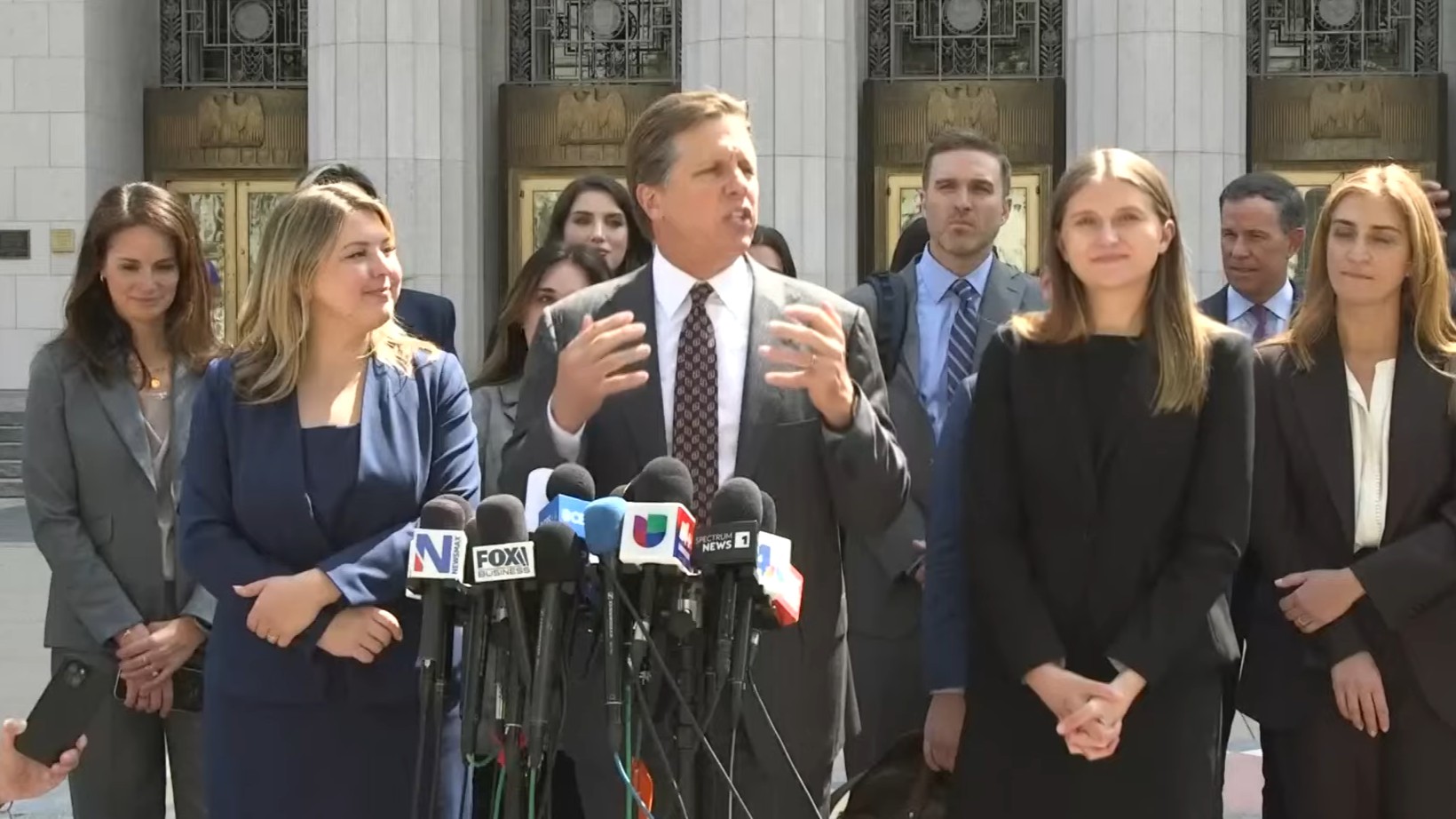
Kaley's lead lawyer Mark Lanier (centre) speaks outside the Los Angeles court. Image: Reuters / YouTube
Parents and relatives of other young people affected by social media harm argued Meta and YouTube knew their platforms were dangerous for children, but moved forward with them and incorrectly blamed parents for their addiction.
The parents said they would demand new safety protections and legislation from political leaders in Washington, DC.
Meta CEO Mark Zuckerberg took the stand in front of a jury for the first time as part of the trial last month, while Instagram CEO Adam Mosseri also testified.
Meta lost separate $US375m case one day prior
The Thursday (AEDT) verdict in Los Angeles came just one day after a separate jury in the US state of New Mexico found Meta had violated local law, in a case brought by the state’s attorney-general.
Meta had knowingly harmed the mental health of children and hidden what it knew about child sexual exploitation on its platforms, the jury found in that case.
The company was ordered to pay $US375 million ($539 million) in civil penalties, but said it disagreed with the verdict and would appeal.
New Mexico Attorney-General Raúl Torrez called the jury’s verdict “a historic victory for every child and family who has paid the price for Meta’s choice to put profits over kids’ safety”.
“The substantial damages the jury ordered Meta to pay should send a clear message to big tech executives that no company is beyond the reach of the law,” he said in a statement.
“Policymakers and law enforcement officials across the country can help make this verdict a turning point in the fight for children’s safety.”
Torrez said prosecutors would seek court-mandated changes to Meta’s platforms during the next phase of the trial in May.
Meta reportedly laid off around 700 employees on Wednesday, after it unveiled a new stock program which could increase the compensation of six top executives, according to the New York Times.