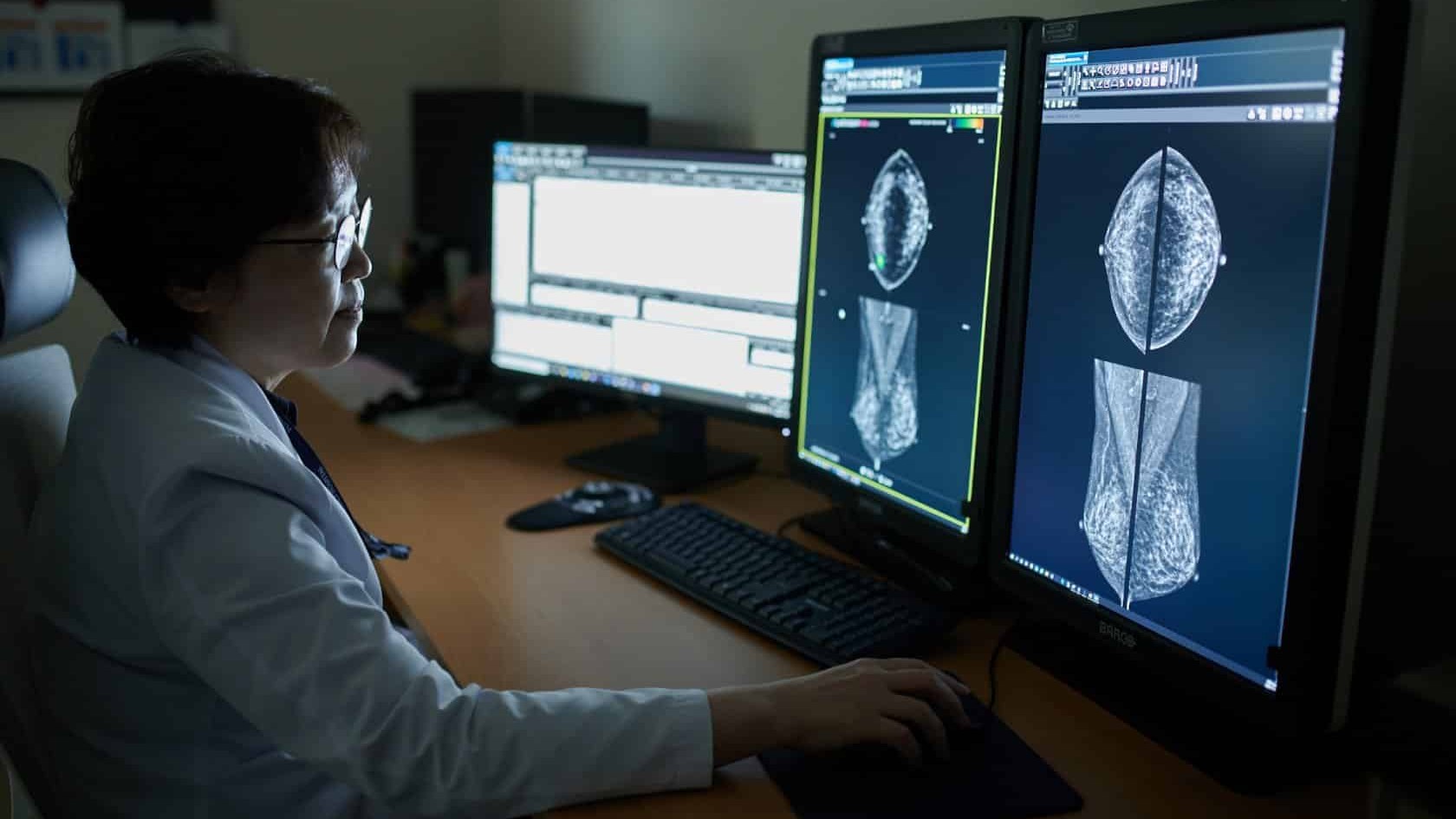

EXCLUSIVE: NSW Health has defended BreastScreen NSW’s use of Korean AI technology after federal assistant minister Dr Andrew Charlton suggested it should have backed an Australian system instead — despite there being no TGA-approved local equivalent.
BreastScreen NSW provides breast cancer screening services across the state and is managed by Cancer Institute NSW, which is part of NSW Health.
Charlton, the assistant minister for Science, Technology and the Digital Economy, questioned BreastScreen NSW’s use of Korean firm Lunit’s cancer detection technology, called Insight, in a speech at the University of Technology Sydney (UTS) on Friday.
In his speech promoting Australian AI, Charlton questioned why BreastScreen NSW “didn't choose” a local breast cancer screening research program called BRAIx, “or any other Australian capability”.
"I have no suggestion that there aren’t compelling features of that Korean option,” Charlton said.
“My point is simple – when you outsource capability to a foreign vendor, you don't just buy a product, you create a dependency.
“You potentially hollow out local expertise, you have the risk of handing over nationally significant data captured by our nation to another nation, and you might foreclose the possibility of an Australian export.”
Charlton said he was not suggesting BreastScreen NSW made its decision “for the wrong reasons” or had done so “in bad faith”, or even that its choice was incorrect.
But he argued procurement decisions should consider “not just which product might be the most mature today, but which pathway is going to create the most value for that organisation and for Australia more broadly over the next decade”.
The assistant minister suggested BreastScreen NSW should have instead chosen to partner with BRAIx, an Australian AI breast screening system still in development under the direction of radiologist and AI researcher Dr Helen Frazer.
‘No TGA-approved Australian provider’
Cancer Institute NSW’s CEO, Professor Tracey O’Brien, told Information Age Lunit’s technology – which has been approved for domestic use by the Therapeutic Goods Administration (TGA) – was selected following “a rigorous NSW government procurement process” and there is no Australian-made, TGA-approved equivalent.
“At the time BreastScreen NSW undertook procurement, and as remains the case today, there is no TGA-approved Australian commercial provider of this technology suitable for use in a public screening program,” she said.
O’Brien added that data generated by BreastScreen NSW scans “is rigorously de-identified and encrypted, and no identifiable data is sent outside NSW”.
She said “BreastScreen NSW’s decision to implement AI was underpinned by world-leading evidence”, including a peer-reviewed study involving over 2.6 million breast images from BreastScreen NSW clients.
“The outcomes [of the study] now clearly demonstrate that AI-supported screening performs at least as well as established practice, without compromising cancer detection or increasing false positives,” she said.
A spokesperson for Charlton declined to comment when asked by Information Age whether his office checked with NSW Health about its Lunit procurement prior to the assistant minister's speech.
"The assistant minister will continue to make the economic case for building Australian AI, rather than renting from abroad,” they said.
“As outlined in the speech, he does not expect every organisation to buy Australian, and no individual decision was being criticised.”
The spokesperson said trials of Australia's BRAIx program by BreastScreen services in Victoria and South Australia will "provide the pathway for TGA approval to build and deploy Australian".
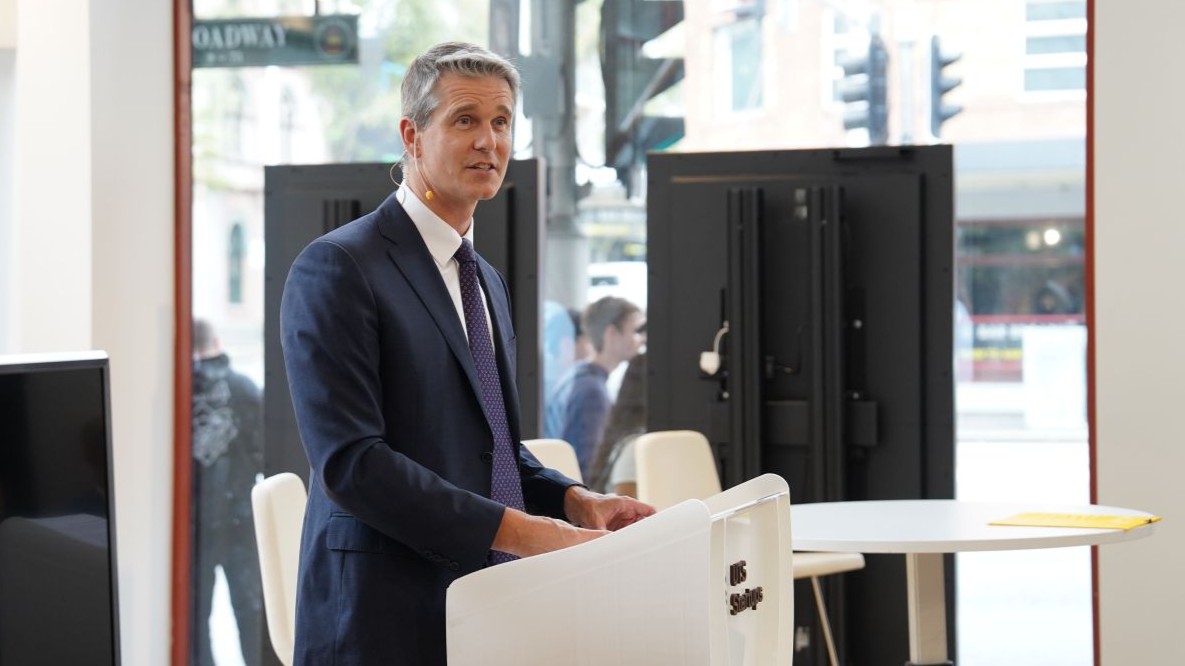
Assistant minister Andrew Charlton speaking at the University of Technology, Sydney. Image: Andrew Charlton / LinkedIn
BreastScreen NSW, which is jointly funded by the Commonwealth and NSW governments, held its tender process in 2019 and signed its initial contract for Lunit’s AI mammogram software in 2022.
After a phased rollout, BreastScreen NSW began using Lunit more broadly in late 2024, with the technology expected to initially provide radiologists with “additional analysis” for around 31,000 mammography exams per year.
NSW Health Minister Ryan Park said in 2024 that the technology would help healthcare workers “continue to serve the community as quickly and as efficiently as possible”.
Charlton pushes for more Australian AI
Speaking at UTS last week, Charlton attempted to contrast BreastScreen NSW’s decision to that of the I-MED Radiology Network, which has procured technology from Australian medical imaging company Harrison.ai.
“Harrison.ai is what happens when an Australian capability is given a chance, and Australia could have hundreds more of these if our local capability is backed with the same conviction,” Charlton said.
He called for procurement decisionmakers to “actively seek out Australian AI options” before signing contracts.
“When the choice is close, and it often is close, we need to lean Australian,” he said.
“... If the foreign product is clearly superior, fine, but don’t let the Australian option lose by default because it wasn’t in the room.”
Speaking at an event in Western Sydney on Tuesday this week, Charlton said the federal government is “motivated” to make sure Australian AI companies “are backed by the Australian government, [and] backed by Australian organisations”.
“We have a lot of capability – more than 1,500 startups, incredible researchers across our universities and government science institutions,” he said.
“But we’re in a critical window right now where those capabilities, where those young companies, will either be adopted and embraced by the Australian community, embraced by Australian organisations and corporates, or not.
“We think that if they are, then we build a dynamic, sovereign, domestic Australian AI industry that will deliver prosperity and trust for a long time to come.
“If we fail to seize that opportunity, we run the risk of being a renter of foreign intelligence – a perennial importer of the technology of the 21st century.”