


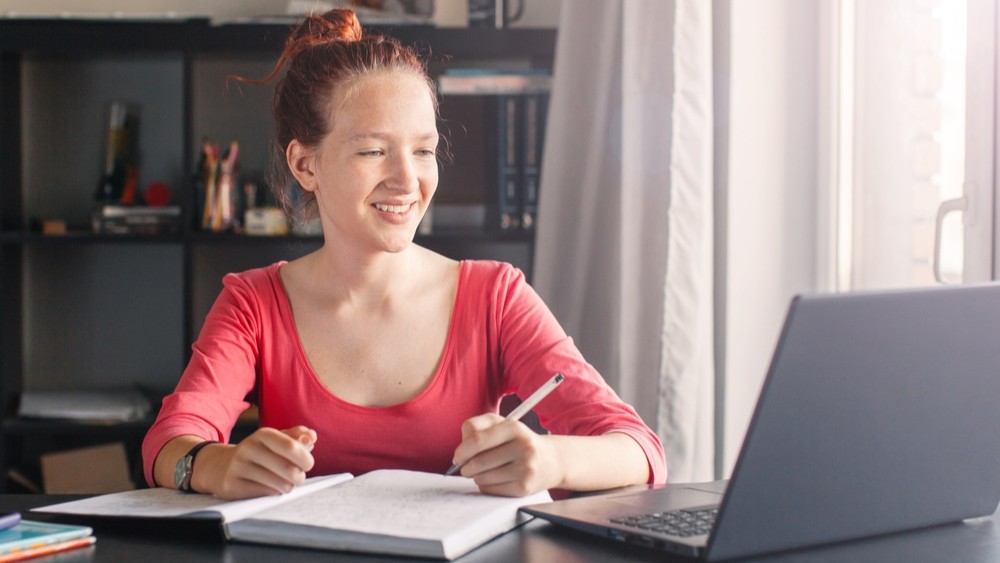

NSW students in Years 11 and 12 will be limited to one take-home assessment task as part of the school-based assessment of their HSC studies, the state government has decreed as it cracks down on the use of generative AI (genAI) that educators fear is compromising student learning.
Half of each student’s HSC result is determined through school-based assessments, and until now schools have had latitude to decide how much of those results are satisfied by take-home assessments.
When the Class of 2027 begins Year 12 studies in term 4 of this year, however, the new policy will limit schools to just one take-home assessment worth no more than 15 per cent of the school-based assessment component, or 7.5 per cent of the total HSC score.
The policy will also apply to Year 11 students from the beginning of 2027.
Courses involving the creation of major works – such as creative arts, technology, and English Extension 2 – will be exempt from the new policy, with the NSW Education Standards Authority (NESA) board set to consider additional subject-specific advice for 2028 and beyond.
The new limits – which reflects the idea that HSC marks should reflect a student’s own knowledge, skills and thinking, without reliance on generative AI tools – “are an important starting point,” NESA CEO Paul Martin said.
GenAI, he continued, “may offer students a short-cut to complex school work, but it bypasses the opportunity to build knowledge and learning…. It is not an overstatement to say the consequences of that could be severe over time.”
AI is reshaping teaching and learning
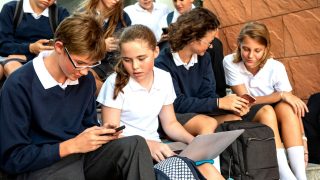
The new measures are a direct response to growing concerns across education, industry and government that ubiquitous genAI tools are allowing students to get away with lower standards of work and learning, with implications for university study and future careers.
A recent Learning First study of Australian teachers and school leaders found around 80 per cent worry about how the technology is impacting education – and that half of secondary teachers don’t know how to stop students from using AI for plagiarism or cheating.
“The dangers posed by AI are real and urgent,” the report warned while noting that “many senior secondary assessments are susceptible to AI related plagiarism or cheating.”
Limiting the opportunities for NSW students to use AI on take-home exams is a step towards reducing this risk, and stems from an urgent request by NSW Minister for Education and Early Learning Prue Car, who last month asked NESA to urgently address the issue.
Car initially requested a complete moratorium on unsupervised, take-home assessment tasks but the new policy represents a compromise, even as genAI remains firmly on education policymakers’ radars and NESA undertakes a more detailed review of AI’s impact.
“School communities are concerned about the tide of AI technology impacting our classrooms, which is undermining learning, thinking, creativity, and hard work,” said Car in announcing the new policy.
“When students outsource their learning – whether that is to tutors, classmates, or artificial intelligence – they are missing out on the rigorous, high-quality education they need to set themselves up for the future.”
Implications for the global skills pipeline
Educators have struggled to find the right level of AI use, with Australian schools embracing the technology even as test scores plummet – Australian students’ latest NAPLAN scores among them – and studies show AI use in schools can cause more harm than good.
It’s a point that UNESCO highlighted years ago, but as the damage becomes clear, countries are finally acting: in June, for example, countries like Norway and China strictly banned AI use during many school years.
The new policy may feel like a contradiction for students that are expected to function in an AI-driven world – and are already using AI for everyday purposes – but educators warn there’s more at stake than just forcing students to think more.
In 2028, many of next year’s Year 12 students will be entering universities where AI use is similarly rampant – but if they lean on AI too heavily, educators fear the impact on their learning will carry through into a workforce that needs creative, effective thinkers.
“We have a moral obligation to the students and teachers of NSW,” NESA’s Martin said, “to protect the learning process, the integrity of assessments, and to maintain confidence in the HSC credential.”