



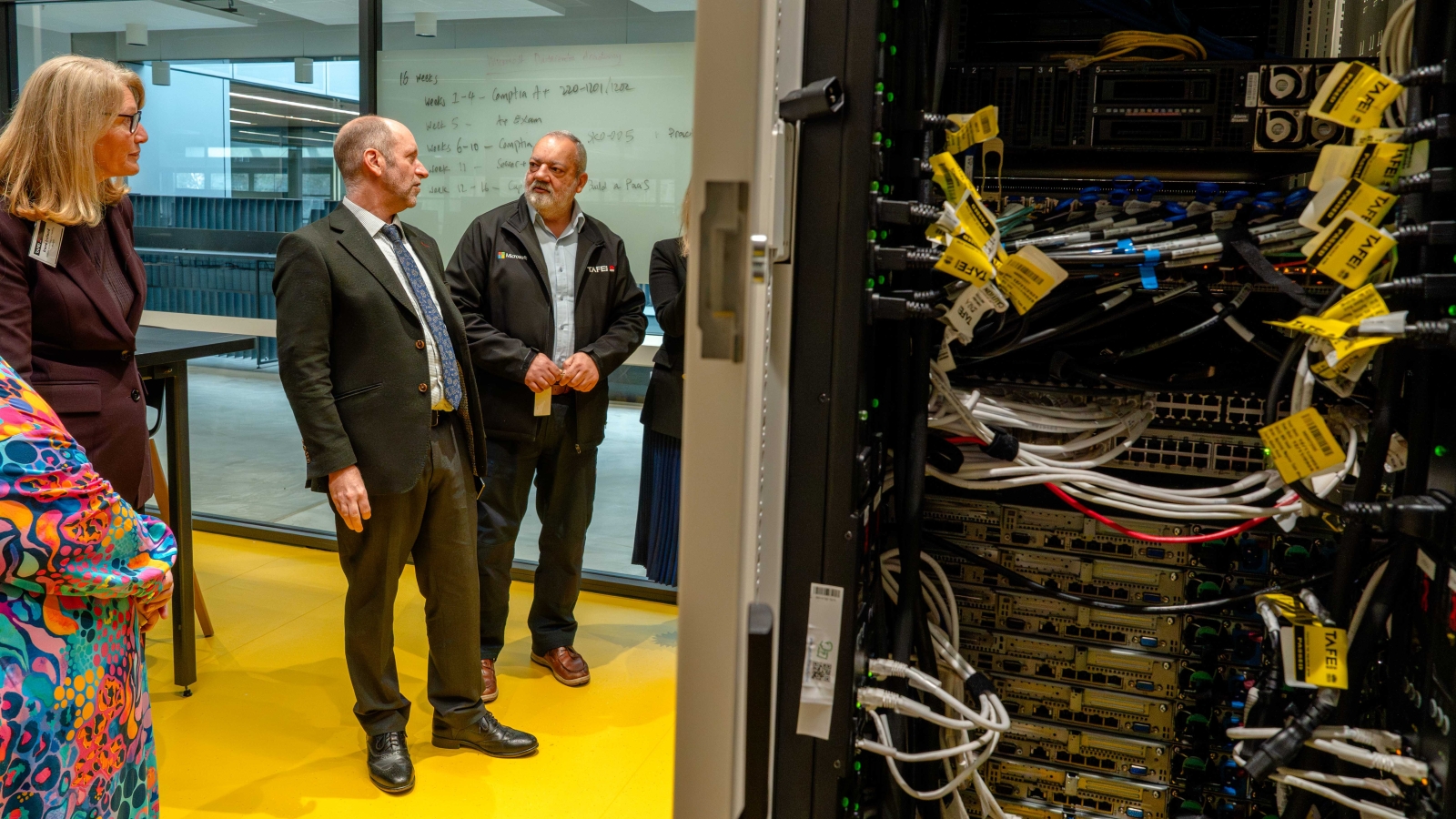

TAFE NSW teachers in digital and finance-related disciplines will be embedded with AI, cybersecurity, data intelligence, and other industry partners for hands-on training after the formal launch of a new ‘return to industry’ program designed to update their skills.
Following a successful pilot with 34 advanced manufacturing teachers, the newly launched ‘Industry Accelerator – Teachers to Industry Program’ has expanded to include 50 more teachers in a cohort called ‘AI Enabled Workforce and Digital Capability’.
Teachers in this cohort will complete professional development before immersing themselves in industry, honing their skills, and bringing new insights back to their peers.
Sponsors include companies like Adobe, Macquarie Technology Group, and OMRON Automation and Robotics – helping teachers work at the cutting edge in a program TAFE NSW managing director Chloe Read said is about “reconnecting educators.”
“Our teachers are already highly professional, bring real-world experience into the classroom, and know how to best engage and support students to succeed in their chosen careers,” she said, with the new program giving them “the latest practices, technologies, and insights.”
“Strong partnerships with business leaders are critical to its success,” she added, “Keeping TAFE NSW closely aligned with industry so the training our students receive reflects real workplace expectations [and builds] skills that work for the jobs of today and tomorrow.”
Filling gaps with targeted skill-building
The program is the latest in a series of TAFE NSW initiatives designed to boost workforce engagement in key skill areas, with other recent programs including free courses for manufacturing employers and microskills in AI, cybersecurity, and data centres.
TAFE NSW has also recently launched training in clean energy, a new TAFE Centre of Excellence in construction, and a TAFE Centre of Excellence at Meadowbank that will train over 50,000 students annually in cybersecurity, AI, big data, cloud computing, and software.
The new program comes days after the NSW government announced it will invest $2.7 billion in TAFE NSW – a 23 per cent annual increase that includes $233.2 million to upgrade campus networks, modernise classroom technology, and deliver new devices for regional staff and students.
That package also includes funding to remove barriers to TAFE training, including $816 million for subsidised vocational education and training (VET), incentives to convert teachers into permanent roles, and training places and payroll tax rebates for firms that hire apprentices and trainees.
NSW Minister for Skills, TAFE, and Tertiary Education, Steve Whan, said such initiatives will help “make sure we’ve got a strong VET workforce delivering high-quality, responsive training that keeps up with industry.”
“By getting teachers back into workplaces, this new initiative will help TAFE NSW support, grow and retain world class teachers, bring the latest knowledge into the classroom and ensure students are learning the skills that work,” he said.
Bringing education and industry into lockstep
The new program comes amidst growing concerns that university courses are failing to deliver the skills that employers require, and that “foundational” AI is further extending the gap by compromising critical thinking skills and diluting the value of university degrees.
Programs that engage industry earlier in the educational process have proved promising, with CSIRO’s STEM Professionals in Schools promoting industry-led STEM education and early industry partnerships, with the likes of Telstra putting students at the ICT coal face.
Even as the Productivity Commission calls for skills reform with a warning that “training participation has stagnated”, programs like the ACS-led CyberPath and government partnerships aim to define the skills needed for roles in an ICT industry undergoing rapid transformation.
Such work will provide clearer targets for university and TAFE educators that have struggled to cater to employers’ ever-changing skills wish lists, and to job seekers working below their qualifications because they don’t know what skills will help them kickstart their careers.
“Australia’s vocational education and training system must remain agile and keep pace with technological change and evolving job roles,” federal Minister for Skills and Training, Andrew Giles, said while launching TAFE’s Meadowbank centre in April.
Such industry-led facilities “are designed to ensure Australians can get the skills they need for good secure work into the future,” he said, noting that they “strengthen Australia’s digital capability and boost pathways into skilled digital jobs.”