
On the afternoon of 27 July, you’re going to receive a message on your phone that will mark the beginning of a significant improvement to Australia’s emergency messaging system.
That message will confirm that the new AusAlert system, due to go live in October, is working as intended.
Based on the cell-broadcast technology already used in 30 other countries, the system will let authorities rapidly notify all area residents of incidents such as natural hazards, public safety and security threats, biosecurity incidents, and health emergencies.
Compatible phones will display critical alerts on users’ home and lock screens, vibrate the phone and play an “intrusive” alert sound even if the phones are on silent, there is poor reception or congestion in the area, or they’re a tourist without local service.
Users can’t opt out of the critical messages but AusAlert – which works with all phones made since 2019 – can also send less-critical ‘priority’ messages, which users can opt out of by adjusting settings on their iPhones or Android phones.
Australia has had over 200 emergency events since Black Friday in 2019, National Emergency Management Agency (NEMA) coordinator-general Brendan Moon said, and “we’ve learned the lessons to ensure that the delivery of critical services… have priority.”
Authorities can target the messages geographically to reach users within around 160m of a specific mobile phone tower – a change from current location-based SMS (LB-SMS) systems, which generally send larger numbers of messages that may or may not get through.
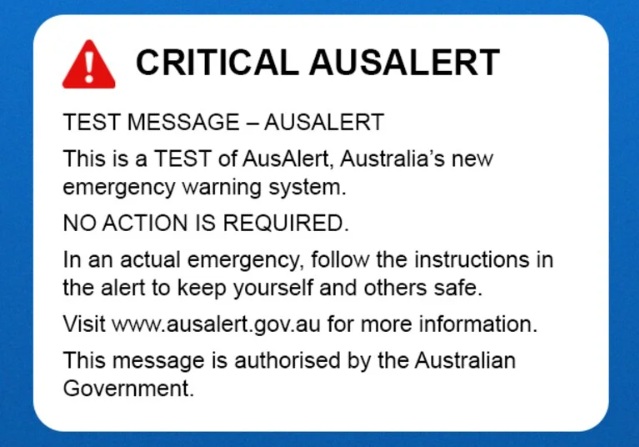
A sample test message that can be sent using AusAlert. Photo: Supplied
NEMA has been working with authorities to train emergency operators on the new system for over 12 months, Moon explained, and in June will run targeted tests in 9 towns nationwide in preparation for full go-live in October.
AusAlert will be “one part of that constellation of warning services” available to help authorities inform the public during times of natural or other emergency, Moon said of the “network agnostic” cell-broadcast technology.
“If there’s a functioning cell tower within a particular area, it doesn’t matter which carrier you’re on, you will receive a message.”
Amber alerts and more
Cell broadcast technology has long been used overseas for ‘amber alerts’ when a child is abducted or goes missing – a strategy that the US National Centre for Missing & Exploited Children says has led to the recovery of at least 1,312 children in the US alone.
A standard component of the official GSM mobile phone specification, cell broadcast technology empowers a cell broadcast entity (CBE), like NEMA or local police, to send a message through a central dispatch hub called a cell broadcast centre (CBC).
The CBC interfaces with the mobility management services of 4G and 5G mobile networks, carrying messages using built-in signalling channels – which are separate from the channels that carry voice conversations and data sessions, and get through regardless of congestion.
Messages – which use the Common Alerting Protocol (CAP) to standardise delivery across many channels – are sent in pages of around 93 characters each, with a single message comprising up to 15 linked pages, allowing up to around 1,400 characters per message.
Each message includes WGS84 geographical coordinates for the alert, as well as a unique identifier and serial number that means your phone can recognise and ignore subsequent messages if they are sent more than once.
Geo-targeting of the messages is possible because each mobile phone tower typically has three individual antennas covering 120 degrees of view with typical range of several hundred metres; the CBE can specify one or more antennas to use for the broadcast.
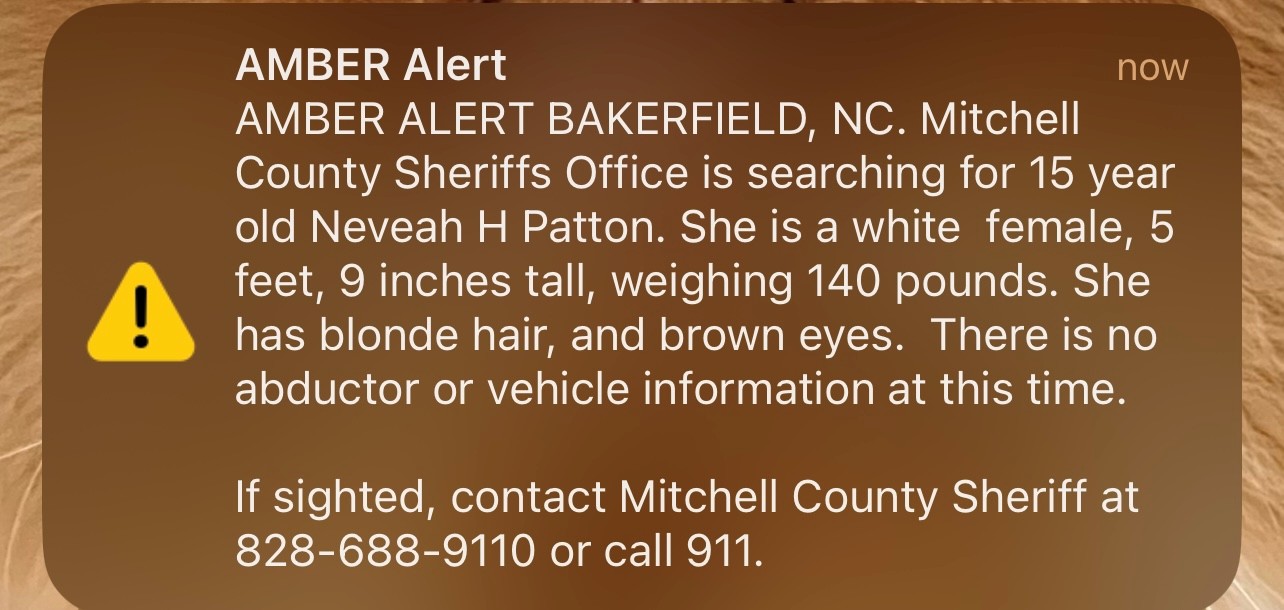
AusAlert’s core cell-broadcast technology has helped authorities locate over 1,300 missing or abducted children in the US alone. Image: Supplied
Importantly, unlike with LB-SMS – which targets individual phones by their service number – cell broadcast messages are automatically received by every phone within range of the tower.
Each phone then uses GPS to check its own location and compare it to the WGS84 coordinates in the message; if it’s not within the relevant area targeted by authorities, the message is simply discarded.
Catching up to world standards
Adopting the technology will help bring Australia in line with the UN’s Early Warnings for All initiative, which was launched in 2022 with a five-year executive action plan that urged member states to spend $4.4 billion ($US3.1 billion) to improve early warning systems.
Such systems “are a proven, efficient, and cost-effective way to save lives and jobs, land and infrastructure, and support long-term sustainability,” the UN said, calling them “urgently needed as climate change [causes] more frequent and intense extreme weather events.”
Delivery of the AusAlert system comes six years after it was recommended in the report of the Royal Commission into National Natural Disaster Arrangements, which flagged the vulnerabilities in existing alert systems such as the Emergency Alert System.
That system’s use of phone calls and text messages in that system, the inquiry found, had limitations that meant it “is considered to be outdated” and its upgrade “needs to be a priority [with] the best available technology to improve the communication of warnings.”
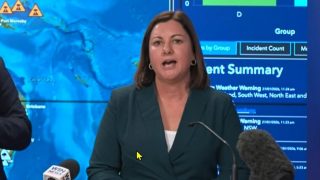
AusAlert’s October go-live has been timed for the run-up to Australia’s seasonal bushfire surge, with Minister for Emergency Management Kristy McBain calling it “an important project that will help us… warn people when they are in harm’s way.”
“This is a major development in Australia’s emergency communication landscape, and I thank Australians in advance for their cooperation.”