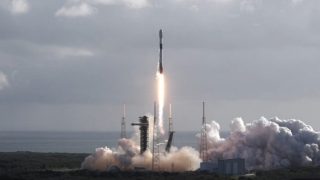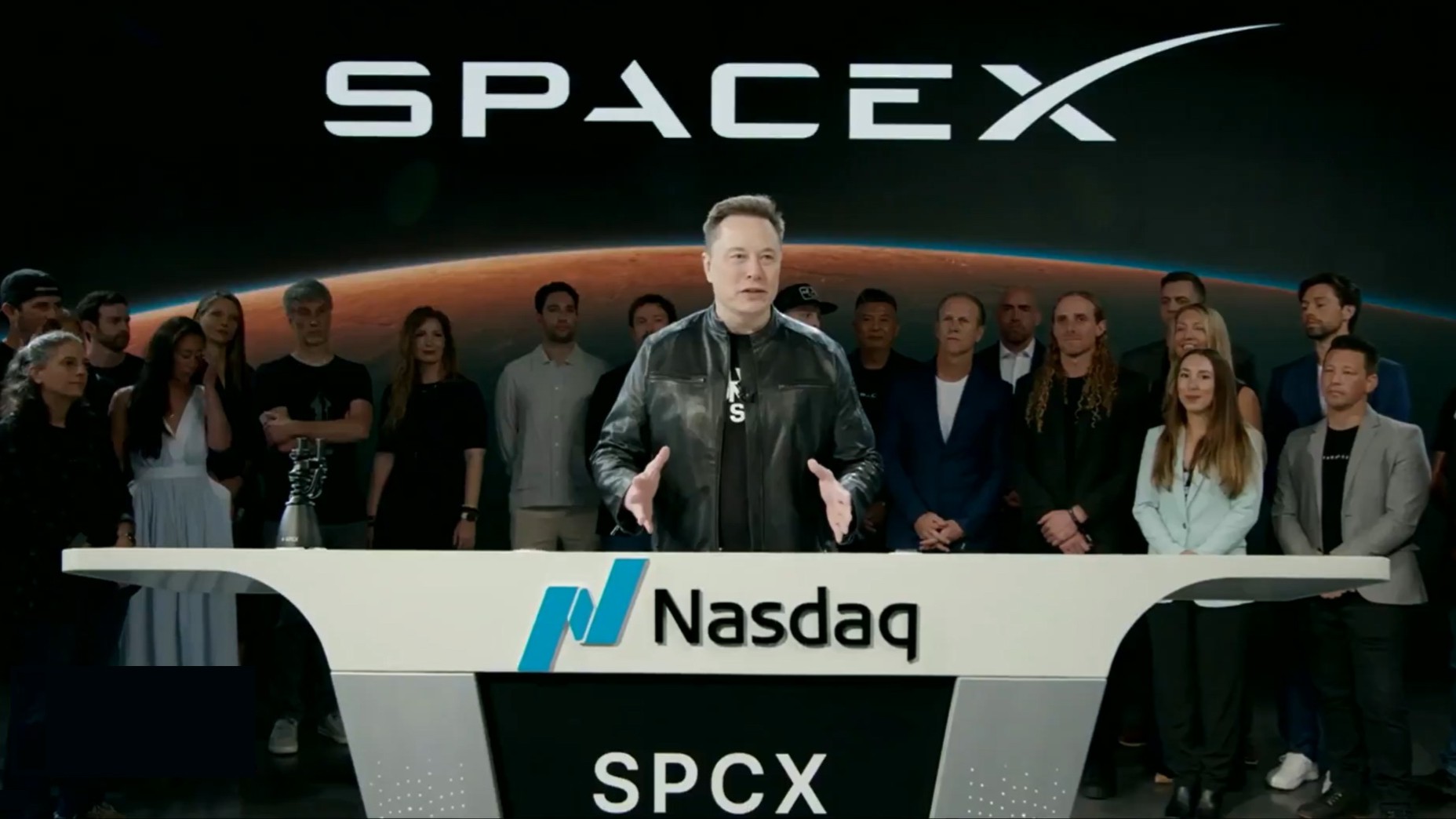

SpaceX soared on its first day of trading as a public company, making its CEO Elon Musk the world’s first trillionaire.
The space exploration company began trading on the New York Stock Exchange on Friday, with its shares jumping by more than 25 per cent by the close of day.
Earlier that day SpaceX announced that it had sold 555.6 million shares at $US135 ($184) each, making it the largest IPO in history.
The SpaceX initial public offering (IPO) is more than double the current record holder Saudi Aramco’s $US29.4 billion ($41 billion) in 2019.
SpaceX shares jumped to as high as more than $US176 ($249) on Friday before closing at $US160.95 ($228).
This values the company at $2.1 trillion ($2.9 trillion), making it the sixth largest company in the US by value.
SpaceX is now coming close to being as valuable as Amazon, which has a market capitalisation of $US2.6 trillion ($3.6 trillion).
The successful IPO has also made Musk the world’s first trillionaire.
“It is certainly hard to believe that a little company that started in a warehouse in El Segundo is now going public with the largest IPO ever,” Musk said on Friday.
Musk is now worth more than the next four wealthiest people in the world combined: Google co-founders Larry Page and Sergey Brin, Amazon’s Jeff Bezos and Oracle’s Larry Ellison.
Analyst concerns
But some analysts are concerned that SpaceX is being significantly overpriced, particularly by the current hype around AI companies.
Investment research group Morningstar calculated that SpaceX shares should have been priced at $US63 each, well under half its current price of $US160.95.
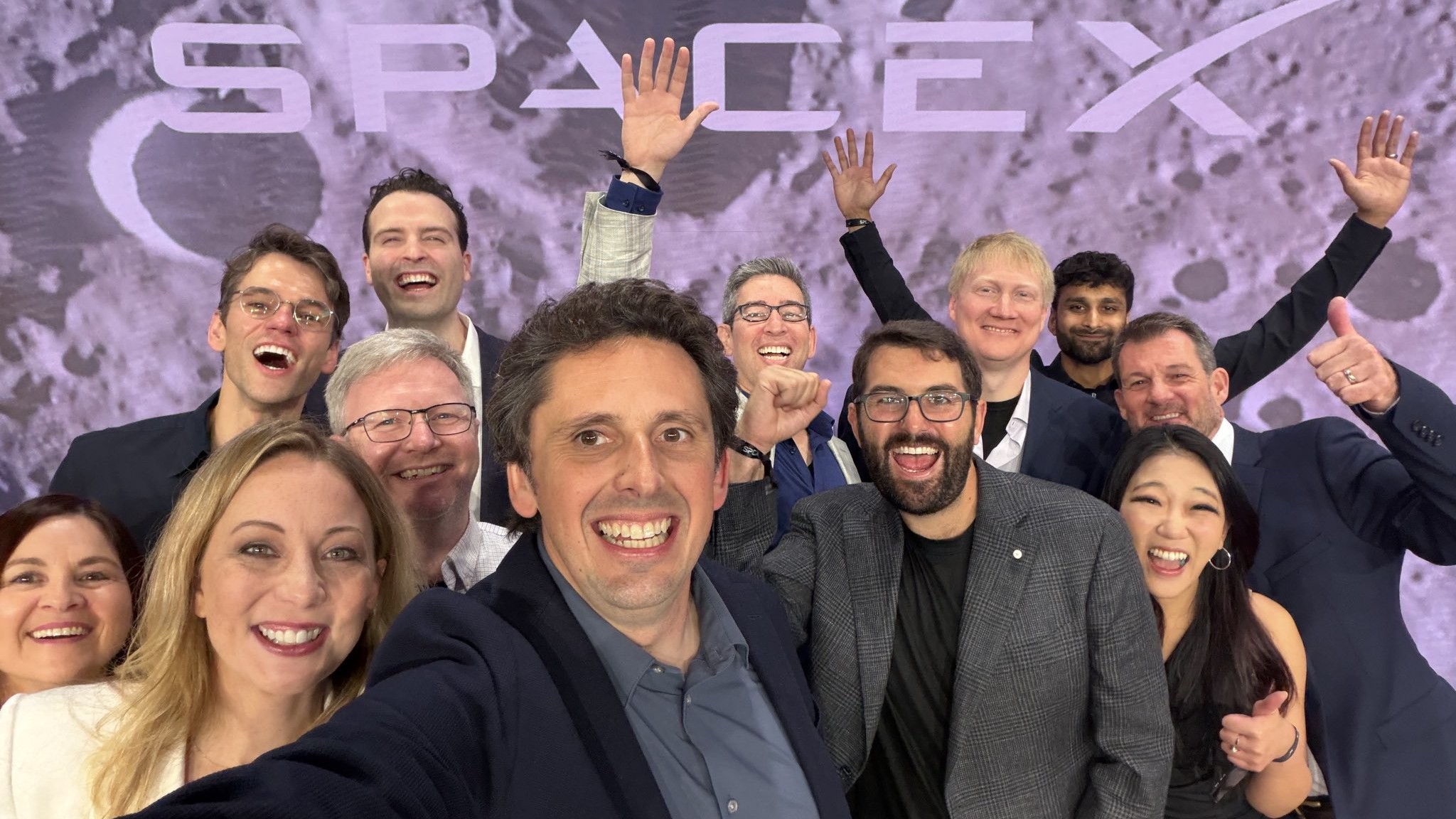
Starlink staff celebrate the public listing of SpaceX. Photo: Starlink / X
Morningstar said there is a “major disconnect between market expectations and underlying fundamentals”.
“We believe the business has real strengths, particularly in Starlink, but with so many unknown and untested technologies underpinning much of the valuation price, particularly within the AI business, we think the valuation is extremely speculative,” Morningstar chief equity strategist Michael Field said.
SpaceX has allocated about 20 per cent of its shares to retail investors and said it received about $US70 billion in orders.
In Australia, CommSec said it received 30,000 bid applications for SpaceX from Australians.
Many other Australians are also likely unknowingly investors in SpaceX, through their big superannuation funds or passive investment funds.
AI-first company
SpaceX filed for its IPO late last month.
While the company is best known for making and launching rockets and satellites, its prospectus focuses on it being an AI infrastructure developer above all else.
SpaceX is “building the infrastructure of the future”, the prospectus said and aims to create the “systems and technologies necessary to make life multiplanetary, to understand the true nature of the universe and to extend the light of consciousness to the stars”.
The prospectus claims SpaceX has the “largest actionable total addressable market in human history” of $US28.5 trillion ($39.8 trillion).
It also revealed financial details of the company.
They showed that SpaceX had a major operating loss in the first three months of this year, is currently losing major amounts of money through its AI arm and that Starlink is its primary profitable branch.
SpaceX was the first of the three AI companies – which also includes Anthropic and OpenAI – to go to market.
Anthropic AI and OpenAI have both confidentially filed for IPO but are yet to announce when they will begin trading.
Anthropic announced its IPO in May, closely followed by OpenAI, which casually made the announcement on X.
“We expect it to leak so we’re just announcing it,” the company’s X account said.
OpenAI was recently valued at $US852 billion ($1.2 trillion) and is reportedly working towards a market valuation of $US1 trillion.